What's going on in Mr. Solarz' Class?
What's going on in Mr. Solarz's Class?
  • Parents (Newsletter)
    • Our Online Photo Album >
      • 2018-2019 Photo Album
      • 2017-2018 Photo Album
      • 2016-2017 Daily Photo Journal
      • 2016-2017 Daily Photo Journal - Album 2
      • 2015-2016 Daily Photo Journal
      • 2015-2016 Yearbook
      • 2014-2015 Daily Photo Journal
    • Our YouTube Channels >
      • 2018-2019 YouTube Channel
      • 2017-2018 YouTube Channel
      • 2016-2017 YouTube Channel
      • 2015-2016 YouTube Channel
      • 2014-2015 YouTube Channel
      • 2013-2014 YouTube Channel
      • 2012-2013 YouTube Channel
      • YouTube videos over the years
      • Learn Like a PIRATE videos
    • Calendar
    • Our Weekly Schedule
    • FAQ about our classroom
    • Curriculum Night Presentation
  • Educators
    • Danielson Framework >
      • Domain 1 - Planning & Preparation
      • Domain 2 - Classroom Environment
      • Domain 3 - Instruction
      • Domain 4 - Professional Responsibilities
      • Professional ePortfolio
      • Instructional Coach Evidence
      • Experience Logs
    • FAQ about our Classroom
    • Workshops
    • Our Classroom Library is for Sale
  • Curriculum
    • Science Units >
      • 5th Grade >
        • Human Body Unit >
          • Human Body Links
        • Ecosystems >
          • Ecosystems - Legends of Learning
        • Watery Earth >
          • Watery Earth Links
        • Earth in Space
        • Investigating Matter
      • 4th Grade >
        • Energy >
          • Energy Unit Notes
          • Energy Debates
          • Energy Debate Organizers
        • Our Geosphere
        • Waves
      • Science Fair
      • STEM Investigations!
      • Try Engineering Together
    • Social Studies Units >
      • 5th Grade >
        • Revolutionary War >
          • Liberty's Kids Videos
          • Revolutionary War Hero Project >
            • RWHP Directions
        • U.S. Constitution & Government >
          • Mini Lessons
          • Colonize Mars! >
            • Claiming Mars for Ourselves >
              • 2017-2018 Creating our Country on Mars
              • 2016-2017 Mars Decisions
              • 2015-2016 Claiming Mars for Ourselves
              • 2014-2015 Claiming Mars for Ourselves 2015
            • Solutions to Problems on Mars >
              • 2017-2018 Our Solutions to Problems on Mars
              • 2016-2017 Problems & Solutions
              • 2015-2016 Our Solutions to Problems
              • 2014-2015 Our Solutions to Problems
            • 2014-2015 "Mission: Mars" Video Discussions 2015
          • Project Citizen
        • Westward Expansion >
          • Oregon Trail Simulation
          • Oregon Trail Readings
          • Reflection Rotation >
            • 2017-2018 Reflections >
              • ThingLink Photo Stories
              • Green Screen Tableaux Vivants
              • Fictional Travel Blog
              • Canva Concept Cards
              • YouTube Newscasts
              • Google Slide Show
              • Daily Travel Blog
              • Act-It-Outs
            • 2016-2017 Reflections
            • 2015-2016 Reflections >
              • Voki Reflections >
                • Voki Blog
            • 2014-2015 Reflections >
              • Act-It-Outs
              • Timeline Spreadsheet
              • Newscasts
              • ThingLink >
                • ThingLink Images
                • Sign up for ThingLink
              • Google Slideshow
              • Fictional Travel Log
              • Daily Travel Log
              • Tableaux Vivants
              • Photo Stories
      • 4th Grade >
        • Geography
        • Explorers
        • Native Americans
        • Colonization
        • State of Sustainability
      • Presidential Election Simulation - 2012 >
        • Presidential Election Simulation - 2016
      • Current Events
    • Reading >
      • 5th Grade Units >
        • Literature Circles >
          • Literature Circles >
            • Video Discussions
          • Literature Circles >
            • Video Discussions
            • Activities
        • Schoolwide Launch
        • Schoolwide Fiction
        • Schoolwide Non-Fiction
        • Schoolwide Ecosystems
        • Schoolwide Poetry
        • Wonder >
          • Wonder
        • The Phantom Tollbooth >
          • Phantom Tollbooth Assignments
      • 4th Grade Units >
        • Schoolwide Launch
        • Schoolwide Fiction
        • Schoolwide Non-Fiction
        • Schoolwide Poetry
        • Schoolwide Energy
    • Writing, Spelling & Grammar >
      • Writing >
        • Writing City
        • WEX
        • WriteAbout
        • Reflection Writing
        • JoonBugz
      • Spelling >
        • Words Their Way
      • Grammar >
        • Grammar
    • Math >
      • Money Island
      • Math in Focus
    • Miscellaneous >
      • Activities >
        • Short-Term Projects
        • Challenges!
        • Special Events
        • Projects & Mini Lessons
        • Bonus Activities
        • Miscellaneous >
          • Honor Badges
          • Growing a Growth Mindset
      • Imagination Club >
        • Schedule
        • Daily Ritual
        • Mini-Lessons
        • Photo Journal
        • Student Creations Round 1
      • Mystery Skype
      • Entrepreneurship Unit >
        • Entrepreneurship - Creating Our Own Businesses!
      • Self-Reflection
      • KinderPals
  • Student ePortfolios
    • 2018-2019 ePortfolios >
      • Students 1-7 >
        • 1 - Isabel
        • 2 - Alexis
        • 3 - Oscar
        • 4 - Adrian
        • 5 - Edy
        • 6 - Matthew
        • 7 - Molly
      • Students 8-14 >
        • 8 - Joey
        • 9 - Jeremiah
        • 10 - Emmalina
        • 11 - Sama
        • 12 - Hazel
        • 13 - Nick
        • 14 - Filip
      • Students 15-21 >
        • 15 - Nellie
        • 16 - Landon
        • 17 - Molly
        • 18 - Harrison
        • 19 - Kali
        • 20 - Inti
        • 21 - Ryan
        • 22 - Pavel
      • Blog Assignments
    • 2017-2018 ePortfolios >
      • Students 1-9 >
        • Elle
        • Daniel
        • Tommy
        • Alyssa
        • Gavin
        • Milosz
        • Mikey F
        • Caitlin
        • Brynna
      • Students 10-17 >
        • Kya
        • Olivia
        • Ian
        • Colin
        • Owen
        • Gianna
        • Isabella
        • Carmen P
      • Students 18-25 >
        • Lucy
        • Caleb
        • Mikey S
        • Wes
        • Martin
        • Will
        • Shaun
        • Carmen W
      • Blog Assignments
    • 2016-2017 ePortfolios >
      • Students 1-8 >
        • Hailie
        • Jody
        • Madison
        • Dylan
        • Calvin
        • Connor
        • Louisa
        • Harvey
      • Students 9-16 >
        • Anna
        • Jack
        • Ben
        • Elijah
        • Catelyn
        • Cole
        • Abby
        • Ashley
      • Students 17-23 >
        • Charles
        • Michelle
        • Charlie
        • Daniel
        • Sam
        • Chingoon
        • Kyren
      • Blog Assignments
    • 2015-2016 ePortfolios >
      • Students 1-9 >
        • TJ
        • JJ
        • Bridget
        • Alex
        • Mason
        • Ryan
        • Lucas
        • Shreya
        • Logan
      • Students 10-18 >
        • Charlotte
        • Addie
        • Aidan
        • Andrew
        • Jeremy
        • Rachel
        • Russell
        • Addy
        • Cassidy
      • Students 19-26 >
        • Audrey
        • Regan
        • Giuliana
        • Brady
        • Stephen
        • Matthew
        • Ben
        • Tyler
        • Thomas
      • Blog Assignments
    • 2014-2015 ePortfolios >
      • Students 1-7 >
        • 1 - Michael
        • 2 - Charlie
        • 3 - Nicole
        • 4 - Stacy
        • 5 - Bela
        • 6 - Kendall
        • 7 - Demetri
      • Students 8-14 >
        • 8 - Emily
        • 9 - Nicky
        • 10 - Hanna
        • 11 - Payton
        • 12 - Hasanain
        • 13 - Tucker
        • 14 - Chris
      • Students 15-21 >
        • 15 - Madi
        • 16 - Aidan
        • 17 - Luke
        • 18 - Kaela
        • 19 - Ryan
        • 20 - Alison
        • 21 - Lucas
      • Blog Assignments
  • Passion Time
    • Passion Time Resources >
      • ALL Passion Time Resources
      • Step-By-Step Directions
      • Submit Your Essential Question
      • Our Trello Page
      • Our Passion Projects over the years
      • Our Trello Board
      • SAMPLE Blog Post Format
      • YouTube Upload Page
      • Mini-Lessons
    • 2018-2019 Projects >
      • Round 1
      • Round 2
      • Round 3
      • Round 4
    • 2017-2018 Projects >
      • Round 1
      • Round 2
      • Round 3
      • Round 4
      • Round 5
    • 2016-2017 Projects >
      • Submit Your Essential Question
      • Mini-Lessons
      • Round 1
      • Round 2
      • Round 3
      • Round-4
      • Round 5
      • Round 6
    • 2015-2016 Projects >
      • Round 1
      • Round 2
      • Round 3
      • Round 4
    • 2014-2015 Projects >
      • Round 1
      • Round 2
      • Round 3
      • Round 4
      • Round 5
      • Round 6
  • Student-Led Classroom Info
    • Our Learning Experiences
    • 21st Century Skills
    • Whole Class Goals
    • Individual Goals
    • Classroom Jobs
    • Collaborative Responsibilities
    • Rituals & Routines
    • Uses of "Give Me Five"
    • Student-Led Mini-Lessons
    • Lit Circle Signposts
    • Mystery Skype Jobs

Insulated Bottles

9/26/2014

0 Comments

 
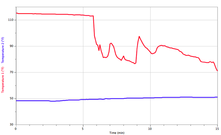
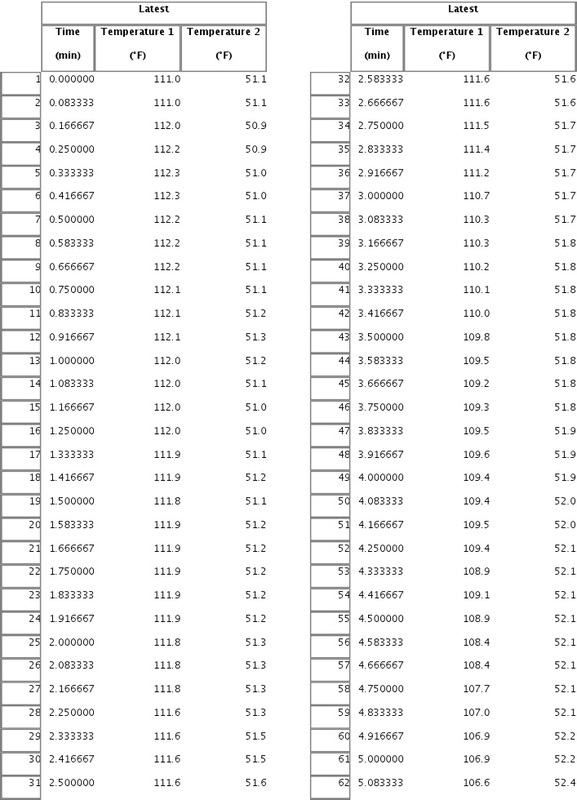
  1. What was your maximum temperature (use your Data Chart, not the picture)?
  2. What was your minimum temperature (use your Data Chart, not the picture)?
  3. What is your range?  If you had any penalties or gifts, include those in your total.
  4. What materials did you use in your insulated bottle (type them in order from your first layer, second layer, and third layer.)?  Why did you choose the materials that you did?
  5. What are some materials that you didn't choose?  Why didn't you choose them?
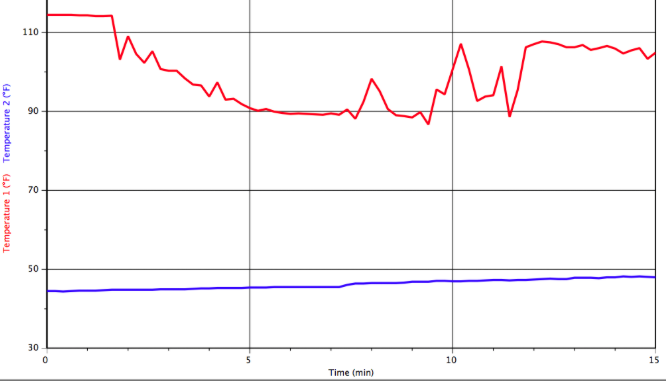
  6. Explain any blips on your graph (if you have them).  Why do you think it did that?
  7. Is an insulator a good or a poor conductor of heat energy?  This is an important question, so really think before you answer it!
1.My maximum temperature for the insulated bottles experiment was 111.4 degrees f. We used many different insulators to keep out bottle warm. Our bottle could've been warmer but we made a little mess up.
2. My minimum temperature 49.4 degrees. We think that are temperature was so low because at first we forgot to put a bag over our materials so all the materials were wet and cold. All the coldness from the materials converted through the bottle to the thermometer, which made the minimum temperature so cold.

3. Our range was exactly 62.0. To get the range we subtractegd the maximum to the minimum to get the 
range.

4. The insulated materials that we used to make the warm bottle in the ice bath warm were, carpet insulation, 3 layers of aluminum foil, 2 layers of wax paper, polyester, and a layer of nylon. Me an my partner chose these insulated materials because of the high scores they ranged in the first round of testing materials.


5. The materials we didn't choose were the regular paper, wool, bubble wrap, and some foam. We didn't 
chose the foam because when it was time to draft it, there was none left. The rest of the materials  had a low range of a score they had.

6. Me and my partner had many blips on our graph. We think this because of all the temperatures changing and moving the thermometer too much.

7. An insulator is a poor conductor because by definition an insulator does not let heat go through but I know from class that a conductor is something that does.
Picture
Picture
Picture
0 Comments

Conductors of Heat

9/24/2014

0 Comments

 
Bamboo Rod
Silver: Aluminum Rod
Brownish Red: Copper rod
Gold Yellowish: Brass Rod
White: Plastic Rod


I predict that the Plastic Rod will make the butter slide down 1st.
2nd: Silver
3rd: Copper Rod
4th: Brass Rod
5th: Bamboo Rod


  1. How did heat energy transfer to the butter in this experiment?
  2. What connections can you make between this experiment and yesterday's experiment?  "Both today's experiment and yesterday's experiment...  The main differences were..."
  3. How did your results compare to your predictions?
  4. Which of the tested materials were the two best conductors?  What is your evidence?
  5. Which of the tested materials were the two worst conductors?  What is your evidence?
  6. Do you think water is a good or poor conductor?  Why?  Can you think of any evidence to support your answer?
  7. Why do you think it matters which material is a good or bad conductor?  How do we use conductors in our life?
Picture
Picture


1. Heat energy transferred down the rod and down to the water. The energy from the coffee warmer made the butter slowly fall attracted to the heat down the rod and into the water.


2.Both today and yesterday the activities included different forms of heat. The main differences were that  in yesterday's activity, there was cold temperatures and in today's, the temperatures were most focused on heat energy.

3. My results were very different from the actual answers but I ended up learning and being surprised about the ending results. I ended up being right with the bamboo rod because I predicted that it would be  the last to be attracted to the heat energy below it.

4. The two best conductors were the plastic and bamboo rods. I know this because in class when we did the expire end, the two conductors were standing.

5. The two worst conductors were the metal rods. I think that this happened because most metals are a bit slippery so the butter must've been very attracted to heat energy below. I have evidence because in class, the metal rods made the butter fall down slower.

6. I think that water is a good conductor. I think this because when my family is having a bonfire, water puts the fire out. Plus, if you put water on a bamboo rod, it can keep the rod from burning.

7. I think that this matters in life because we have many regular days that have all this energy and we don't even know it! Like a said, one example is how you put water on something to make it stop burning or keep something from burning, you wouldn't notice it but you would be using heat and motion energy.


In class the wooden rod kept the butter on the longest while the heat was coming up. I think that the wooden rod kept the butter on the most because like I said before, wood is a good conductor. It does not burn in fire when water is on wood and wood has elements that do not make wood soggy or let water get onto it's body. That means that the heat released hit the rod but got off because wood does not let the heat stay on it. Therefore, the butter did not fall down fast because wood let's the heat fall off.


In class one of the medal rods made the butter fall down first. I think that this happened because when heat hits a medal kind of element it makes the element soggy and wet which made the butter fall down fast. Therefore, medal elements are not good conductors.
0 Comments

Transferring Heat Energy From Warm to Cold Water

9/22/2014

0 Comments

 
  1. What happened to the temperature of the cold water over time?  What about the warm water?
  2. What happened on the graph to show what happened with the water temperatures?
  3. What did you notice happened at the end of the experiment?
  4. How did the cold water get warmer? How did the warm water get colder?
  5. Did the water go through the red Solo cup?  How do you know?
  6. Which direction did the heat energy move?
This is an example of what a graph would look like
Picture
1. Over time the temperature of the cold water over time kept getting colder and colder but, eventually the cold water stopped decreasing and started to get warmer. The warm water started out very hot starting at about 117 degrees and then i realized that the cold water around the hot water condensed into the cup holding the hot water which made the hot water about the same degrees.
2. On the graph, there were lines representing "hot and cold". The lines started off apart, showing how different the temperatures were but then, the lines started converting together showing how the temperatures got closer together.k
3. I noticed that at the end of the experiment, the two lines representing their part of hot or cold, intersected each other. I think that this happened because at the end, the hot and cold became similar temperatures.

4. The cold water got colder by the hot water in the other cup. The heat in the cup transferred to the ice cold water to make it warmer. For the hot water to get cold, the same thing happened, the cold temperatures transferred to the hot water to make it colder.
5. The water did not go through the red solo cup,  the heat did. I know this because I have done similar expirements like this and my old teacher taught us that.
6. The heat energy moved down because the ice water made it colder putting the heat energy downward.
0 Comments

Energy Transfers

9/22/2014

0 Comments

 
  1. What was your favorite station? Why?
  2. Which object was most difficult to figure out?  Why was it so hard to figure out the energy transfers in this object?
  3. Which three stations do you feel very confident that you figured out correctly? Describe one and explain what made it so obvious.
  4. Was it always possible to know for sure what kinds of energy transfers occurred?
1. My favorite station was the dominoes station because I felt like me and Emily worked really well together and this station was also really fun to experiment. I learned that the dominoes could be a lot of different energy forms and byproducts.
2. I feel like the drinking bird was the hardest to figure out because it had so many unique things going on at the same time. I was very puzzled but then I thought, and I looked at all the objects on top of the bird and thought that those had something to do with it.

3. I feel like the dominoes, leaping frog, and color changing bracelets were the ones that made me feel most confident. I think this because all of the energy forms it hey created seemed to have the most obvious energy forms.
4. Sometimes it was not  always possible to know what kinds of energy occurred. I think that I missed a few energy forms with the drinking bird.

Read More
0 Comments

Finding Eight Forms of Energy Around Westgate

9/11/2014

0 Comments

 
Picture


Reflection & Synthesis Questions:
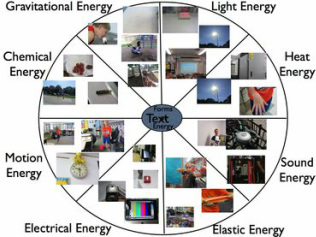
  1. Where is energy found?        
  2. What forms of energy are easiest to notice? Which ones are hardest to notice?
  3. Do some items possess more than one form of energy? If so, which ones?
  4. Why is energy important?


1. Energy can be found almost everywhere. When I was looking for energy forms around westgate, I found a lot of energy in and out side. I never realized how much energy there really is.
2. I feel like the easiest energy form to notice is motion energy and the hardest Chemical. I think this because it took me a long time to find Chemical energy but, it took me a short period of time to find motion energy.
3. I think that Motion energy and light energy possess more than one form of energy.  I think this because i experienced  finding what energy posses more than one form of energy.
4. I thing that energy is very important because it makes the world a lot easier. With energy we can breathe, move, play, and do much more things that are important that we can only do with energy.
0 Comments

    Archives

    June 2015
    May 2015
    April 2015
    March 2015
    February 2015
    January 2015
    December 2014
    November 2014
    October 2014
    September 2014

    Author

    Write something about yourself. No need to be fancy, just an overview.

    Categories

    All

    RSS Feed

Powered by Create your own unique website with customizable templates.