What's going on in Mr. Solarz' Class?
What's going on in Mr. Solarz's Class?
  • Parents (Newsletter)
    • Our Online Photo Album >
      • 2018-2019 Photo Album
      • 2017-2018 Photo Album
      • 2016-2017 Daily Photo Journal
      • 2016-2017 Daily Photo Journal - Album 2
      • 2015-2016 Daily Photo Journal
      • 2015-2016 Yearbook
      • 2014-2015 Daily Photo Journal
    • Our YouTube Channels >
      • 2018-2019 YouTube Channel
      • 2017-2018 YouTube Channel
      • 2016-2017 YouTube Channel
      • 2015-2016 YouTube Channel
      • 2014-2015 YouTube Channel
      • 2013-2014 YouTube Channel
      • 2012-2013 YouTube Channel
      • YouTube videos over the years
      • Learn Like a PIRATE videos
    • Calendar
    • Our Weekly Schedule
    • FAQ about our classroom
    • Curriculum Night Presentation
  • Educators
    • Danielson Framework >
      • Domain 1 - Planning & Preparation
      • Domain 2 - Classroom Environment
      • Domain 3 - Instruction
      • Domain 4 - Professional Responsibilities
      • Professional ePortfolio
      • Instructional Coach Evidence
      • Experience Logs
    • FAQ about our Classroom
    • Workshops
    • Our Classroom Library is for Sale
  • Curriculum
    • Science Units >
      • 5th Grade >
        • Human Body Unit >
          • Human Body Links
        • Ecosystems >
          • Ecosystems - Legends of Learning
        • Watery Earth >
          • Watery Earth Links
        • Earth in Space
        • Investigating Matter
      • 4th Grade >
        • Energy >
          • Energy Unit Notes
          • Energy Debates
          • Energy Debate Organizers
        • Our Geosphere
        • Waves
      • Science Fair
      • STEM Investigations!
      • Try Engineering Together
    • Social Studies Units >
      • 5th Grade >
        • Revolutionary War >
          • Liberty's Kids Videos
          • Revolutionary War Hero Project >
            • RWHP Directions
        • U.S. Constitution & Government >
          • Mini Lessons
          • Colonize Mars! >
            • Claiming Mars for Ourselves >
              • 2017-2018 Creating our Country on Mars
              • 2016-2017 Mars Decisions
              • 2015-2016 Claiming Mars for Ourselves
              • 2014-2015 Claiming Mars for Ourselves 2015
            • Solutions to Problems on Mars >
              • 2017-2018 Our Solutions to Problems on Mars
              • 2016-2017 Problems & Solutions
              • 2015-2016 Our Solutions to Problems
              • 2014-2015 Our Solutions to Problems
            • 2014-2015 "Mission: Mars" Video Discussions 2015
          • Project Citizen
        • Westward Expansion >
          • Oregon Trail Simulation
          • Oregon Trail Readings
          • Reflection Rotation >
            • 2017-2018 Reflections >
              • ThingLink Photo Stories
              • Green Screen Tableaux Vivants
              • Fictional Travel Blog
              • Canva Concept Cards
              • YouTube Newscasts
              • Google Slide Show
              • Daily Travel Blog
              • Act-It-Outs
            • 2016-2017 Reflections
            • 2015-2016 Reflections >
              • Voki Reflections >
                • Voki Blog
            • 2014-2015 Reflections >
              • Act-It-Outs
              • Timeline Spreadsheet
              • Newscasts
              • ThingLink >
                • ThingLink Images
                • Sign up for ThingLink
              • Google Slideshow
              • Fictional Travel Log
              • Daily Travel Log
              • Tableaux Vivants
              • Photo Stories
      • 4th Grade >
        • Geography
        • Explorers
        • Native Americans
        • Colonization
        • State of Sustainability
      • Presidential Election Simulation - 2012 >
        • Presidential Election Simulation - 2016
      • Current Events
    • Reading >
      • 5th Grade Units >
        • Literature Circles >
          • Literature Circles >
            • Video Discussions
          • Literature Circles >
            • Video Discussions
            • Activities
        • Schoolwide Launch
        • Schoolwide Fiction
        • Schoolwide Non-Fiction
        • Schoolwide Ecosystems
        • Schoolwide Poetry
        • Wonder >
          • Wonder
        • The Phantom Tollbooth >
          • Phantom Tollbooth Assignments
      • 4th Grade Units >
        • Schoolwide Launch
        • Schoolwide Fiction
        • Schoolwide Non-Fiction
        • Schoolwide Poetry
        • Schoolwide Energy
    • Writing, Spelling & Grammar >
      • Writing >
        • Writing City
        • WEX
        • WriteAbout
        • Reflection Writing
        • JoonBugz
      • Spelling >
        • Words Their Way
      • Grammar >
        • Grammar
    • Math >
      • Money Island
      • Math in Focus
    • Miscellaneous >
      • Activities >
        • Short-Term Projects
        • Challenges!
        • Special Events
        • Projects & Mini Lessons
        • Bonus Activities
        • Miscellaneous >
          • Honor Badges
          • Growing a Growth Mindset
      • Imagination Club >
        • Schedule
        • Daily Ritual
        • Mini-Lessons
        • Photo Journal
        • Student Creations Round 1
      • Mystery Skype
      • Entrepreneurship Unit >
        • Entrepreneurship - Creating Our Own Businesses!
      • Self-Reflection
      • KinderPals
  • Student ePortfolios
    • 2018-2019 ePortfolios >
      • Students 1-7 >
        • 1 - Isabel
        • 2 - Alexis
        • 3 - Oscar
        • 4 - Adrian
        • 5 - Edy
        • 6 - Matthew
        • 7 - Molly
      • Students 8-14 >
        • 8 - Joey
        • 9 - Jeremiah
        • 10 - Emmalina
        • 11 - Sama
        • 12 - Hazel
        • 13 - Nick
        • 14 - Filip
      • Students 15-21 >
        • 15 - Nellie
        • 16 - Landon
        • 17 - Molly
        • 18 - Harrison
        • 19 - Kali
        • 20 - Inti
        • 21 - Ryan
        • 22 - Pavel
      • Blog Assignments
    • 2017-2018 ePortfolios >
      • Students 1-9 >
        • Elle
        • Daniel
        • Tommy
        • Alyssa
        • Gavin
        • Milosz
        • Mikey F
        • Caitlin
        • Brynna
      • Students 10-17 >
        • Kya
        • Olivia
        • Ian
        • Colin
        • Owen
        • Gianna
        • Isabella
        • Carmen P
      • Students 18-25 >
        • Lucy
        • Caleb
        • Mikey S
        • Wes
        • Martin
        • Will
        • Shaun
        • Carmen W
      • Blog Assignments
    • 2016-2017 ePortfolios >
      • Students 1-8 >
        • Hailie
        • Jody
        • Madison
        • Dylan
        • Calvin
        • Connor
        • Louisa
        • Harvey
      • Students 9-16 >
        • Anna
        • Jack
        • Ben
        • Elijah
        • Catelyn
        • Cole
        • Abby
        • Ashley
      • Students 17-23 >
        • Charles
        • Michelle
        • Charlie
        • Daniel
        • Sam
        • Chingoon
        • Kyren
      • Blog Assignments
    • 2015-2016 ePortfolios >
      • Students 1-9 >
        • TJ
        • JJ
        • Bridget
        • Alex
        • Mason
        • Ryan
        • Lucas
        • Shreya
        • Logan
      • Students 10-18 >
        • Charlotte
        • Addie
        • Aidan
        • Andrew
        • Jeremy
        • Rachel
        • Russell
        • Addy
        • Cassidy
      • Students 19-26 >
        • Audrey
        • Regan
        • Giuliana
        • Brady
        • Stephen
        • Matthew
        • Ben
        • Tyler
        • Thomas
      • Blog Assignments
    • 2014-2015 ePortfolios >
      • Students 1-7 >
        • 1 - Michael
        • 2 - Charlie
        • 3 - Nicole
        • 4 - Stacy
        • 5 - Bela
        • 6 - Kendall
        • 7 - Demetri
      • Students 8-14 >
        • 8 - Emily
        • 9 - Nicky
        • 10 - Hanna
        • 11 - Payton
        • 12 - Hasanain
        • 13 - Tucker
        • 14 - Chris
      • Students 15-21 >
        • 15 - Madi
        • 16 - Aidan
        • 17 - Luke
        • 18 - Kaela
        • 19 - Ryan
        • 20 - Alison
        • 21 - Lucas
      • Blog Assignments
  • Passion Time
    • Passion Time Resources >
      • ALL Passion Time Resources
      • Step-By-Step Directions
      • Submit Your Essential Question
      • Our Trello Page
      • Our Passion Projects over the years
      • Our Trello Board
      • SAMPLE Blog Post Format
      • YouTube Upload Page
      • Mini-Lessons
    • 2018-2019 Projects >
      • Round 1
      • Round 2
      • Round 3
      • Round 4
    • 2017-2018 Projects >
      • Round 1
      • Round 2
      • Round 3
      • Round 4
      • Round 5
    • 2016-2017 Projects >
      • Submit Your Essential Question
      • Mini-Lessons
      • Round 1
      • Round 2
      • Round 3
      • Round-4
      • Round 5
      • Round 6
    • 2015-2016 Projects >
      • Round 1
      • Round 2
      • Round 3
      • Round 4
    • 2014-2015 Projects >
      • Round 1
      • Round 2
      • Round 3
      • Round 4
      • Round 5
      • Round 6
  • Student-Led Classroom Info
    • Our Learning Experiences
    • 21st Century Skills
    • Whole Class Goals
    • Individual Goals
    • Classroom Jobs
    • Collaborative Responsibilities
    • Rituals & Routines
    • Uses of "Give Me Five"
    • Student-Led Mini-Lessons
    • Lit Circle Signposts
    • Mystery Skype Jobs

1f - Designing Student Assessments

3/26/2019

0 Comments

 
Picture
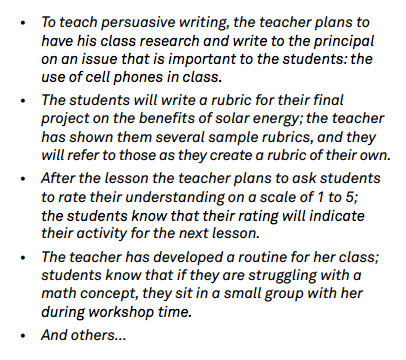
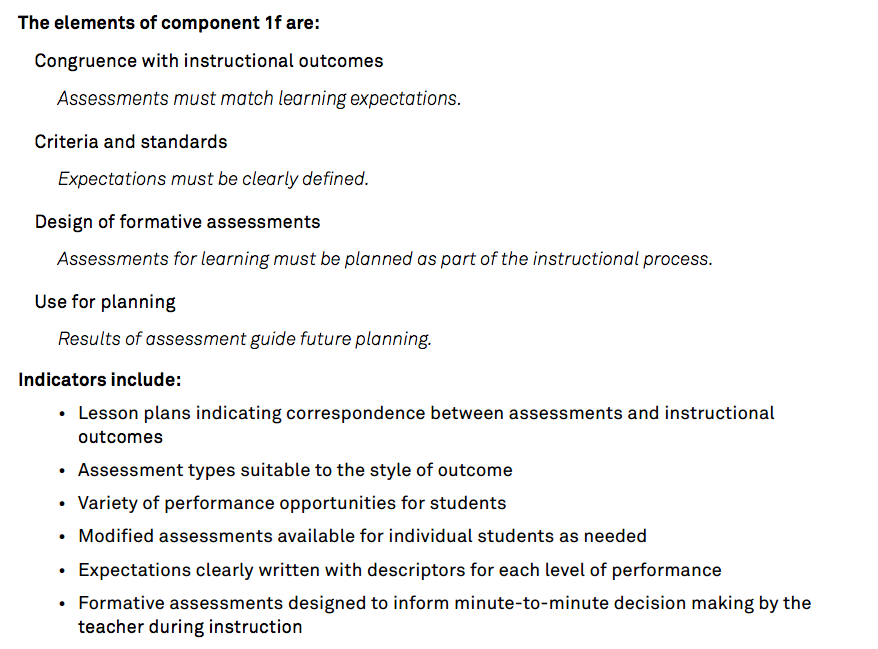
Examples from Charlotte Danielson:
Picture

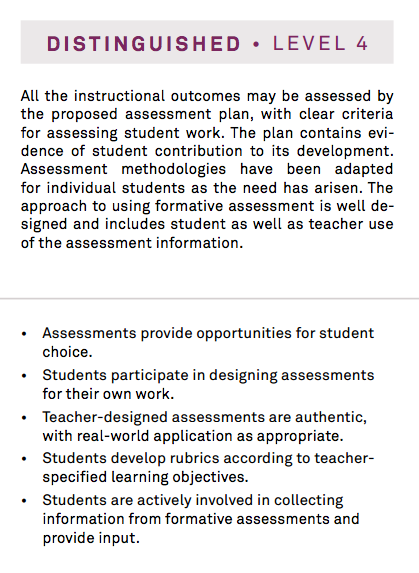
All of the instructional outcomes may be assessed by the proposed assessment plan, with clear criteria for assessing student work. The plan contains evidence of student contribution to its development. Assessment methodologies have been adapted for individual students as the need has arisen. ​The approach to using formative assessment is well designed and includes student as well as teacher use of the assessment information:

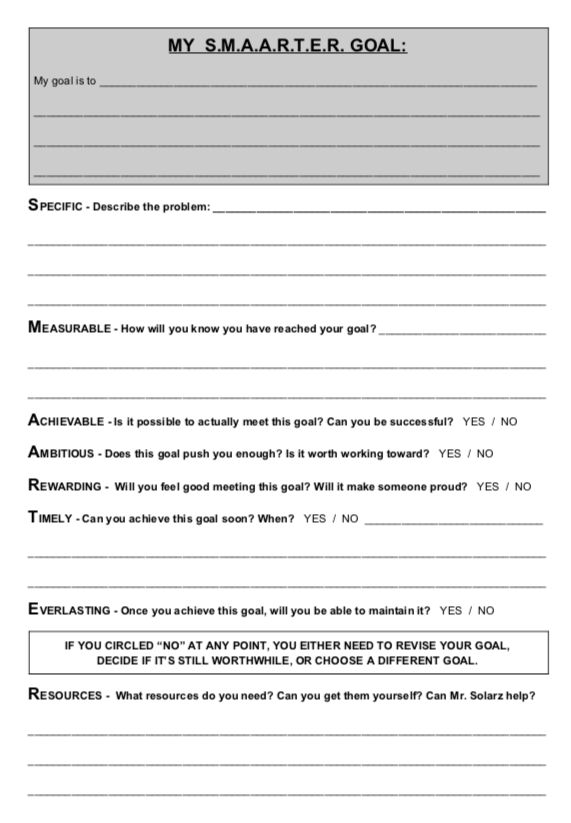
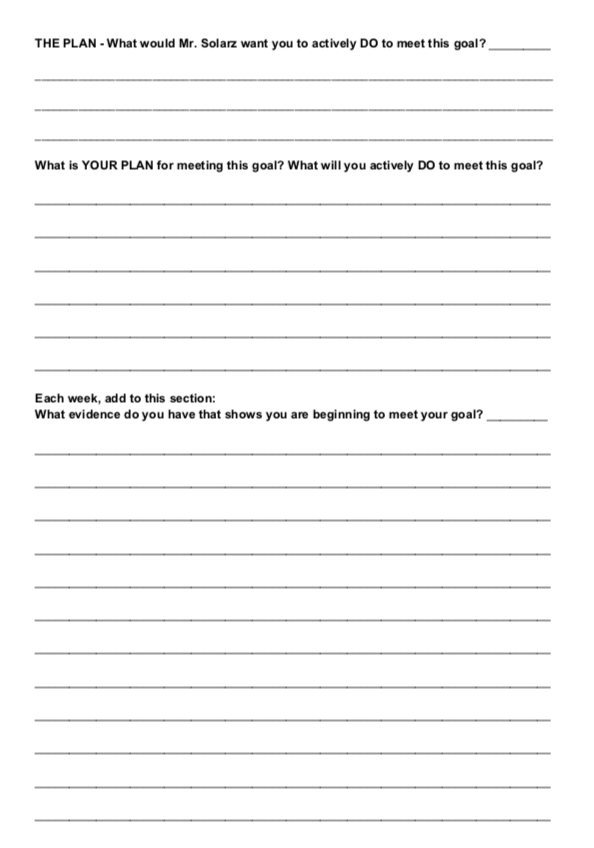
  • In our classroom, students set goals for themselves, write plans for achieving those goals, and cite evidence as they close in on achieving their goals. The plan they create and the evidence they choose to collect is completely up to them. In addition, they get to decide when they've accomplished their goal and what criteria need to be met in order to feel that a goal has been met. These are THEIR goals, not mine. These are things they feel they need to improve on in order to become a stronger student, peer, or leader.
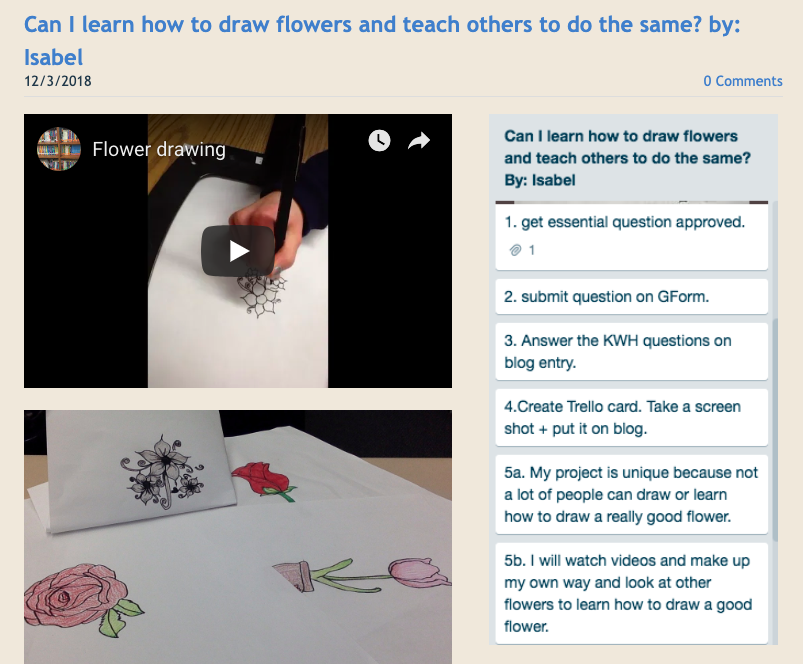
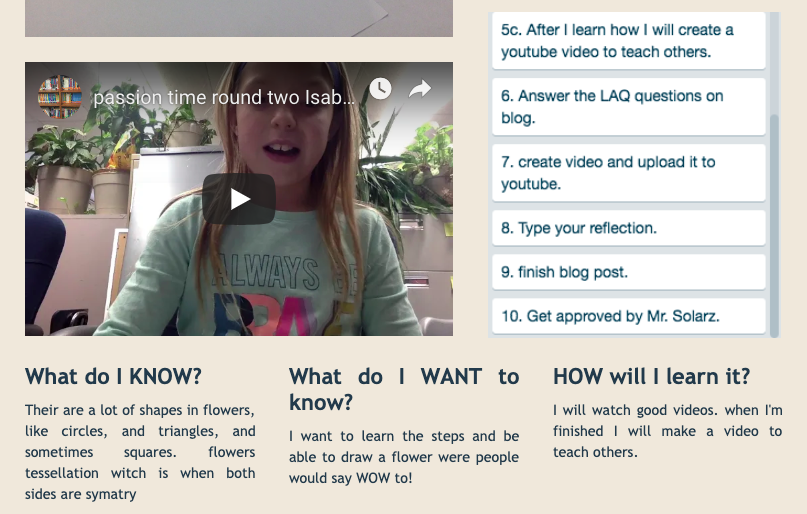
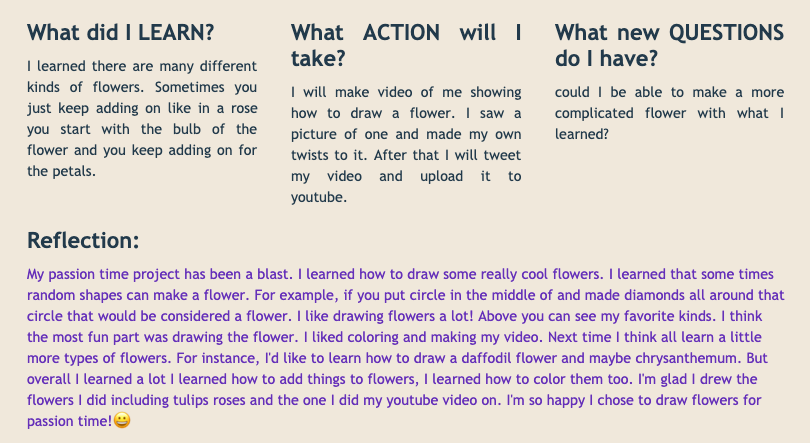
  • During Passion Time, students write an essential question that takes them on a journey through ten class periods of 30 minutes where they explore a topic of personal interest to them. I help them revise the essential question so that it focuses their work carefully, but students determine the process by which they learn their new skill. At the end of the learning process, students complete a reflection and make a video describing their learning. They determine their level of achievement and make adjustments for the next round. Students listen to each others' videos, typing "Quality Boosters" that help their peers improve their work for the next round. 
​
  • Once again, students set individual goals based on feedback from me and their own observations. They set the criteria for evaluation and determine when they've met their goals. I assist with the process to ensure that it is meaningful for all students.
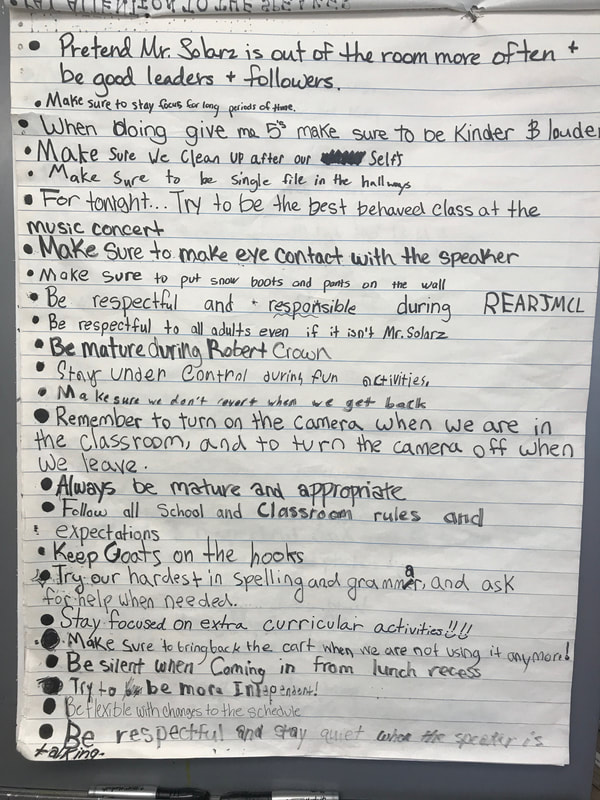
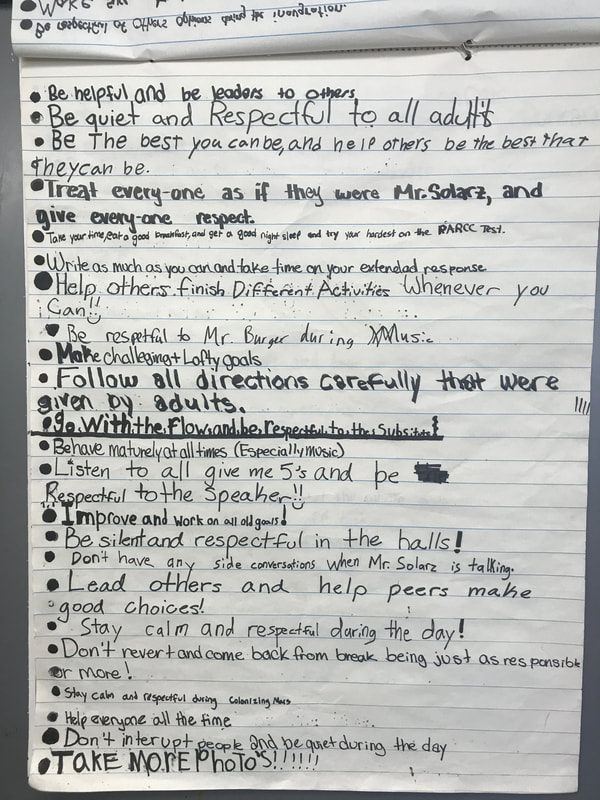
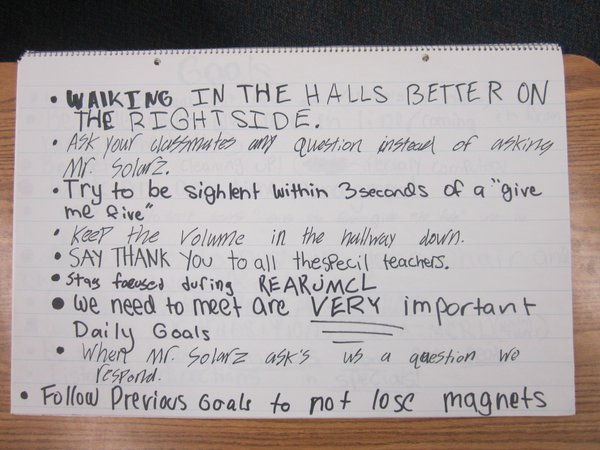
  • In addition to individual goals, students also form whole-class goals each day during Evaluate in REARJMCL:
Picture
Picture
Picture
Picture
Picture
Picture
Picture
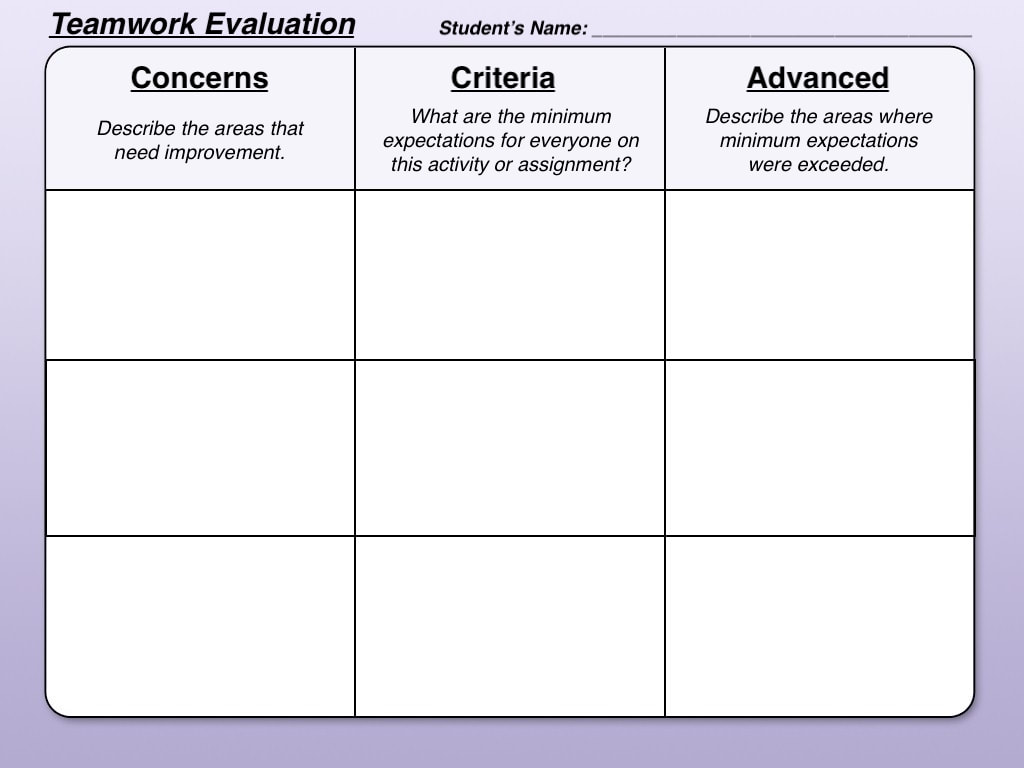
  • Whenever possible, I like to have students develop our rubrics for upcoming projects or activities. Here is an example of one we did for our KinderPals on the topic of TEAMWORK. (I prefer to use a SINGLE-POINT RUBRIC rather than more traditional style rubrics. This matches my improvement-focused philosophy more closely than traditional rubrics which focus on a grade.
  • At the beginning of the year, I had my math class set goals for themselves that would address many of the challenges that are typical in math class. We sat down together on the floor and had a classroom meeting where we worked together to write goals for ourselves that ensured we would have a great year together!
Picture

Evidence from Earlier Years:

Assessment can be tricky for many reasons, and because of this I have chosen to move into an ePortfolio system for much of my assessment.

By using ePortfolios, students have the opportunity to take things as far as they want, to revise blog posts with or without assistance, and to choose web tools that make the most sense for them and for the assignment.

Since ePortfolios are online, I am able to assess their progress on a daily basis from home or school, students can write comments to help with revision & improvement, and it provides a much larger authentic audience than a worksheet or test!

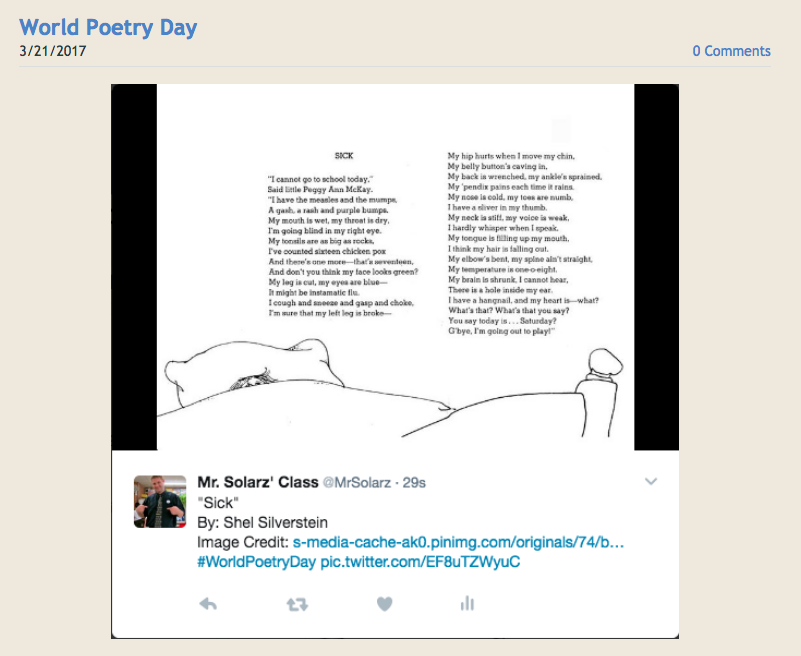
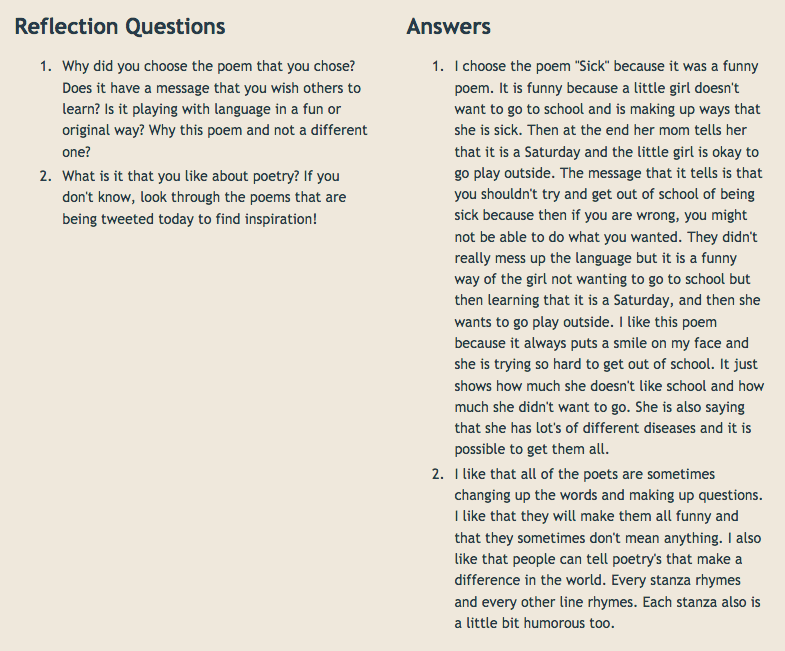
Because students can take each assignment as far as they want or can, differentiation is often natural and only requires some nudges and coaching. On the right, is a sample blog post by Abby. The assignment asked students to find a poem that they enjoyed, share it on Twitter on #WorldPoetryDay and answer a couple questions about it.

As for students who need additional support, I provide lots of feedback both verbal and written to all of my students. I provide time in class and during Homework Club (before school and during lunch recess) for students to make revisions. I encourage parents to help where they can, and I see tremendous growth over the course of the year in all of my students.

On the right is one of our blog feedback sheets that students receive each trimester. Students get a blank version of this sheet when I cut off grades for the trimester. One week later, I grade their blog posts and fill out the sheet. I give it to them and they have 1-2 weeks to make revisions (this is beyond the feedback they receive all trimester). At that point, I grade the ePortfolio entries one more time and students get two grades on the report card:
  1. Blogs BEFORE feedback
  2. Blogs AFTER feedback

This information can also be found on our website all trimester long here.

This system of blog posts also helps me ensure that I assess & document all standards and objectives in at least science and social studies. Other subjects are often done in other ways:
  • Math: I teach a skill, check for understanding, give feedback as students practice their work, and end units with formal assessments that get documented. Students receive daily one-on-one feedback on their class work and homework (if it applies).
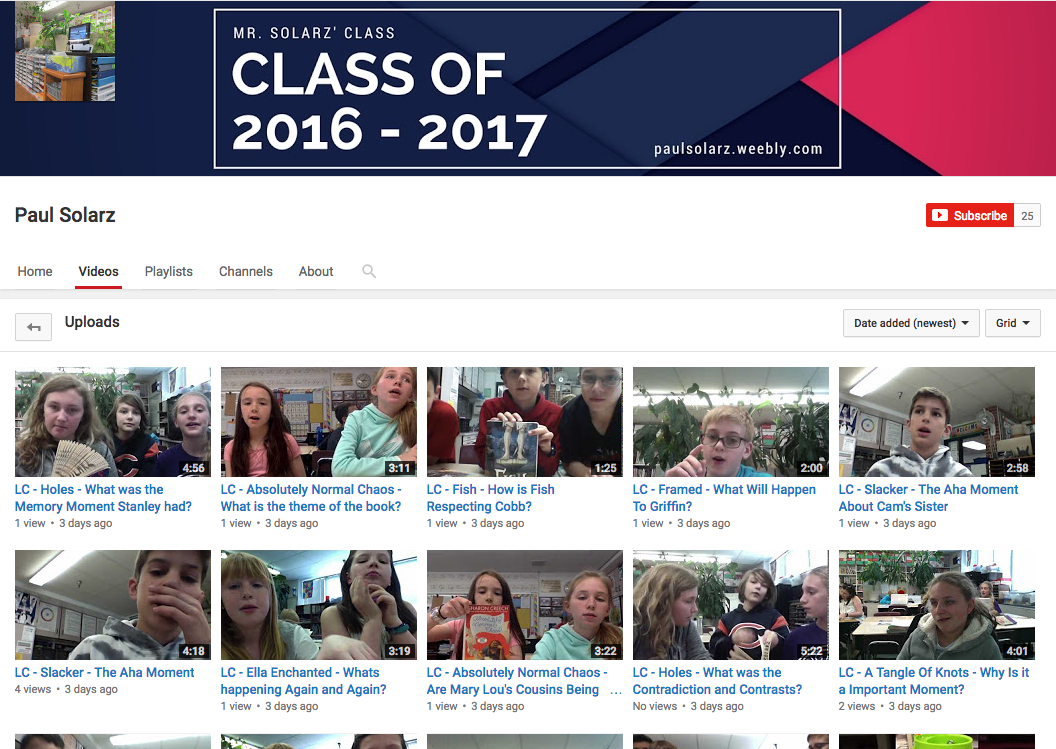
  • Reading: I teach lessons (usually as mini-lessons during Literature Circles, but also as independent lessons), have students make final products whenever possible (sometimes reflections or examples), have students record videos during their reading that demonstrates understanding of a standard or objective, and I give them feedback on their work. It gets documented on each report card and comments section.
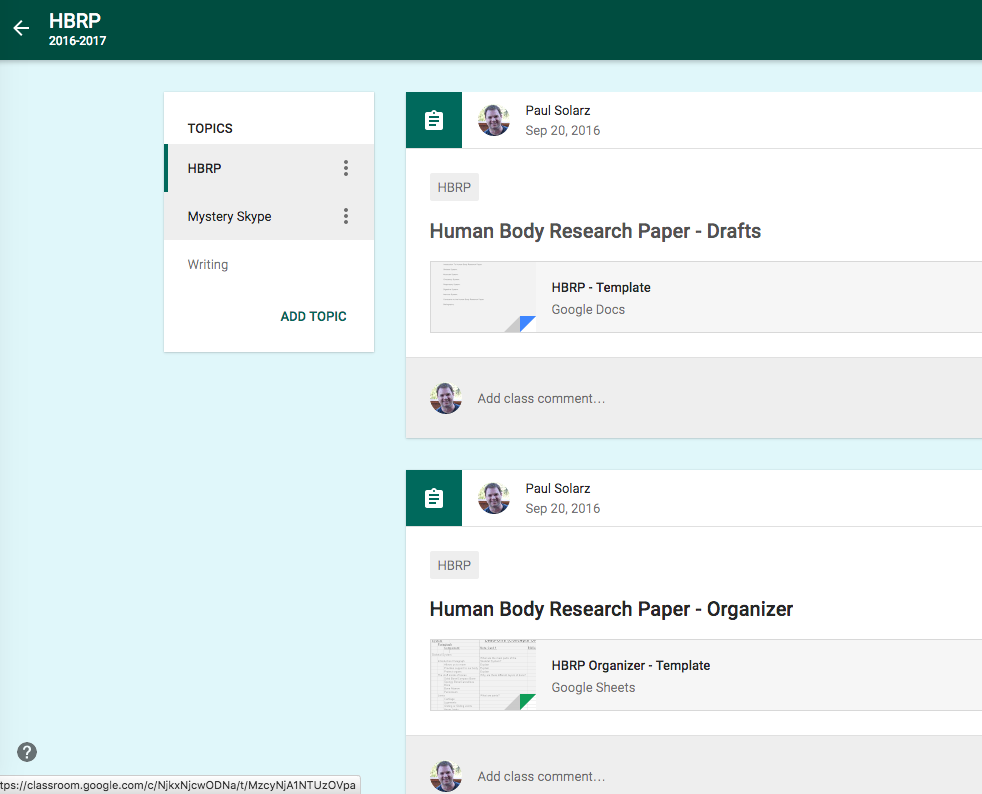
  • Writing: I use Google Classroom or Doctopus to distribute Google Docs to students, occasionally provide organizers to help them structure their writing, teach lessons & provide feedback to students as they write. Each student is given writing goals that meet their own personal needs and everyone is challenged to improve their writing every day!
Formative assessment is being used constantly in our classroom because feedback is my major focus as the teacher, while my students' main focus is improvement.

Formative assessment allows me to get an idea of where my students are as an entire class, helping me make decisions on what to do next in my instructional path. Formative assessment also helps me identify which students will need more support moving forward and which ones need enrichment and encouragement to challenge themselves further!

On the right is one way I conduct formative assessment in my class. It's a Google Sheet created by a Google Form that students fill out. The form has multiple long-answer questions on it that help me determine where students are academically, socially, and behaviorally in class. Based on this data, I make important decisions as I move forward with my teaching.

Of course, the main ways that I use formative assessment in my class is through observation. I sit with my students and walk around the classroom as they work each day. I listen to their words and anticipate misunderstandings and misconceptions. I determine if peer assistance is all that's needed (which is sometimes the case) or if I need to intervene. Many times, I will use this opportunity to do a "Give me five!" and give the feedback to the entire group so various students don't repeat the same mistakes.

My students track goals (some made by me, but many more made by them). We do so on a form at the right and we do this every week for 30 minutes. Students see tremendous growth in academic, social, and behavioral areas throughout the year due to this process!

My students also evaluate each day by discussing what went well and what needed improvement. They set a whole-class goal for the next day and work hard to ensure that goals is met. We do this during REARJMCL, the last 20 minutes of our day. This time includes time to write down any homework, gather our mail and materials, and do our classroom jobs. This time is completely student-led and is a sight to see! An example of some of our daily whole-class goals is on the right.

In addition to creating a whole-class goal, students also evaluate their progress towards goals that have been somewhat elusive! We have a rubric that we use nearly every day where students self-evaluate our class' achievement with regard to each task. Whenever the "Evaluator" disagrees with the majority of students on a grade, they ask for evidence to support their claim. This is an outstanding process that improves students' perspective of reality, self-assessment skills, and metacognition skills. It takes most of the year to make real gains, but it is undeniable when you watch them in the spring! Although the checklist changes every few months, there is one to the right you can check out.

Reflection and Synthesis is a main goal of ours all year long. I teach these skills in many ways, but one great resource I found is on the right.

Students are asked to reflect and self-assess on all assignments they complete either formally or informally. Some of the expectations are given, while others are left up to the student to decide.
Picture
Picture
Picture
Picture
Picture
Picture
Picture
Picture
0 Comments


Leave a Reply.

    Domain 1: Planning and Preparation

    Instructional planning includes a deep understanding of content and pedagogy and an understanding and appreciation of the students and what they bring to the educational encounter. But understanding the content is not sufficient; the content must be transformed through instructional design into sequences of activities and exercises that make it accessible to students. All elements of the instructional design – learning activities, materials, and strategies –must be appropriate to both the content and the students, and aligned with larger instructional goals. In their content and process, assessment techniques must also reflect the instructional outcomes and should serve to document student progress during and at the end of a teaching episode. Furthermore, in designing assessment strategies, teachers must consider their use for formative purposes, and how assessments can provide diagnostic opportunities for students to demonstrate their level of understanding during the instructional sequence, while there is still time to make adjustments.

    Archives

    March 2019
    January 2019

    Categories

    All

    RSS Feed

Powered by Create your own unique website with customizable templates.