What's going on in Mr. Solarz' Class?
What's going on in Mr. Solarz's Class?
  • Parents (Newsletter)
    • Our Online Photo Album >
      • 2018-2019 Photo Album
      • 2017-2018 Photo Album
      • 2016-2017 Daily Photo Journal
      • 2016-2017 Daily Photo Journal - Album 2
      • 2015-2016 Daily Photo Journal
      • 2015-2016 Yearbook
      • 2014-2015 Daily Photo Journal
    • Our YouTube Channels >
      • 2018-2019 YouTube Channel
      • 2017-2018 YouTube Channel
      • 2016-2017 YouTube Channel
      • 2015-2016 YouTube Channel
      • 2014-2015 YouTube Channel
      • 2013-2014 YouTube Channel
      • 2012-2013 YouTube Channel
      • YouTube videos over the years
      • Learn Like a PIRATE videos
    • Calendar
    • Our Weekly Schedule
    • FAQ about our classroom
    • Curriculum Night Presentation
  • Educators
    • Danielson Framework >
      • Domain 1 - Planning & Preparation
      • Domain 2 - Classroom Environment
      • Domain 3 - Instruction
      • Domain 4 - Professional Responsibilities
      • Professional ePortfolio
      • Instructional Coach Evidence
      • Experience Logs
    • FAQ about our Classroom
    • Workshops
    • Our Classroom Library is for Sale
  • Curriculum
    • Science Units >
      • 5th Grade >
        • Human Body Unit >
          • Human Body Links
        • Ecosystems >
          • Ecosystems - Legends of Learning
        • Watery Earth >
          • Watery Earth Links
        • Earth in Space
        • Investigating Matter
      • 4th Grade >
        • Energy >
          • Energy Unit Notes
          • Energy Debates
          • Energy Debate Organizers
        • Our Geosphere
        • Waves
      • Science Fair
      • STEM Investigations!
      • Try Engineering Together
    • Social Studies Units >
      • 5th Grade >
        • Revolutionary War >
          • Liberty's Kids Videos
          • Revolutionary War Hero Project >
            • RWHP Directions
        • U.S. Constitution & Government >
          • Mini Lessons
          • Colonize Mars! >
            • Claiming Mars for Ourselves >
              • 2017-2018 Creating our Country on Mars
              • 2016-2017 Mars Decisions
              • 2015-2016 Claiming Mars for Ourselves
              • 2014-2015 Claiming Mars for Ourselves 2015
            • Solutions to Problems on Mars >
              • 2017-2018 Our Solutions to Problems on Mars
              • 2016-2017 Problems & Solutions
              • 2015-2016 Our Solutions to Problems
              • 2014-2015 Our Solutions to Problems
            • 2014-2015 "Mission: Mars" Video Discussions 2015
          • Project Citizen
        • Westward Expansion >
          • Oregon Trail Simulation
          • Oregon Trail Readings
          • Reflection Rotation >
            • 2017-2018 Reflections >
              • ThingLink Photo Stories
              • Green Screen Tableaux Vivants
              • Fictional Travel Blog
              • Canva Concept Cards
              • YouTube Newscasts
              • Google Slide Show
              • Daily Travel Blog
              • Act-It-Outs
            • 2016-2017 Reflections
            • 2015-2016 Reflections >
              • Voki Reflections >
                • Voki Blog
            • 2014-2015 Reflections >
              • Act-It-Outs
              • Timeline Spreadsheet
              • Newscasts
              • ThingLink >
                • ThingLink Images
                • Sign up for ThingLink
              • Google Slideshow
              • Fictional Travel Log
              • Daily Travel Log
              • Tableaux Vivants
              • Photo Stories
      • 4th Grade >
        • Geography
        • Explorers
        • Native Americans
        • Colonization
        • State of Sustainability
      • Presidential Election Simulation - 2012 >
        • Presidential Election Simulation - 2016
      • Current Events
    • Reading >
      • 5th Grade Units >
        • Literature Circles >
          • Literature Circles >
            • Video Discussions
          • Literature Circles >
            • Video Discussions
            • Activities
        • Schoolwide Launch
        • Schoolwide Fiction
        • Schoolwide Non-Fiction
        • Schoolwide Ecosystems
        • Schoolwide Poetry
        • Wonder >
          • Wonder
        • The Phantom Tollbooth >
          • Phantom Tollbooth Assignments
      • 4th Grade Units >
        • Schoolwide Launch
        • Schoolwide Fiction
        • Schoolwide Non-Fiction
        • Schoolwide Poetry
        • Schoolwide Energy
    • Writing, Spelling & Grammar >
      • Writing >
        • Writing City
        • WEX
        • WriteAbout
        • Reflection Writing
        • JoonBugz
      • Spelling >
        • Words Their Way
      • Grammar >
        • Grammar
    • Math >
      • Money Island
      • Math in Focus
    • Miscellaneous >
      • Activities >
        • Short-Term Projects
        • Challenges!
        • Special Events
        • Projects & Mini Lessons
        • Bonus Activities
        • Miscellaneous >
          • Honor Badges
          • Growing a Growth Mindset
      • Imagination Club >
        • Schedule
        • Daily Ritual
        • Mini-Lessons
        • Photo Journal
        • Student Creations Round 1
      • Mystery Skype
      • Entrepreneurship Unit >
        • Entrepreneurship - Creating Our Own Businesses!
      • Self-Reflection
      • KinderPals
  • Student ePortfolios
    • 2018-2019 ePortfolios >
      • Students 1-7 >
        • 1 - Isabel
        • 2 - Alexis
        • 3 - Oscar
        • 4 - Adrian
        • 5 - Edy
        • 6 - Matthew
        • 7 - Molly
      • Students 8-14 >
        • 8 - Joey
        • 9 - Jeremiah
        • 10 - Emmalina
        • 11 - Sama
        • 12 - Hazel
        • 13 - Nick
        • 14 - Filip
      • Students 15-21 >
        • 15 - Nellie
        • 16 - Landon
        • 17 - Molly
        • 18 - Harrison
        • 19 - Kali
        • 20 - Inti
        • 21 - Ryan
        • 22 - Pavel
      • Blog Assignments
    • 2017-2018 ePortfolios >
      • Students 1-9 >
        • Elle
        • Daniel
        • Tommy
        • Alyssa
        • Gavin
        • Milosz
        • Mikey F
        • Caitlin
        • Brynna
      • Students 10-17 >
        • Kya
        • Olivia
        • Ian
        • Colin
        • Owen
        • Gianna
        • Isabella
        • Carmen P
      • Students 18-25 >
        • Lucy
        • Caleb
        • Mikey S
        • Wes
        • Martin
        • Will
        • Shaun
        • Carmen W
      • Blog Assignments
    • 2016-2017 ePortfolios >
      • Students 1-8 >
        • Hailie
        • Jody
        • Madison
        • Dylan
        • Calvin
        • Connor
        • Louisa
        • Harvey
      • Students 9-16 >
        • Anna
        • Jack
        • Ben
        • Elijah
        • Catelyn
        • Cole
        • Abby
        • Ashley
      • Students 17-23 >
        • Charles
        • Michelle
        • Charlie
        • Daniel
        • Sam
        • Chingoon
        • Kyren
      • Blog Assignments
    • 2015-2016 ePortfolios >
      • Students 1-9 >
        • TJ
        • JJ
        • Bridget
        • Alex
        • Mason
        • Ryan
        • Lucas
        • Shreya
        • Logan
      • Students 10-18 >
        • Charlotte
        • Addie
        • Aidan
        • Andrew
        • Jeremy
        • Rachel
        • Russell
        • Addy
        • Cassidy
      • Students 19-26 >
        • Audrey
        • Regan
        • Giuliana
        • Brady
        • Stephen
        • Matthew
        • Ben
        • Tyler
        • Thomas
      • Blog Assignments
    • 2014-2015 ePortfolios >
      • Students 1-7 >
        • 1 - Michael
        • 2 - Charlie
        • 3 - Nicole
        • 4 - Stacy
        • 5 - Bela
        • 6 - Kendall
        • 7 - Demetri
      • Students 8-14 >
        • 8 - Emily
        • 9 - Nicky
        • 10 - Hanna
        • 11 - Payton
        • 12 - Hasanain
        • 13 - Tucker
        • 14 - Chris
      • Students 15-21 >
        • 15 - Madi
        • 16 - Aidan
        • 17 - Luke
        • 18 - Kaela
        • 19 - Ryan
        • 20 - Alison
        • 21 - Lucas
      • Blog Assignments
  • Passion Time
    • Passion Time Resources >
      • ALL Passion Time Resources
      • Step-By-Step Directions
      • Submit Your Essential Question
      • Our Trello Page
      • Our Passion Projects over the years
      • Our Trello Board
      • SAMPLE Blog Post Format
      • YouTube Upload Page
      • Mini-Lessons
    • 2018-2019 Projects >
      • Round 1
      • Round 2
      • Round 3
      • Round 4
    • 2017-2018 Projects >
      • Round 1
      • Round 2
      • Round 3
      • Round 4
      • Round 5
    • 2016-2017 Projects >
      • Submit Your Essential Question
      • Mini-Lessons
      • Round 1
      • Round 2
      • Round 3
      • Round-4
      • Round 5
      • Round 6
    • 2015-2016 Projects >
      • Round 1
      • Round 2
      • Round 3
      • Round 4
    • 2014-2015 Projects >
      • Round 1
      • Round 2
      • Round 3
      • Round 4
      • Round 5
      • Round 6
  • Student-Led Classroom Info
    • Our Learning Experiences
    • 21st Century Skills
    • Whole Class Goals
    • Individual Goals
    • Classroom Jobs
    • Collaborative Responsibilities
    • Rituals & Routines
    • Uses of "Give Me Five"
    • Student-Led Mini-Lessons
    • Lit Circle Signposts
    • Mystery Skype Jobs

Money Island and Vault Reflection

5/29/2018

0 Comments

 
Picture
0 Comments

Oregon Trail Reflections

5/25/2018

0 Comments

 
Picture
This leads to the blog post above
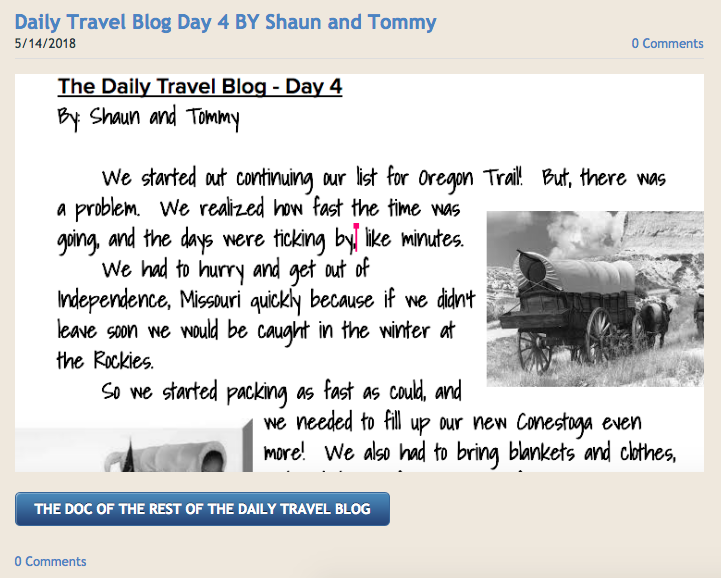
I think Tommy and I did well on our Travel Blog.  I think we did well because we included everything that happened today and we were sure to make it detailed.
Picture
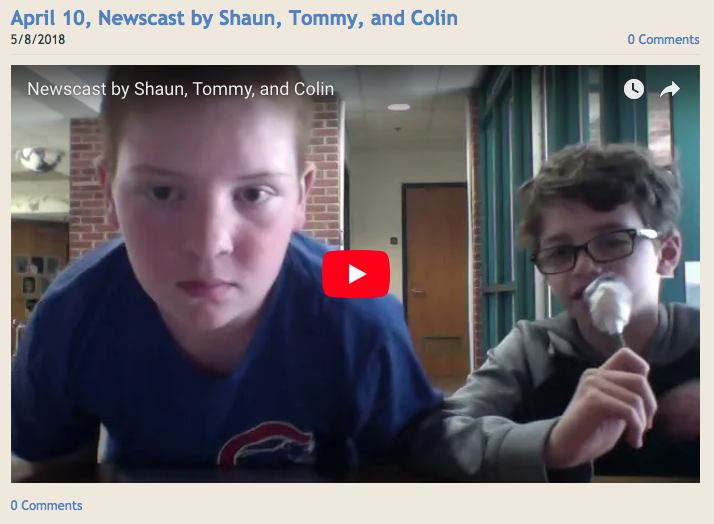
THIS LEADS TO THE BLOG POST ABOVE
I think that our group did well on this video.  First of all, we were able to explain everything!  Not just one thing, but all of it.  Also, with props and news voices, we were able to have a great time, which is really important.
Picture
THIS LEADS TO THE BLOG POST ABOVE
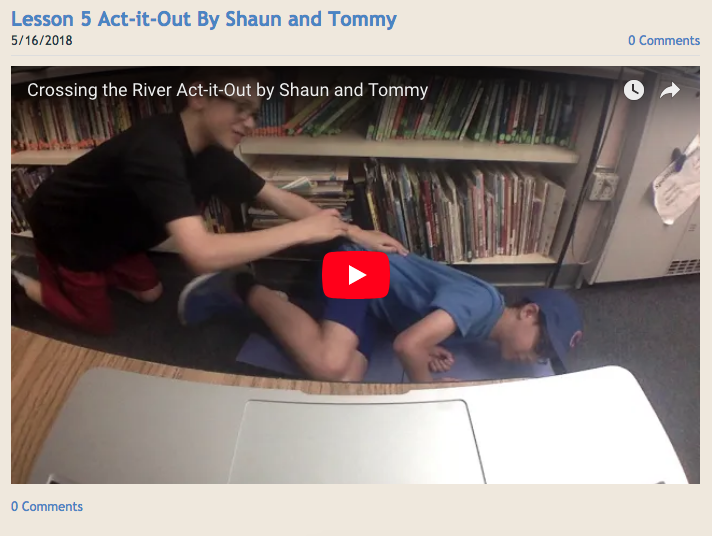
I think our group did well on this project.  We showed (in the video) big important parts that happened in the Oregon Trail.  We had a really fun time when we acted out our wagon sinking in the river, which was good.
0 Comments

KinderPals Reflection

5/22/2018

0 Comments

 
  1. What is the KinderPals Program?
  2. In what ways do you think the program benefits the kindergartners? Try to explain several with support.
  3. Why is the KinderPals program beneficial to 5th graders? Believe it or not, you should be getting something out of the program as well!
  4. What challenges did you experience in KinderPals this year?
  5. What improvements could be made to the program for next year?
  6. Do you think the kindergartners enjoyed the stories from Peekapak? Why do you think that? Do you have any evidence to support your answer?
  1. The KinderPals Program is when the 5th graders meet with the kindergarteners and teach them lessons.  Peekapak.com is a site we use to share stories with the kindergartener and it makes them very interested.  We teach them life lesson like being honest and more.
  2. The goodness they get from this program is the lessons and stories they hear.  We, the fifth graders, tell them stories and read stories from peekapak.com, which allows them to really think of what is right.
  3. It allows us to also learn.  We may know a lot, but we actually realize things to about the stories we hear.  Also, we become better planners because we plan all the time before we meet with the kindergarteners.  We also become patient with our buddies.
  4. It was a little hard not to make it boring for the Kindergartener.  Sometimes he would zone-out and we would have to get back in focus.
  5. I think the program needed more reflection on the Kindergartener.  It is good for them to think about THEIR past experiences because it get them to think  of what is right and what is wrong.  It gets them to think if they made the right choice or lied and how it would make others feel.
  6. I think they do like the stories.  My buddy was so tuned in on the stories and he was able to answer questions.  He loved how the character acted because he could sometimes relate to them.
0 Comments

Testing Plant Growth

5/14/2018

0 Comments

 
Picture
Picture

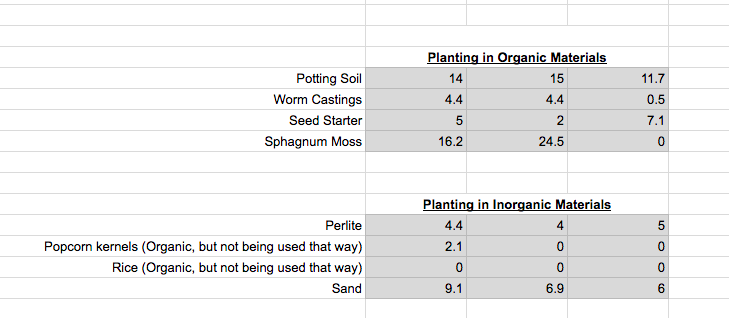
Independent Variable ​

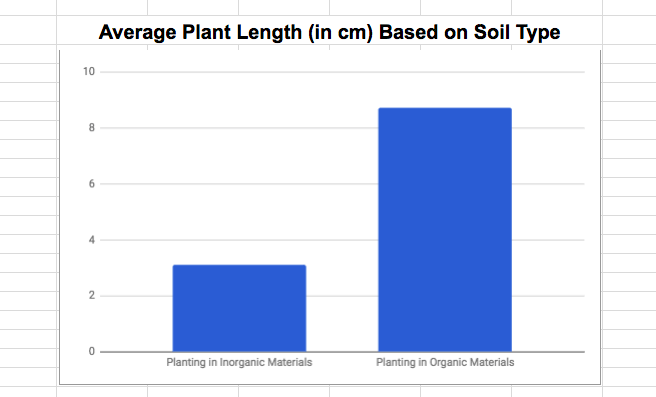
  • Plant seeds in different kinds of soil (e.g. potting soil, perlite, sand, etc.)

Dependent Variables ​

  • Measure the height of each plant at certain checkpoints.

Evidence​

  • We can record our data using measurements (in cm).
  • ________________________

Reflection/Synthesis

  1. Name your Control Variables (What will stay the same for each of the three cups)?
  2. Name the Independent Variable (What is it that is different for each of the three cups)?
  3. Name your Dependent Variable (What is it that you are testing & recording data on?)
  4. What data are you collecting to serve as Evidence to show how plants grow in organic material versus inorganic planting material?
  5. Why is everyone starting with the same three cups? Why do we need to test so many plants?
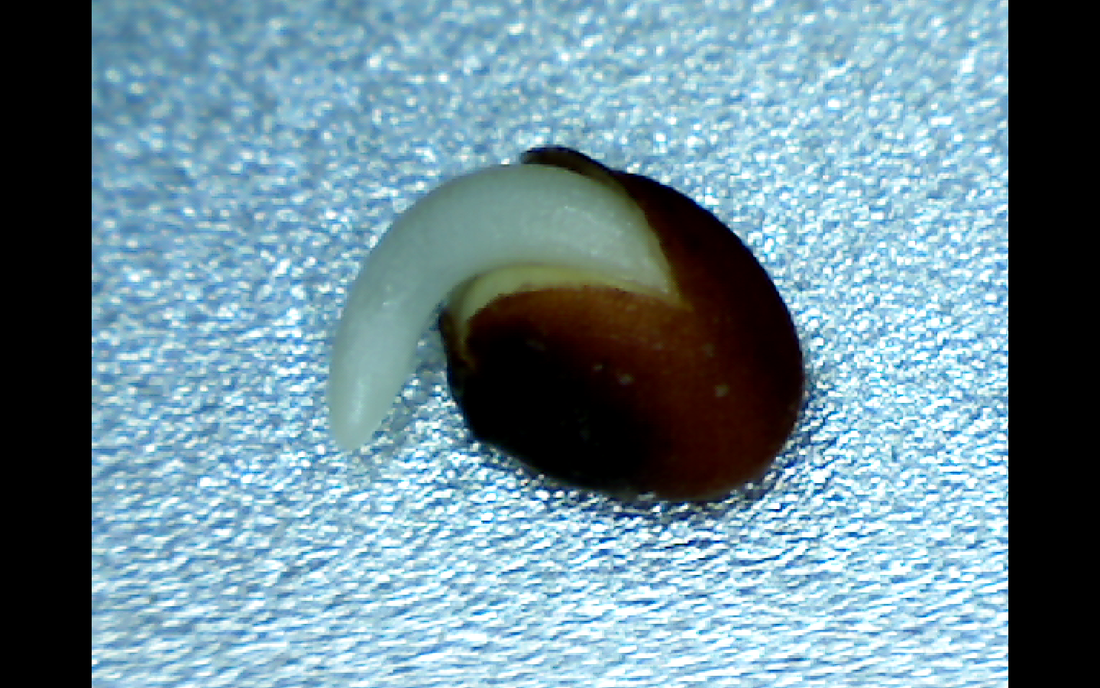
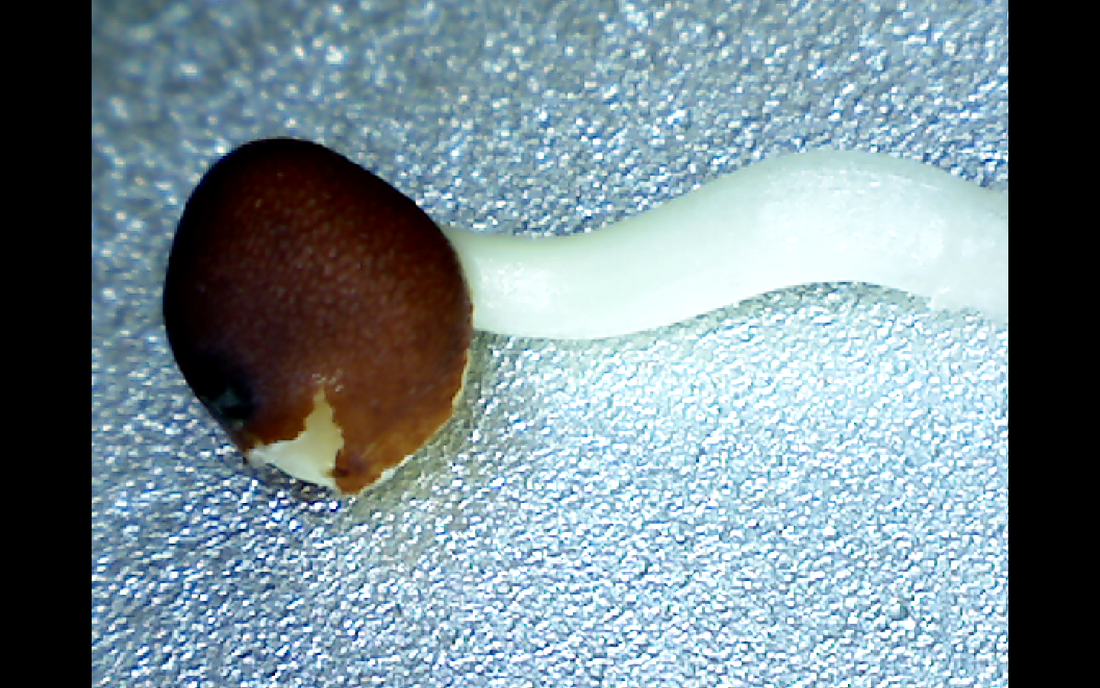
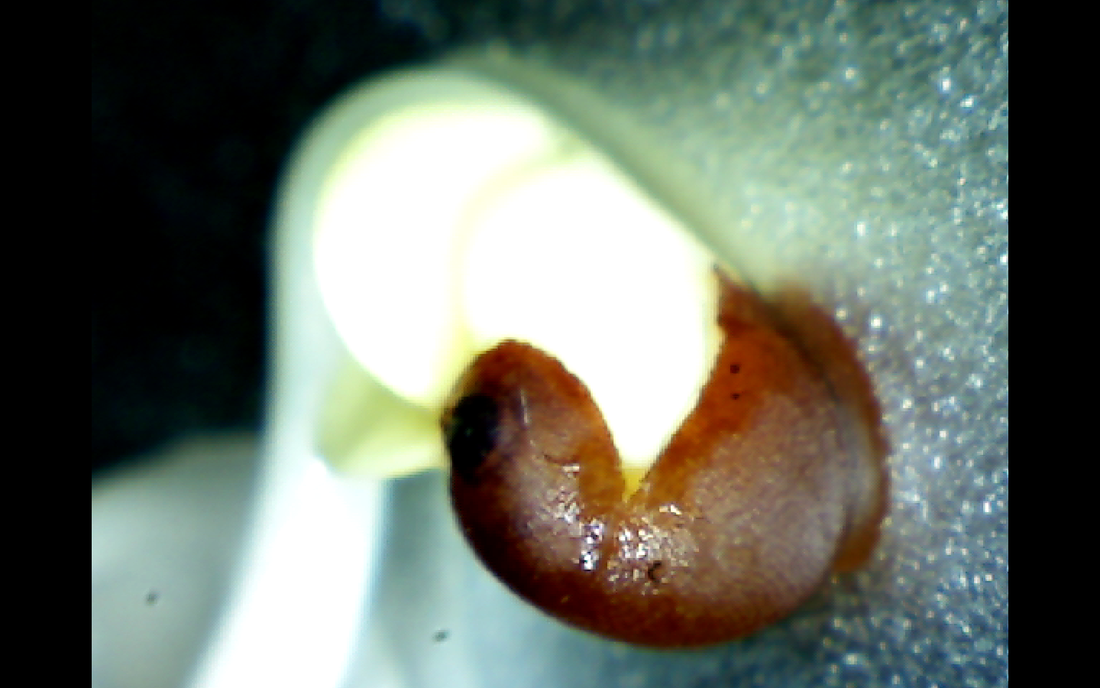
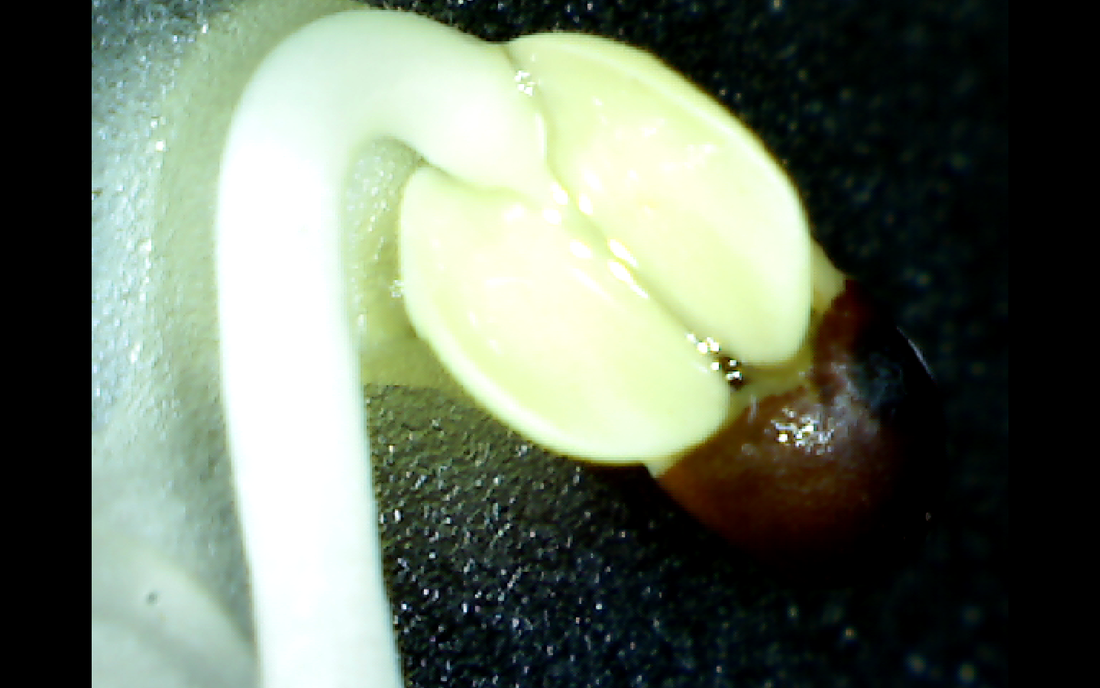
  6. What sprouts first in a seed: the stem or the root?
  7. How do you know? How do the pictures below help explain your answer for #6?
  8. Why do you think it goes in that order?
  1. How much soil is in it, how much water it gets, how much sunlight it gets, how much air it gets, how much carbon dioxide, and the container.
  2. Each three plants have different soil.  For example, one of the three might be sand, but the other could be rice.
  3. We are recording the plant length.  We will measure all the plants and compare them.
  4. We measured all the plants and compared them.
  5. In case something went wrong to one of the plants, we would have a more to compare to.  If there was one of everything, then everything would have to go right to make the table work.
  6. The root comes first.  It come first so it can find water to grow the stem.
  7. The pictures show how the line is white, which makes it a root.  It is also not straight up, instead it swirls around for water
  8. I think it goes in that order because the seed needs more water to grow.  Without that water the stem can't come up.
Picture
Picture
Picture
Picture
0 Comments

Plants As Producers

5/3/2018

0 Comments


 ​Reflection/Synthesis:

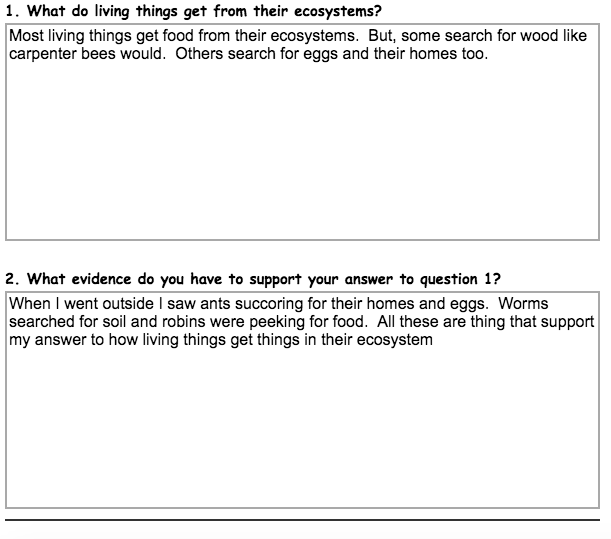
  1. Plants need energy and matter to grow. Where do plants get their ENERGY?
  2. Where do plants get their MATTER?
  3. Where do plants get their FOOD (be careful - this is a trick question)?
  4. Why are plants called Producers?
  5. What would happen if plants didn't have a way to get energy?
  6. What would happen to animals if there were no plants to eat?
  7. What are some of the LIVING components of a plant "system"? (A plant "system" is everything that a plant needs to survive and everything it produces.)
  8. What are some of the NON-LIVING components of a plant "system"?
  9. In what ways do the components of the system interact?
  10. What matter is transported in and out of the plant system?
  1. Plants get the energy they need to live and grow from the Sun.
  2. Plants take oxygen and water to make their own matter.  They start with matter for only a little bit of time, so they need to get more later.
  3. Plants use the sun as a way for food.  However, they don't eat the sun, they use the energy to make their OWN food!
  4. They are called producers because they produce their own food.
  5. They would not be able to produce their own food, making them die.
  6. The animals that eat plants would go hungry and die, along with the animals that eat those animals.  In other words, it would destroy food chains
  7. Nothing really is living, except the plant.  Also what eats the plant could be living too.
  8. What it produces is not living, neither the water, soil, the Sun, carbon dioxide, or oxygen it uses to survive.
  9. The animals interact by eating the plant.  Also, the plant interacts by drinking water, absorbing sunlight, living in soil, breathing carbon dioxide, and then produce air and photosynthesis.
  10. All the matter, such as water, soil, the Sun, carbon dioxide, and oxygen is used and transported by the plant.  But it comes out by becoming air or photosynthesis.
0 Comments

Players in an Ecosystem

4/23/2018

0 Comments

 
Picture
Picture
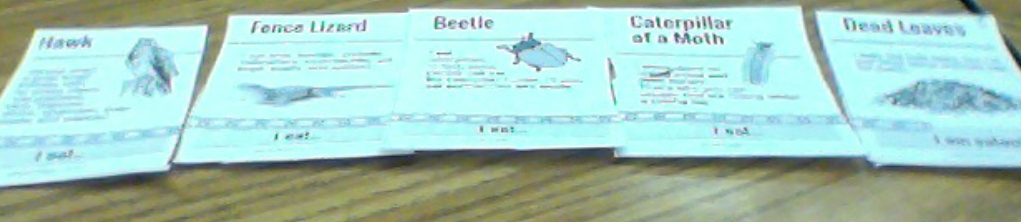
My longest food chain was Hawk eats Fence Lizard, Fence lizard eats Beetle, Beetle eats Caterpillar, and Caterpillar eats Dead Leaves.

Reflect & Synthesize:

  1. Choose one of your Food Chains that you created and explain how it works.
  2. Can a Food Web be considered a "system"? Why or why not?
  3. What happens if a plant or animal all of a sudden disappears from the food web?
  4. Using this food chain, "sunlight to apple to worm to bird to cat," How do organisms in this food chain get the matter they need for body repair and growth?
  5. Using the same food chain in #4, How do organisms in that food chain get the energy they need for body warmth and motion?
  6. What do you think happens to the matter that is NOT used by the organisms in a food chain or food web? Is it wasted or does something else happen?
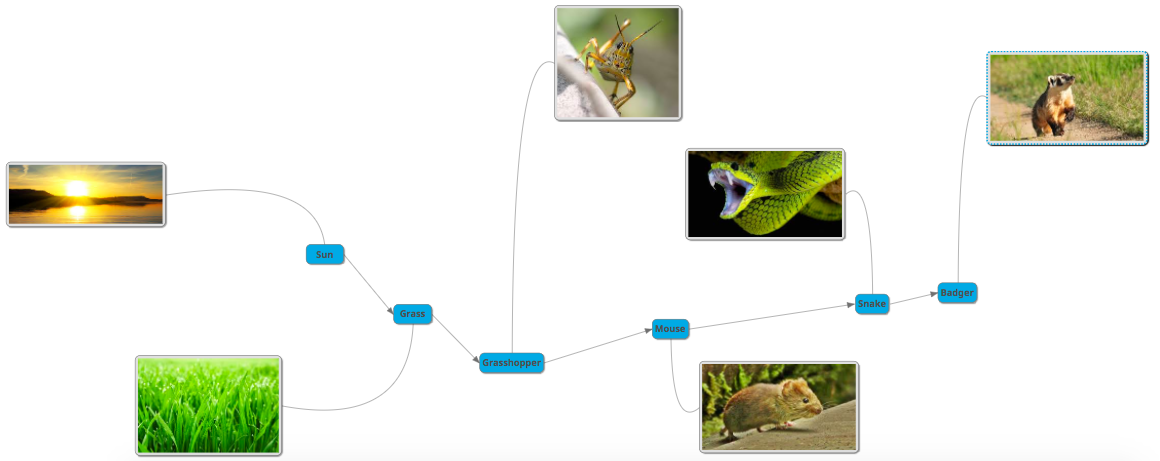
  1. The food chain that I choose is my Mindmup one.  The way my food chain works is how the energy is transferred.  First, grass absorbs sun, but then get eaten by a grasshopper.
  2. Yes, it is a system of how animals eat and survive.  It is also how they get matter and energy.
  3. Then the entire food web might die.  It would die because the (for example) rabbit won't have grass and would die, and that means the hawk would have no food.
  4. Because a apple has matter in it, as long as the food chain stays true and alive, then all the animals get the matter to repair their bodies.
  5. Because an apple has energy in it, the animals ALL get the energy they need to move around and stay warm.
  6. The plants and animals will die and become decomposed.  Then, the decomposers will use that source to live.  This can become another food chain.
0 Comments

Food - Matter and Energy

4/17/2018

0 Comments

 
Picture
Picture

Questions and Answers:

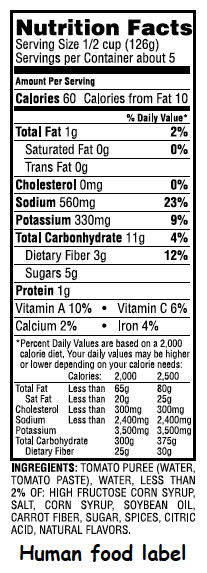
On the human food label:
  1. How do we find the energy (calories) per serving?
  2. How do we find the matter (carbohydrates, fats, proteins, vitamins, minerals)?
  3. Where can we locate the list of ingredients?

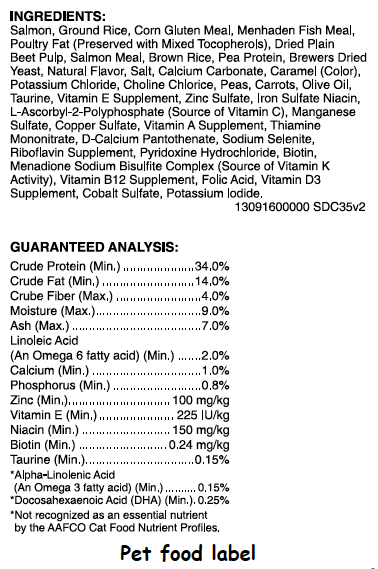
On the pet food label:
  1. Where can we locate the list of ingredients?
  2. How do we find the percentage of different types of matter in the food?
  1. As a result of looking at food labels, what did you learn about food?
  2. Look at the ingredients of one human food label. Write down the food name. What ingredients came from animals?
  3. What ingredients in the above food label came from plants?
  4. What similarities and differences did you notice between the human food and pet food labels you looked at?
  5. Choose an animal/insect from the ecosystem walk. What do you think it eats? Explain what you think it gets from its food.
For the human food label:
  1. At the very top, also right by the Nutrition Facts.
  2. In the middle, there is a big list.  The list contains all the vitamins, fat, and more.
  3. At the very bottom of the food label.

For the pet food label:
  1. Instead of on the very bottom, like the human food label, it is on the top.
  2. In the middle of the pet food label, it says, "Guaranteed Analysis".  Under it, it shows the percentage of different types of matter in food.
  1. I learned more how to read and understand the food label.  At first, I thought it was just a bunch of words, but now I know how to identify certain facts about foods I eat.
  2. The food name that I picked was, "String Cheese Mozzarella".  The milk in this food came from a animal, which was a cow.
  3. In the human food label I saw tomato puree, which comes from a plant.  I also, saw tomato paste as well.
  4. I noticed that both labels are measured in percents.  Also, both labels have types Vitamins in them.
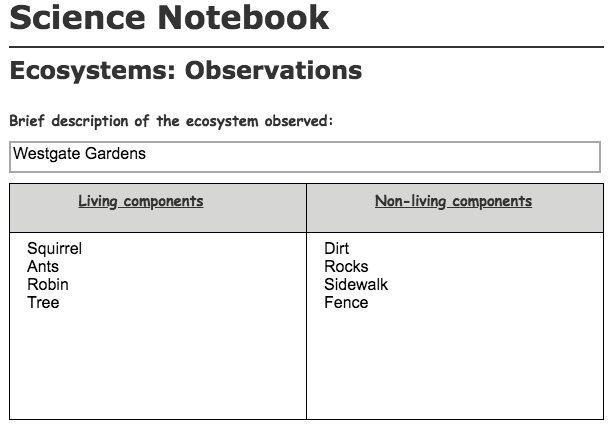
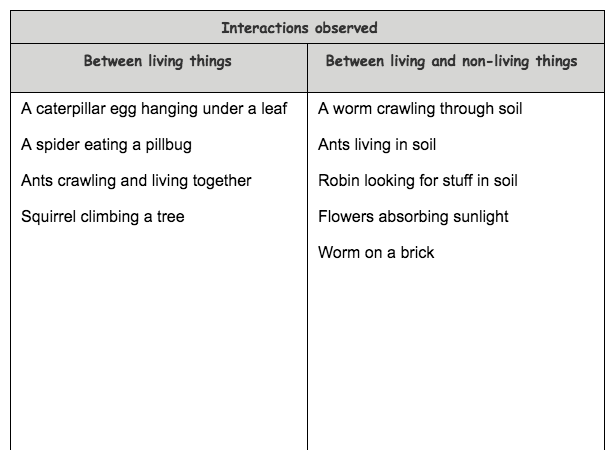
  5. My animal is a squirrel.  I saw it climbing a tree when we went on our walk and started to think about acorns.  When a squirrel eats a acorn, it may get matter and energy.

​Reflection/Synthesis Questions:

  1. What does food provide to animals, including humans?
  2. Do the pet food and human food have the same nutrients? In what ways are they different?
  3. Does a higher calorie count mean a food is better for pets to eat? What makes pet owners think that?
  4. What is it in food that helps us repair our bodies and grow?
  5. What in food helps us move and stay warm?
  6. In what way does energy transfer when animals eat food?
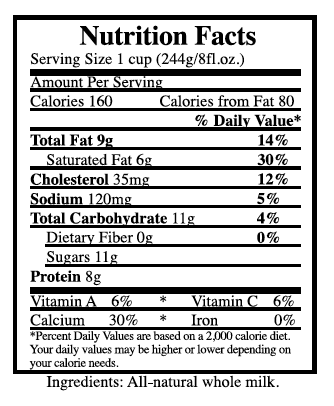
  7. Look at the nutrition label below for milk. How much energy is in the food?
  8. What matter is in the food?
Picture
  1. Food provides energy and matter, which allows us to do work.
  2. Both food labels have Vitamin C, which makes them similar.  But, the pet food label haves some Vitamins that are not on the human food label.
  3. Calories are good for pets to eat, but as long as it is from good food, not something like grass.  But, too many calories are bad for pets, especially fat.  Because of that, we need to make sure our pets do not have too much food, because that's not good for them.
  4. Fiber repairs our bodies when muscles tear.  They often tear when we grow, so fiber can help us grow.
  5. Energy is in food and hat helps our bodies stay warm and move around to do work.
  6. This happens in food chains.  For example, if a plant gets energy from the sun, but then gets eaten by a bunny, the plant's energy transfers to the bunny.
  7. The amount of energy can be measured by calories, which is 160 calories, plus 80 calories from fat.
  8. There are 244 grams of matter in one cup of milk (one serving).
0 Comments

Skills21 - Superhero Rehebilitation

4/12/2018

0 Comments

 
0 Comments

Money Island and Vault Reflection

4/10/2018

0 Comments


I was absent for this activity. 

0 Comments

What is an Ecosystem?

4/5/2018

0 Comments

 
Picture

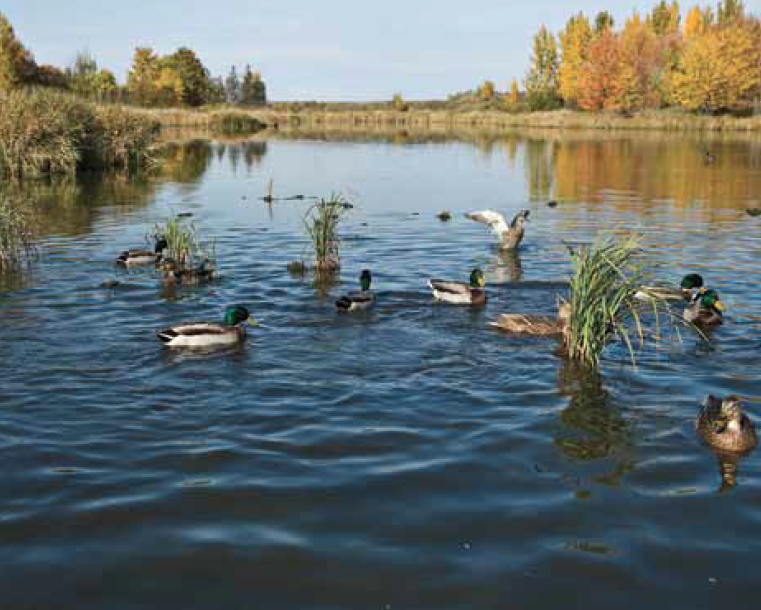
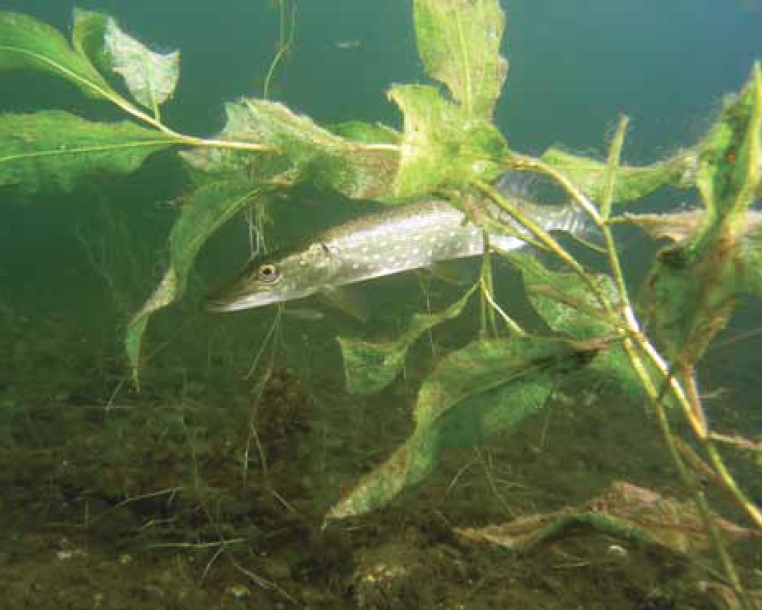
Lake Ecosystem INTERACTIONS

Within a system of living things

  • ​Ducks eat fish
  • Ducks eat bugs
  • Ducks eat plants
  • Some ducks live in families

Between living & non-living things

  • Ducks swim in water
  • Ducks breath in air
  • Plants absorb water
  • Ducks fly in the air
Picture

Lake Ecosystem INTERACTIONS

Within a system of living things

  • ​Fish eat plants
  • Fish hide in plants
  • Fish eat smaller fish
  • Fish eat worms

Between living & non-living things ​

  • ​Fish swim in water
  • Plants grow in the lake bed
  • Fish absorb water
  • Plants asborb the water that they in living in

​Reflection/Synthesis Questions:

  1. What kinds of living things (organisms) do you see in both pictures?
  2. What other living things might be here, even if you can't see them in the photos?
  3. Why might living things in these photos interact with each other?
  4. How do these pictures depict an ecosystem?

Answer

  1. I see fish and ducks living in the water.  Also, I see plants living in the water.
  2. There could be bugs we do not see and even parasites.  There could even be more fish.
  3. They would interact with each other to live or survive.  They also might be taking care of their family or their natural instincts would take control.
  4. The way living thing are living in an environment of non-living things.
Picture
Picture
Picture
Picture

More Reflection/Synthesis Questions:

  1. What does the term ecosystem mean, based on your experience in this lesson? (Don't use the definition from the BIG IDEA here. Put it into your own words.)
  2. Brainstorm at least one question you have about Ecosystems that you hope you learn from this unit.
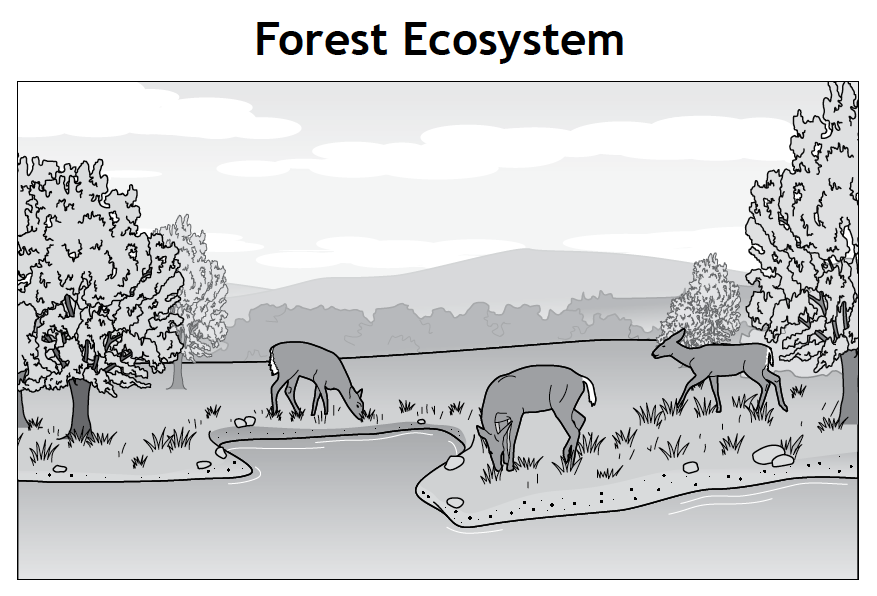
  3. Look at the image below that shows a portion of a forest ecosystem. Name at least five components (living or non-living things) of the ecosystem that you can either observe directly or infer. 
  4. What are three (or more) interactions that might occur in this portion of the forest ecosystem?
  1. I think that an ecosystem is something living interacting with a non-living thing.  For example, when a family of raccoons are living under a big rock, that can be called an ecosystem.
  2. My question is to learn more with plants and how they live in ecosystems.  I also want to know more about a fertilizer.
  3. There are deer living in grass, and by rocks and by trees.  I also see dirt/soil.
  4. I see a lake that might have fish swimming in it. There also might be birds in the sky and humans wandering around a path in the woods.
Picture
0 Comments

Student Led Conference - Winter, 2018

4/5/2018

0 Comments

 
Picture
0 Comments

21st Century Skills

4/4/2018

0 Comments

 
0 Comments

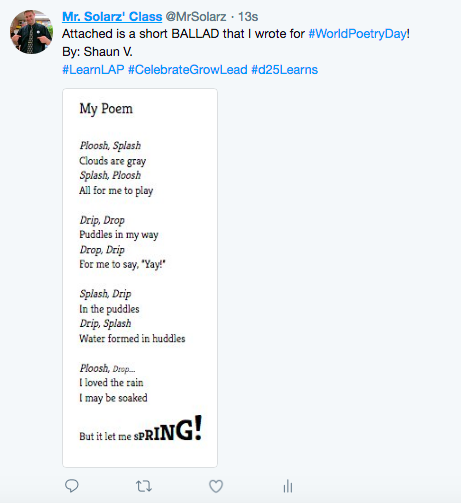
#World Poetry Day

3/21/2018

0 Comments

 
Picture
0 Comments

The Constitution of the Kingdom of Dustania

3/21/2018

0 Comments

 
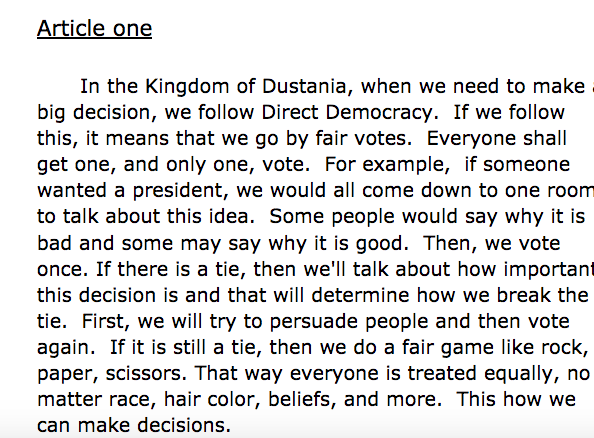
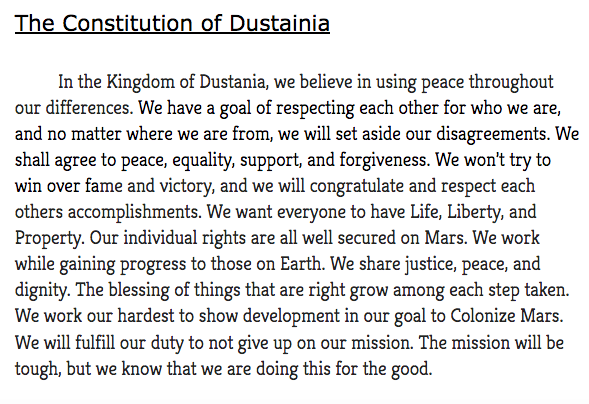
This is the doc of the Constitution
This button will show more of the Constitution of the Kingdom of Dustaina.
Picture
Picture
Picture

Reflection/Synthesis Questions:

  1. What was the hardest part of writing your preamble? Explain how you overcame that challenge.
  2. What is your favorite part of your preamble? Why is that part powerful and important?
  3. What is the purpose of a preamble in a constitution? What does it do?
  1. It was hard not to just jump around statements.  So we reread our preamble and make a list of ides to put them in the best order.
  2. I liked when we introduced our preamble.  It was powerful the way we stated peace.  Peace was powerful because it said throughout differences.  That way we don't argue when we decide something.
  3. The preamble states the purpose of the constitution. 
0 Comments

Common Core Discussions

2/28/2018

0 Comments


Character Comparison:
How are David and Jason similar and different? What evidence do we have to support our claims?

​Character Past:
How has Catherine Changed during the book? What evidence do we have to support or claims?

​Text-to-text:
In what ways are Rules and Wonder similar (two books)? What evidence do we have to support our claims?

​Character Trait:
What examples from the text are evidence that Catherine is embarrassed? (A character is a specific personality traits)?

​Inference with Evidence:
I think Ryan and Kristi became friends because of the way they are acting. Here's all my evidence.

​What's the theme?
Explain how specific moments in the text combine to create a moral or theme and describe that theme.

​Prediction with Evidence:
I think David will ruin the party because of how much Catherine is worrying. Here's my evidence.

​Responding to a Challenge:
How did Catherine respond to the challenge of regaining friendship with Jason?

0 Comments

Leadership Day, 2018

2/8/2018

0 Comments

 
Picture

Before Leadership Day

  1. If you could make more changes to your poster board, what would you do? Why?
  2. What aspect of your poster board are you most proud of? Why?
  3. How did your speech improve once you had given it several times?
  4. In your opinion, why did it improve?
  5. What do you hope people learned from your poster board and presentation?
  6. What did you do to try to ensure that they learned those things?
  7. What things were surprisingly easy for you today that you thought might have been harder?
  8. What things were difficult today. Why were they hard for you?
  9. What comments were people telling you about your message? What did they say that was meaningful?

After Leadership Day

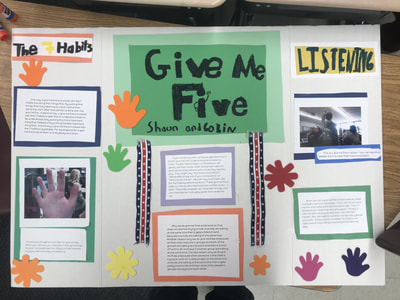
  1. I would add that anyone can do a give me five, but most importantly; I wanted to explain what a 10 min. give me five was and why we use them.  I think it is important because it helps clam us down.
  2. I am really proud of how it include almost everything that it needs to include.  I worked well with my partner and love it is not to crazy looking!
  3. I knew what to say without having to think as much first.  I was able to know what people would most likely be confused on something specific.
  4. I think it improved because all of the sudden I felt more comfortable because I knew what to say when they ask questions.  I could tell they understood questions better after a lot of people came.
  5. I hope they learned what a give me five is and why we use them.
  6. It was easy to explain to them if they were confused on something.  I could tell that after we explained something to them, they understood.
  7. It was easy for people to come over to my poster.  I thought I would only present to 5 people, but it ended up being much more!
  8. It was very hard not to interrupt my partner.  There were many times where I felt he could have said it differently, but I needed to keep my mouth quiet until he was done.  I know he said it fine, I just wanted to word it differently.
  9. They said it was cool that students use a give me five.

0 Comments

Global School Play Day 2018

2/7/2018

0 Comments

 
  1. Why does Peter Gray feel that children need more experience playing games without adult interference? (Remember: All answers need follow-up sentences! Your answer is always better by the 2nd and 3rd sentences!)
  2. How did you improve your creativity, improvisation, teamwork, and initiative skills today? If you don't know what some of these skills are, please ask me!
  3. Why should other teachers do Global School Play Day in their classrooms?
  1. Peter Grey felt that kids were forgetting how they used to play.  Kids used to play without their parents interferring or creating the rules.  Kids used to plan how they play, make up hand games, make up rules for their own games, and use pieces and other things from different games and creating their own game.  Peter feels that Global School Play Day should help remind kids how to make up their own fun games without needing the guidance of a parent.
  2. I am very good with my creativity skills and couldn't wait to test them out!  My partner(s) and I started to poke around the games until we found one that looked enjoyable.  Immediately, I started to see ways we could play and ended up improving my improvisational skills.
  3. Many kids would miss the reminder of Global School Play Day and keep following rules and playing video games.  It is important that we get this reminder because Global School Play Day is only celebrated once a year and kids will forget how they used to use their imagination to play.
0 Comments

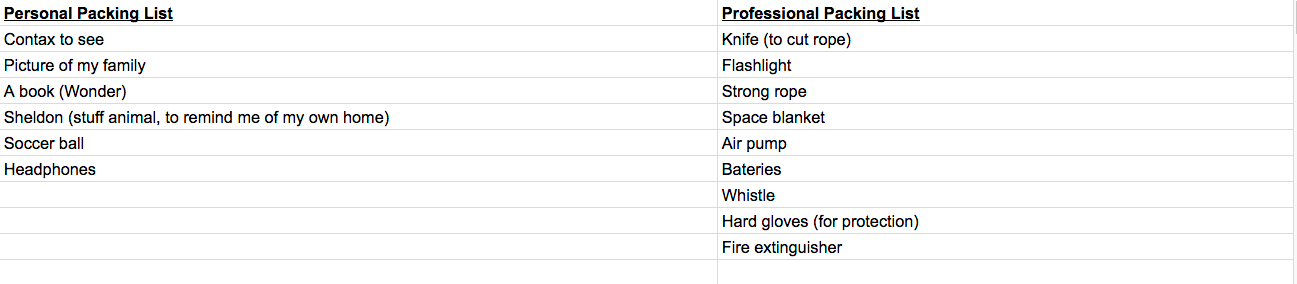
The Supplies I Get to Take With Me to Mars!

1/31/2018

0 Comments

 
Picture
0 Comments

Properties of Gases

1/25/2018

0 Comments


Reflection/Synthesis Questions: ​

​
  1. What did you learn about air in this session (that took a couple periods)? Hopefully, you learned at least three BIG IDEAS!
  2. What evidence do you have to explain the phenomenon that air takes up space (we didn't prove this in our video, but learned it in the first days of the lesson)?
  3. What evidence do you have to explain the phenomenon that air has weight? 
  4. When Mr. Solarz watches your video, will he be able to find problems with your "proof" that air has weight? Remember when we watched videos together as a class he mentioned a few ways teachers could trick their students - make sure you didn't use any trickery!

  1. I learned that gases actually have weight.  In addition, I learned how to prove that air has weight...through water and balloon experiments.  I also learned that air flows around us and does not follow the rules of gravity.
  2. If you have an empty balloon and a full balloon next to each other you realize that air takes up space.  The balloon with air is more full (bigger) than the other one.
  3. Because the yard stick is almost completely balanced and the balloons have almost the same amount of air in them, if you let one of the balloons leak you will see the other full balloon fall toward the ground.  This is because that balloon's air has more weight.
  4. Two ways that trickery could be used: if the string is not perfectly in the center of the yard stick and if the balloon was filled with helium.
0 Comments

If the World Were a Village

1/12/2018

0 Comments


Paragraph…

Imagine if the world were a village.  A village of a 100 people.  There are many things you do not realize that can occur in this village.  For example, in 2150, there will be too many people living in the village.  100 is the max, which means the world will be too small for all of us to live in and it surprises me because I never thought of our own world being too small to fit all the people in it!  This book talks a lot about things going around the world that we don't even realize.  It  takes the perspective of a world as 100 people and uses that as a way of counting people for religion, water we get, what we speak, and many more.  I think most of these are SUPER important to the world and the future.  A great example for this is that 62 people have access to have a place to put waste and garbage.  However, 38 do not, which can cause diseases and that upsets me because we all NEED somewhere to do this.  That is a good example because it describes how important the future is.  If we don't find a way to fix all the problems the book states, then our future could be in trouble.  Speaking of trouble, another problem we need to fix is that 87 people have access to safe water.  But, 13 do not and I wish this wasn't a problem because it is so important to get access to this or you could die.  Luckily, we can help because company's run charities that we can help to help end this!.  We need everyone to get safe, clean water and they should be able to get it easily.  I think that diseases are really important to consider, like when I talked about the waste not having a place to go to.  Another thing the book states about diseases is that ​68 people breath clean air.  32 people do not get good, clean which can cause diseases for people.  I think this book is a great example of how we need to take care of our planet because it gives you the perspective of a world of 100 people which makes you realize and consider problems that we face and will face in the future.

Notes:
  • Imagine if the world were a village of 100 people
  • In 2012 the population was 7 billion, 50 million
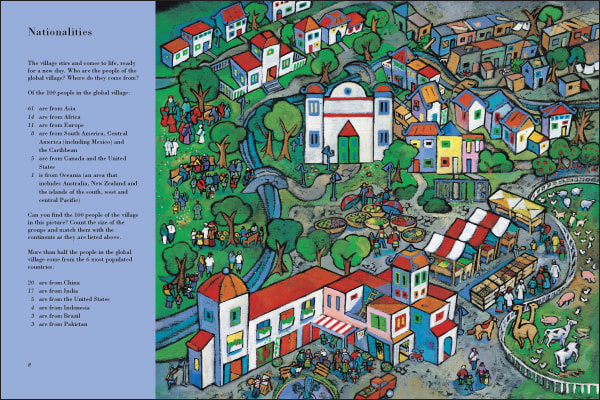
  •  In the village there are 60 people from Asia, 15 Africa, 11 people from Europe, 8 people from South America, 5 people from Canada and United States, and 1 person Oceania
  • Many people speak different ways.  Over half of the people in the world speak 8 languages.  21 speak Chinese, 9 speak Hindi, 9 speak English, 7 speak Spanish, 4 speak Bengali, 4 speak Arabic, 3 speak Portuguese, and 3 speak Russian.
  • 9 people are under the age 5, 10 are between 5-9, 18 are between 10 and 19, 17 are between 20-29, 15 are between 30-39, 12 are between 40-49, 9 are between 50-59, 6 are between 60-69, 3 are between 70-79, and only 1 is over 79.
  • Many people have religions.  33 people are Christians, 22 are Muslims, 15 are non-religious or atheist, 14 are Hindus, 9 practice shamanism, animism and other folk religions, 5 are Buddhists, 2 belong to other global religions such as Judaism, Confucianism, Shintoism, Sikhism, Jainism or the Baha'i faith.
  • 1 person used to have no religion, but now 15 people don't!
  • Many people eat different foods.  We use animals to produce food.  31 sheep and goat, 23 cows, bulls and oxen, 15 pigs, 3 camels, 2 horses, and 700 chickens-yes, there are seven times as many chicken as people in the global village.  Not everyone gets food though.  30 people in the village do not have a reliable source of food and are hungry some or all or all of the time.  17 people are severely undernourished and are always hungry.  47 of the people in the village do not have food security-they cannot always be sure they will have enough to eat.
  • 87 people have access to safe water.  But, 13 do not.  Mostly women and girls gather water.
  • 62 people have a access to have a place to put waste and garbage.  However, 38 do not, which can cause diseases.
  • 68 people breath clean air.  32 people do not get good, clean which can cause diseases for people.
  • Many kids get to go to school.  However, some do not and more males get to read than females.   36 kids are school-age kids, but only 30 kids go to school.  There is 1 teacher for these students.  6 kids who could be in school have to work instead.  3 do businesses and other jobs.  The other 3 kids are child laborers.  63 adults in the village could have jobs, but only 52 do.
  • If all the money was divid equally, everyone would get 10,300 dollar.  Out of the 100 people, 10 have 85 percent of the world's wealth.  The poorest 10 people each had less than 2 dollars a day.  They make 600 a year.  The people have a lot of possessions.  There are 50 radios, 45 television, 103 telephone (more than 86 are cellphones), and 28 computers.  There are also 2 trucks, 10 automobile, and 20 bicycles.
  • Many house have electricity.  76 people have electricity.  However 24 do not.  Out of the 76 they only use for night.  Long ago most of the energy source was wood.  73 percent of the electricity comes from fossil fuels, 17 from nuclear power, and 10 from renewable sources, such as wind and energy.
  • In 1850, an average baby was to live to be 38.  One big problem is malaria.  6% of our world gets it.  About 80 people have received vaccinations, which have helped.
  • In 1000 B.C.E, 1 person lived.  In 2012, 100 people lived in the village.  In 2150, there will be 250 people in the village living.  That is the maximum number.
Picture
0 Comments

Properties of Matter

1/11/2018

0 Comments


​Solids

Liquids

​Gases

  • Particles in solids don't move and don't fill a space-they always have a volume
  • Can always be seen, except for those that are too small or transparent for the naked eye.
  • Have a definite shape
  • Particles in liquids flow and fill the space they're in, following the rules of gravity-they have an indefinite shape
  • Can always be seen, except for those that are too small, transparent or when it's soaked into something for the naked eye
  • Assuming good health conditions, if you're trying to feel it, and there's enough of it, you can always feel liquids
  • Have a definite volume
  • Particles in gases flow and fill the space they're in, ignoring the rules of gravity-they have in indefinite shape
  • We can rarely see gases, except for the particles are big enough like steam and our breath in the winter
  • Have an indefinite volume
Picture
Snow under a microscope!
Picture
Water under a microscope!

Snow

Water

Air

  • Very white​
  • Very soft
  • Very cold
  • You can put your hand through it
  • Melts to water
  • You can pick it up with your hand
  • Takes up space
  • Can change states
  • Reflective
  • You can put your hand through it
  • Changes shape
  • Takes up space
  • Can change states
  • Transparent
  • You can put your hand through it
  • Takes up space
  • Can change states

  1. What unique properties can be used to identify a material as a solid?
  2. What unique properties can be used to identify a material as a liquid?
  3. What unique properties can be used to identify a material as a gas?
  4. ​​Do you think most solids we can see such as wood, rice, and flour could be divided into smaller and smaller pieces?
  5. Based on this information, what do you think solid matter is made up of?
  6. What do you think liquids and gases are made up of?
  1. Solids have a definite shape and volume.  You can normally touch it like you would with a brick.
  2. Liquid also has a definite volume, but have an indefinite shape.  Liquids are hard to pick up; If you do, it will most likely slip through your hands.
  3. Gases have both indefinite shape and volume.  Most gases are impossible to see, but some you can.  Gases also take up weight and space.
  4. Yes, most solids are able to be cut many times.  But, some are harder to cut than others.  For example; try to cut a sandwich in half, but then try to cut a brick in half!
  5. Solids are made up of matter that doesn't change shape unless a motion forces it to change shape.
  6. Liquids and gases are made up of matter that is constantly changing shape.
0 Comments

What is Matter?

12/14/2017

0 Comments


​Solids

​Liquids

Gases

  • Freeze Pop
  • Red Chair
  • Ball Chairs
  • Water
  • Ice Tea
  • Ink
  • Oxygen
  • Carbon Dioxide
  • Wind from fan
Picture
  1. What is YOUR definition of matter?
  2. Explain how you came up with that definition.
  3. Scientists define matter as...
​
  1. My definition of matter is that it is everything.  Besides anti atoms, everything is made up of atoms, which we call matter.  Matter is made into three parts: solid, liquid, gas, and plasma.  Therefore, matter is everything.
  2. I came up with this definition because Mr. Solarz told us that the 4 sections are all matter.  In fact, everything is matter.  So if I point to something, it's matter.  That is why everything is matter.
  3. Scientists define matter as three categories.  Solid, liquid and gas.  Plasma is not a main category.  Everything falls in these sections and are described as matter.
0 Comments

A Conversation with WriteSteps Teacher Mrs. Van Raden!

12/5/2017

0 Comments


Some of my GLOWS so far this year in writing include:
  • Using punctuation in my writing to get good sentences and no run-ons. 
  • Using voice in my piece.  I can translate into a different perspective.

Some of my GROWS so far this year in writing include:
  • I need to make my sentences more descriptive.
  • When I proofread, I shouldn't be finding SO many things to correct.

Notes on our conversation/Things I learned:
  • It takes about 6 hours to make a Write Steps video and the timing is very hard.
  • Mrs V. loves to write special things down to remember.
  • R.A.C.E. was a thing until Write Steps added S. for summary.
  • They love writing, it's their passion.

My contribution to the discussion:
I asked a lot questions and even answered some!  Here are some questions I've asked:
  • Did you come up with R.A.C.E.S?
  • Do you talk about different perspectives ever?
Here are some things I anserwed:
  • I have a glow to use punctuation and to use voice.
0 Comments

Student Led Conference - Fall, 2017

12/1/2017

0 Comments

 
Picture
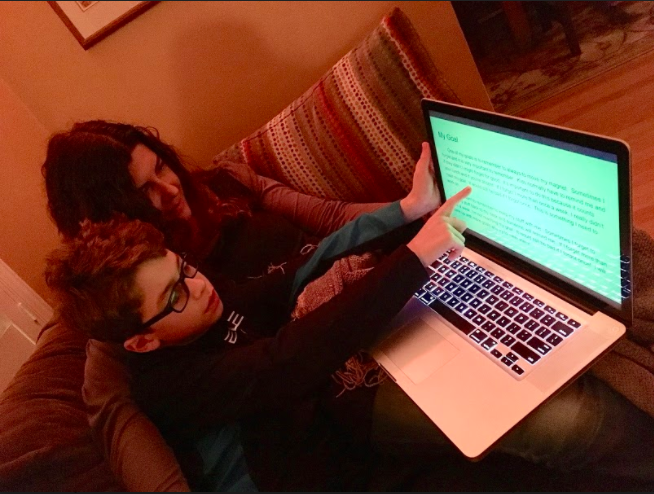
My Student Led Conference slideshow is about my goals, my learning, and some of the amazing activities we did.  It shows how I developed and learned new skills in Passion Time, Lit Circles, and being the Evaluator for my job.  The slideshow even explains the Marble Theory.  In the first trimester I feel that I have grown to reach new abilities and now I can do them as a normal routine in class.  In my slideshow, you can see how I have started to contribute to a Student Led classroom environment.  When I showed my parents my presentation I showed each slide and explained how each piece works in the classroom.  I also showed them my goals, my jobs, and my favorite work examples.  My parents were very proud of my hard work and growth mindset.  They also told me to keep working on my focus because the next trimester will be even more challenging!
0 Comments

World Kindness Day 2017

11/13/2017

0 Comments


Here are all the kind gestures:

  • Kid falls on skate broad and a worker helps pick thing up to help him
  • Worker helps him up and makes sure he is okay
  • Kid helps a elderly women with her grocery bags and helps her cross the street
  • He gives eye contact and smiles
  • They start talking
  • Elderly women gives girl a quarter because a lady needs to pay the parking meter and can't find one
  • Girl gives a man a wallet because he drop it
  • Girl smiles to the man
  • Man helps carry a heavy piece of luggage and smiles to a guy
  • Guy gets two hot dogs and a hot dog guy gives him a water
  • The guy gives a hot dog to a homeless man
  • Homeless man gives a phone that drops on the ground to a girl
  • Girl buys flowers for a lady sitting alone
  • Lady holds the girl's hand to show thank you
  • Flower lady gives a rose to the girl
  • Lady that got flowers leaves an a hundred dollar bill for the waitress
  • Waitress gives a glass of water to the worker
  •  Waitress smiles and worker smiles
Picture

“The greatest mistake we can make is allowing the guilt of what we haven’t yet achieved consume us.” 
― Orly Wahba, Kindness Boomerang: How to Save the World (and Yourself) Through 365 Daily Acts

Picture
My brother made me feel better when the weekend was ending.  I was feeling sad because I didn't get to hangout with him.  He had homework and had to practice guitar and right when we started thinking of things to do we had to go to a family birthday party.  I was sad I couldn't see him and he made me feel better by saying, "I'll see you a bunch on Thanksgiving break, don't worry."  I started feeling better and had a fun time at the party.
0 Comments
<<Previous

    Author

    Write something about yourself. No need to be fancy, just an overview.

    Archives

    May 2018
    April 2018
    March 2018
    February 2018
    January 2018
    December 2017
    November 2017
    October 2017
    September 2017

    Categories

    All

    RSS Feed

    Picture
Powered by Create your own unique website with customizable templates.