What's going on in Mr. Solarz' Class?
What's going on in Mr. Solarz's Class?
  • Parents (Newsletter)
    • Our Online Photo Album >
      • 2018-2019 Photo Album
      • 2017-2018 Photo Album
      • 2016-2017 Daily Photo Journal
      • 2016-2017 Daily Photo Journal - Album 2
      • 2015-2016 Daily Photo Journal
      • 2015-2016 Yearbook
      • 2014-2015 Daily Photo Journal
    • Our YouTube Channels >
      • 2018-2019 YouTube Channel
      • 2017-2018 YouTube Channel
      • 2016-2017 YouTube Channel
      • 2015-2016 YouTube Channel
      • 2014-2015 YouTube Channel
      • 2013-2014 YouTube Channel
      • 2012-2013 YouTube Channel
      • YouTube videos over the years
      • Learn Like a PIRATE videos
    • Calendar
    • Our Weekly Schedule
    • FAQ about our classroom
    • Curriculum Night Presentation
  • Educators
    • Danielson Framework >
      • Domain 1 - Planning & Preparation
      • Domain 2 - Classroom Environment
      • Domain 3 - Instruction
      • Domain 4 - Professional Responsibilities
      • Professional ePortfolio
      • Instructional Coach Evidence
      • Experience Logs
    • FAQ about our Classroom
    • Workshops
    • Our Classroom Library is for Sale
  • Curriculum
    • Science Units >
      • 5th Grade >
        • Human Body Unit >
          • Human Body Links
        • Ecosystems >
          • Ecosystems - Legends of Learning
        • Watery Earth >
          • Watery Earth Links
        • Earth in Space
        • Investigating Matter
      • 4th Grade >
        • Energy >
          • Energy Unit Notes
          • Energy Debates
          • Energy Debate Organizers
        • Our Geosphere
        • Waves
      • Science Fair
      • STEM Investigations!
      • Try Engineering Together
    • Social Studies Units >
      • 5th Grade >
        • Revolutionary War >
          • Liberty's Kids Videos
          • Revolutionary War Hero Project >
            • RWHP Directions
        • U.S. Constitution & Government >
          • Mini Lessons
          • Colonize Mars! >
            • Claiming Mars for Ourselves >
              • 2017-2018 Creating our Country on Mars
              • 2016-2017 Mars Decisions
              • 2015-2016 Claiming Mars for Ourselves
              • 2014-2015 Claiming Mars for Ourselves 2015
            • Solutions to Problems on Mars >
              • 2017-2018 Our Solutions to Problems on Mars
              • 2016-2017 Problems & Solutions
              • 2015-2016 Our Solutions to Problems
              • 2014-2015 Our Solutions to Problems
            • 2014-2015 "Mission: Mars" Video Discussions 2015
          • Project Citizen
        • Westward Expansion >
          • Oregon Trail Simulation
          • Oregon Trail Readings
          • Reflection Rotation >
            • 2017-2018 Reflections >
              • ThingLink Photo Stories
              • Green Screen Tableaux Vivants
              • Fictional Travel Blog
              • Canva Concept Cards
              • YouTube Newscasts
              • Google Slide Show
              • Daily Travel Blog
              • Act-It-Outs
            • 2016-2017 Reflections
            • 2015-2016 Reflections >
              • Voki Reflections >
                • Voki Blog
            • 2014-2015 Reflections >
              • Act-It-Outs
              • Timeline Spreadsheet
              • Newscasts
              • ThingLink >
                • ThingLink Images
                • Sign up for ThingLink
              • Google Slideshow
              • Fictional Travel Log
              • Daily Travel Log
              • Tableaux Vivants
              • Photo Stories
      • 4th Grade >
        • Geography
        • Explorers
        • Native Americans
        • Colonization
        • State of Sustainability
      • Presidential Election Simulation - 2012 >
        • Presidential Election Simulation - 2016
      • Current Events
    • Reading >
      • 5th Grade Units >
        • Literature Circles >
          • Literature Circles >
            • Video Discussions
          • Literature Circles >
            • Video Discussions
            • Activities
        • Schoolwide Launch
        • Schoolwide Fiction
        • Schoolwide Non-Fiction
        • Schoolwide Ecosystems
        • Schoolwide Poetry
        • Wonder >
          • Wonder
        • The Phantom Tollbooth >
          • Phantom Tollbooth Assignments
      • 4th Grade Units >
        • Schoolwide Launch
        • Schoolwide Fiction
        • Schoolwide Non-Fiction
        • Schoolwide Poetry
        • Schoolwide Energy
    • Writing, Spelling & Grammar >
      • Writing >
        • Writing City
        • WEX
        • WriteAbout
        • Reflection Writing
        • JoonBugz
      • Spelling >
        • Words Their Way
      • Grammar >
        • Grammar
    • Math >
      • Money Island
      • Math in Focus
    • Miscellaneous >
      • Activities >
        • Short-Term Projects
        • Challenges!
        • Special Events
        • Projects & Mini Lessons
        • Bonus Activities
        • Miscellaneous >
          • Honor Badges
          • Growing a Growth Mindset
      • Imagination Club >
        • Schedule
        • Daily Ritual
        • Mini-Lessons
        • Photo Journal
        • Student Creations Round 1
      • Mystery Skype
      • Entrepreneurship Unit >
        • Entrepreneurship - Creating Our Own Businesses!
      • Self-Reflection
      • KinderPals
  • Student ePortfolios
    • 2018-2019 ePortfolios >
      • Students 1-7 >
        • 1 - Isabel
        • 2 - Alexis
        • 3 - Oscar
        • 4 - Adrian
        • 5 - Edy
        • 6 - Matthew
        • 7 - Molly
      • Students 8-14 >
        • 8 - Joey
        • 9 - Jeremiah
        • 10 - Emmalina
        • 11 - Sama
        • 12 - Hazel
        • 13 - Nick
        • 14 - Filip
      • Students 15-21 >
        • 15 - Nellie
        • 16 - Landon
        • 17 - Molly
        • 18 - Harrison
        • 19 - Kali
        • 20 - Inti
        • 21 - Ryan
        • 22 - Pavel
      • Blog Assignments
    • 2017-2018 ePortfolios >
      • Students 1-9 >
        • Elle
        • Daniel
        • Tommy
        • Alyssa
        • Gavin
        • Milosz
        • Mikey F
        • Caitlin
        • Brynna
      • Students 10-17 >
        • Kya
        • Olivia
        • Ian
        • Colin
        • Owen
        • Gianna
        • Isabella
        • Carmen P
      • Students 18-25 >
        • Lucy
        • Caleb
        • Mikey S
        • Wes
        • Martin
        • Will
        • Shaun
        • Carmen W
      • Blog Assignments
    • 2016-2017 ePortfolios >
      • Students 1-8 >
        • Hailie
        • Jody
        • Madison
        • Dylan
        • Calvin
        • Connor
        • Louisa
        • Harvey
      • Students 9-16 >
        • Anna
        • Jack
        • Ben
        • Elijah
        • Catelyn
        • Cole
        • Abby
        • Ashley
      • Students 17-23 >
        • Charles
        • Michelle
        • Charlie
        • Daniel
        • Sam
        • Chingoon
        • Kyren
      • Blog Assignments
    • 2015-2016 ePortfolios >
      • Students 1-9 >
        • TJ
        • JJ
        • Bridget
        • Alex
        • Mason
        • Ryan
        • Lucas
        • Shreya
        • Logan
      • Students 10-18 >
        • Charlotte
        • Addie
        • Aidan
        • Andrew
        • Jeremy
        • Rachel
        • Russell
        • Addy
        • Cassidy
      • Students 19-26 >
        • Audrey
        • Regan
        • Giuliana
        • Brady
        • Stephen
        • Matthew
        • Ben
        • Tyler
        • Thomas
      • Blog Assignments
    • 2014-2015 ePortfolios >
      • Students 1-7 >
        • 1 - Michael
        • 2 - Charlie
        • 3 - Nicole
        • 4 - Stacy
        • 5 - Bela
        • 6 - Kendall
        • 7 - Demetri
      • Students 8-14 >
        • 8 - Emily
        • 9 - Nicky
        • 10 - Hanna
        • 11 - Payton
        • 12 - Hasanain
        • 13 - Tucker
        • 14 - Chris
      • Students 15-21 >
        • 15 - Madi
        • 16 - Aidan
        • 17 - Luke
        • 18 - Kaela
        • 19 - Ryan
        • 20 - Alison
        • 21 - Lucas
      • Blog Assignments
  • Passion Time
    • Passion Time Resources >
      • ALL Passion Time Resources
      • Step-By-Step Directions
      • Submit Your Essential Question
      • Our Trello Page
      • Our Passion Projects over the years
      • Our Trello Board
      • SAMPLE Blog Post Format
      • YouTube Upload Page
      • Mini-Lessons
    • 2018-2019 Projects >
      • Round 1
      • Round 2
      • Round 3
      • Round 4
    • 2017-2018 Projects >
      • Round 1
      • Round 2
      • Round 3
      • Round 4
      • Round 5
    • 2016-2017 Projects >
      • Submit Your Essential Question
      • Mini-Lessons
      • Round 1
      • Round 2
      • Round 3
      • Round-4
      • Round 5
      • Round 6
    • 2015-2016 Projects >
      • Round 1
      • Round 2
      • Round 3
      • Round 4
    • 2014-2015 Projects >
      • Round 1
      • Round 2
      • Round 3
      • Round 4
      • Round 5
      • Round 6
  • Student-Led Classroom Info
    • Our Learning Experiences
    • 21st Century Skills
    • Whole Class Goals
    • Individual Goals
    • Classroom Jobs
    • Collaborative Responsibilities
    • Rituals & Routines
    • Uses of "Give Me Five"
    • Student-Led Mini-Lessons
    • Lit Circle Signposts
    • Mystery Skype Jobs

14 - How Our Muscle Know When To Move

2/29/2016

0 Comments

 
  1. How did your body respond when the ball of paper was thrown at you?
  2. How would this reflex protect your eyes if the transparency had not been there?
  1. I closed my eyes for a second, but then opened them.  When I did, I rapidly blinked a few times.  My head jerked backward and my grip on the transparency tightened.
  2. Since my eyes closed, the paper ball wouldn't scratch them.  Since my head jerked back, the ball might have actually missed me.
Picture
I'm sorry if you can't see
  1. Can you feel it when your pupils dilate?
  2. Do you have any control over your pupils when they dilate?
  3. What do we call this when a reflex happens without our control?
  4. Why do our pupils get bigger in the dark and smaller in the light?
  5. How does this reflex protect our eyes?
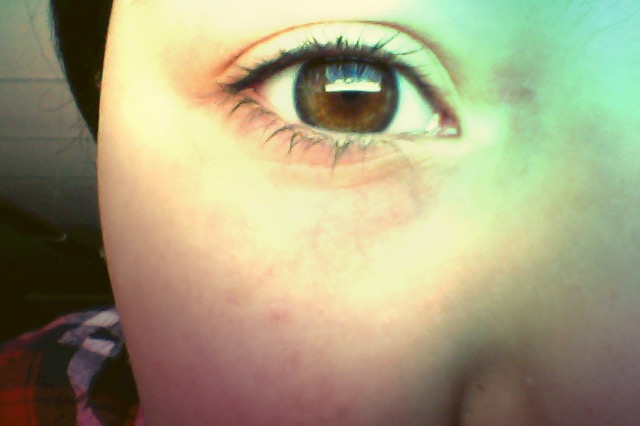
Picture
 my pupils; I have dark eyes
1. I can't feel my pupils dilate.  In fact, there are no changes in my vision when that happens.

2. I don't because smooth muscle makes that happen.  I have no control over smooth muscle, meaning that I can't control the dilation of my eyes.

3.  It is called an involuntary reflex.  This is because the definition of involuntary is something done without will or conscious control, like this specific reflex.

4.  Our pupils get bigger in the dark to be able to take in as much light as possible, which helps us see.  They shrink in the light, though, to not let our eyes take in so much light, which might result in a vision problem.

5.  If our pupils didn't dilate when in the dark, we wouldn't be able to see in dark places.  But if our pupils didn't contract in the light, we would probably be blinded when we look at something bright.

I was absent during the second part of this activity

0 Comments

13 - How Our Muscles Get the Nutrients They Need

2/19/2016

0 Comments


Bloodstream 1

  • Less jello in coffee filter
  • Red
  • Yellowish liquid in cup
  • Coffee filter is wet on outside

Bloodstream 2

  • Jello stayed in coffee filter
  • Green
  • Nothing in cup
  • Coffee filter is dry on outside
Bloodstream 1 related to the stomach more that Bloodstream 2
  1. How are the two cups different and why?
  2. What process in the human body is demonstrated by the liquid in the bottom of the cup?
  3. What process in the human body is demonstrated by the wet coffee filter?
  4. How does this lab help us understand digestion?
1.  One cup kept all the jello in the coffee filter, while the other one didn't.  Bloodstream 2's coffee filter was dry on the outside while Bloodstream 1's wasn't.

2.  This shows how the small intestine separates what is useful from the jello from the things that aren't.  The jello at the bottom of the cup represents what is useful.

3. It symbolizes how chyme covers the whole bloodstream when it gets in.

4.  This lab help us understand digestion by showing us the different elements needed for digestion.  The jello was chyme, the meat tenderizer represented enzymes breaking down chyme, the coffee filter was the small intestine, and the bottom of the cup was the large intestine.
0 Comments

If The World Were a Village

2/18/2016

0 Comments

 
  • Earth's population is 7.05 in 2012
  • If Earth was a village, 60 would be from Asia
  • 11 would be from Europe
  • 8 from South/Central America
  • 5 would be USA/Canada
  • Most common languages:
  • 21 speak Chinese dialect
  • 9 speak Hindi
  • 9 speak English
  • 7 speak Spanish
  • 3 speak Portugues
  • 3 speak Russian
  • Ages
  • 10 between 5-9
  • 18 between 10-19
  • 17 between 20 and 29
  • 15 between 30-39
  • 12 between 40-49
  • 9 between 50-59
  • 6 between 60-69
  • 3 between 70-79
  • 1 over 79
  • Religions:
  • 33 Christians
  • 27 Muslims
  • 15 non-religious
  • 14 Hindu
  • 9 Shamanism
  • 5 Buddhists
  • 2 other religions
  • Food:
  • 37 sheep and goats
  • 23 cows, bulls, and oxen
  • 13 pigs
  • 3 camels
  • 2 horses
  • 700 chickens
  • 30 people are underfed
  • 17 people are severely underfed
  • Air and water
  • Most of it is pure
  • Some of it isn't
  • 87 have access to water
  • 13 need to walk long distances
  • 62 have access to adapt sanitation
  • 38 aren't
  • 68 breath clean air
  • 36 should go to school
  • 30 of 36 go to school
  • 1 teacher
  • 3 kids work
  • 3 others are child laborers, some work in fields, factories, sell things, ect.
  • Of people who should know how to read, 14 don't
  • More boys than girls read
  • 63 adults can work, but 52 work
  • 6 people want jobs but can't find one
  • If money were divided equally, everyone would have about $10,300
  • Richest 10 people have 85% of money, or more than $87,500
  • 10 poorest people make less than $2 a day
  • Other 80 make about $6 a day
  • 50 people have radios
  • 45 TVs
  • 103 telephones
  • More than 86 are cell phones
  • 28 computers
  • 76 have electricity
  • 24 don't
  • 73% of energy in fossil fuel
  • 17% from nuclear power
  • 10% from renewable sources
  • In 1850, life expectancy was 38
  • In 1900,  it was 47
  • Today, it is 68
  • 41 people live around malaria
  • 6 people get it
  • 80 people get vaccinations
  • In 1000 B.C.E, 1 person lived in the village
  • In 500 B.C.E, 2 people did
  • In 1 C.E, 3 people lived in the village
  • In 1000, 5 people did
  • In 1500, 8 people did
  • In 1650, 10 did
  • In 1800, 17 people did
  • In 1900, 32 did
  • In 2012, 100 people did
  • Village is growing by 1.15 people per year
  • By 2150, there will be 250 in village
  • Global village's capacity is around 250
  • Explain what surprised you about the statistics of our world.
  • What upset you?  What do you wish were different?
  • What made you want to do something to improve a situation?
  • Can you do anything to help? If so, what?
  • I was surprised to know that there are 103 phones in the village because I know that not everyone in the world has one.  I assume that the 17 that aren't cellphones are home phones and public phones.  It enrages me that 47% of the population is either underfed or severely underfed.  I wish that were different along with the fact 41% of the population is exposed to Malaria, a deadly disease.  Just the fact that almost half of our 7 billion people aren't eating enough makes me want to do something about it.  3,290,000,000 individuals are stuck in this problem.  We should help every man, women, and child to get out of it.  There are many ways to help.  For example, donate money.  Many organisations, like UNICEF, need it to buy meals.  Something that is equally needed if not more is time.  If you can't or don't want to donate money, go to places like Feed My Starving Child, where you can help pack meals to be sent to different places in the world.  A good website is www.freerice.com, where you can answer questions of all subjects.  For every question correctly answered, they will donate 10 grains of rice to starving people.
0 Comments

11 - Delivering What Muscles Need

1/21/2016

0 Comments

 
Picture
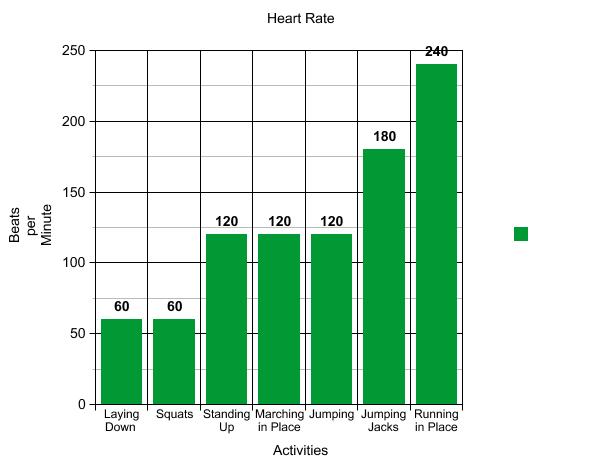
  1. Which activities increased your heart rate the most?
  2. Which activities increased your heart rate the least?
  3. Was the order in which you ranked the activities accurate? (It's good to be wrong!) Explain.
  4. What changes did you notice about your heart rate as you became more active?
  5. Why do you think your heart rate changed when you were more active? What inference can you make? (Use pages 65–66 of your reference book to help you answer this question.)
  1. Running in place got my heart rate up to 240 beats per minute.  For some reason, my heart rate goes very high by running, no matter for how long I do it.
  2. Laying down and squats both got my heart rate down to 60 beats per minute.  I was surprised that doing squats didn't get my heart rate any higher.
  3. I think it was accurate because running in place did make me tiered, while laying down made my heart rate go down.
  4. I noticed that my hear rate got higher.  The more active I got, my heart rate got faster by more that 50.
  5. I know that when you get more active, you need to get oxygen in your blood faster, resulting in the heart having to speed up.  If you relax for a bit, your heart doesn't need to go tat fast, so it slows down.


0 Comments

10 - Working Muscles - A Clothespin Activity

1/13/2016

0 Comments

 
Picture
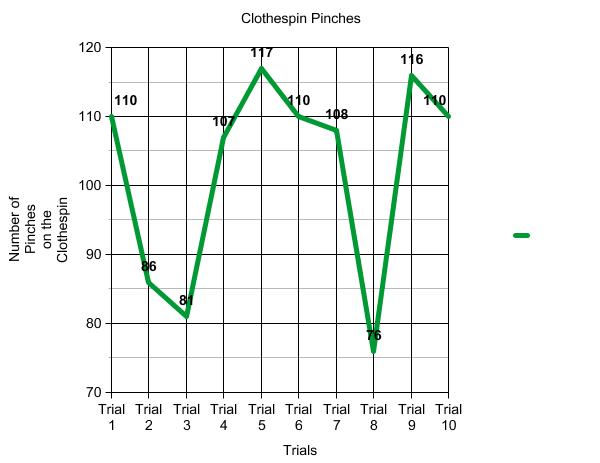
This was a tough activity for many reasons.  Not only did I have to move my fingers so fast they almost fell off, but I also had to count how many times I did.  It was tiring, but I was happy I did it because of specific thing.  That one thing is my graph.  I was surprised on how it turned out and exited to learn why.  Overall, I really enjoyed this activity and would do it again.

  • Write a one paragraph reflection, and answer the following questions:

  1. Was it difficult to use the same technique throughout the whole experiment?
  2. How did you hands and fingers feel BEFORE, DURING, and AFTER the experiment?
  3. Describe how your data changed over time.
  4. What errors or inconsistencies might have affected your results?
  5. Why did your hand strength change over the course of this experiment?
  6. How do you think your muscle cells get oxygen, nutrients, and water to make the energy they need to function?
  7. What do you think you could have done to prevent your muscles from tiring?
  8. What should you do if you experience muscle fatigue in the future?
1.  Definitely.  At times, I wanted to put the fingers of the other hand on the clothespin, use a third finger, switch hands,  and use my whole hand to get two pieces of thin wood to touch.

2.Before the experiment, my hand felt perfectly normal, untouched.  They weren't ready for what laid ahead.  During the experiment, my hands were hurting so bad they almost fell off!  The pain was like a pang, each one lasting about 2 seconds. At some points, they actually began feeling numb. After the activity, my hands were aching, but got better by the second.

3.  My data did change overtime.  At the beginning, I wasn't tired, so the number was high in trial one.  After that, my fingers were tired, so my results went down.  As my fingers got more energy, the data I collected in the next two trials were high, but got low again.  As you can see, my diverse data made a very spiky graph!

4.  An error that most likely occurred was that a third finger "slipped" next to my index finger, which might have made my results slightly higher.  Also, the amount of time in between each 30 seconds that Mr. Solarz reset the timer may have varied, which might have resulted in higher results in a round who started in a longer break.

5.  My hand strength changed over the course of the experiment because during the 30-ish second break, it got stronger.  When I started clicking again, my fingers were strong and fast for the first couple seconds, but got weak again.  The cycle starts again when the 1-minute period starts again.

6.  Our muscles cells get oxygen when we breathe oxygen.  Our lungs give the oxygen to blood, which transmits it into the muscles.  We get water when we drink it, dirty or clean.  Water can come in the form of food, like watermelon and cucumber.

7. I think I should have taken often breaks, for the muscles to relax.  The breaks would also have given me time to breath in and out, so that my muscle cells got oxygen.

8. I should probably stop doing what I'm doing, relax and take deep breaths, and drink water.  After a few minutes, I can resume physical activity.
0 Comments

KinderPals - January 

1/11/2016

0 Comments

 
  1. How has your first round of KinderPals gone?
  2. What were some differences between the two experiences (AM and PM)?
  3. How did you improve your skills as a KinderPal from the first experience to the second?
  4. In what specific ways did you help improve your students' self-esteem?
  5. Why should other schools do a program similar to KinderPals? Is it worth the time spent?
  1. I think it went pretty well.  Things were never awkward with my partner.  I got to know a bit about both my KinderPals, which I felt was very good.  Although we didn't spend the whole time on the superhero sheet, I did make my KinderPals feel good about themselves.
  2. My KinderPal in PM was a bit shy, making it slightly harder for her to talk to me at first.  Other than that, the two girls had similar interests, which made it easy to know what to do with my AM KinderPal.
  3. I gave reasons why each of my AM KinderPal's superpowers were important, something I didn't completely to with my PM KinderPal.  It was an important thing to do because it taught my KinderPal that her talents were something to embrace.
  4. I asked my KinderPal what she liked doing, and if she said something like drawing or running, I asked her to demonstrate it for me.  Since the spotlight was on my KinderPal, she felt special and that her talents really matter.
  5. KinderPals is a great program because it teaches kids how to embrace their talents at a young age.  This is important because in the future, they will know what they want to do and be good at it.
0 Comments

9 - Creating Limb Models (Elbow Joints)

1/8/2016

0 Comments


Questions

Answers

  1. How many bones did your model need?  How many muscles did it need?
  2. How were your pretend muscles similar and different to real muscles?
  3. What would happen if the ligaments of the models were overstretched or torn? How would it affect the way the models could operate?
  4. Explain what ligaments, tendons, and cartilage are.
  5. What made this activity fun?
  6. What made this activity challenging?
1.  Our model needed 3 bones, like any arm.  They were the ulna, the radius, and the humerus.  The humerus is long, although it wasn't in our joint.  The ulna and radius are shorter and thinner.  They stay right next to each other, as seen in our joint.  Our model needed two muscles, the biceps and the triceps.  A normal arm also have these two.  The biceps are on top of the arm while the triceps are on the bottom.

2.   Our muscles were similar to real muscles because they work the same way.  When the biceps contract, they pull the arm up, therefor letting the triceps relax.  They are different, though, because although our tendons fade into the bone, the model's tendons abruptly  ended when it touched the bone.

3.  If the ligaments were overstretched or torn, the whole model would fall apart.  The bones would be attached by only the tendons, which would cause the bones to slide right next to each other.

4.  Ligaments are long, stretchy strands of tissue that hold bones together at every joint.  Cartilage is a spongy material that is in between bones to prevent the two bones from rubbing together.  Tendons are the spot where muscle connects to bone.  The muscle fades into the bone, going from muscle to solid bone. 

5.  The thing that made this activity fun was the challenge.  It was just awesome that we got to get in touch with our "creative selves" and create something that made sense.

6.  This activity was challenging because of the joint.  Making a working joint was the hardest part of the model because not only did it have to be done well, but the bones kept on sliding somewhere they shouldn't be. 

0 Comments

Which Joints Are Most Important?

12/11/2015

0 Comments

 
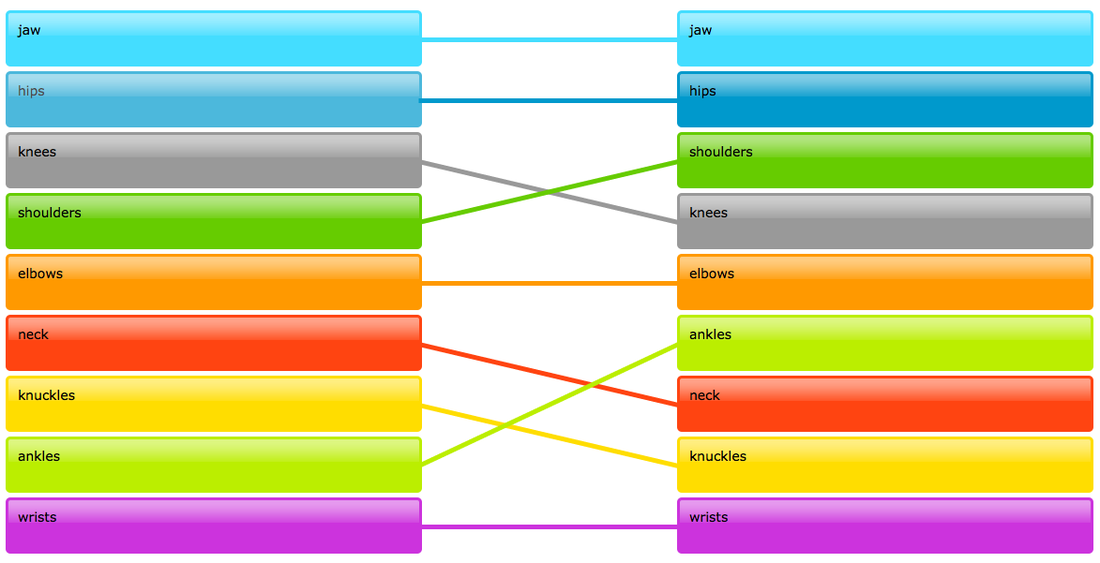
Picture
  1. Which joint did you choose as our most important joint?
  2. Why did you choose that joint?
  3. What things would be difficult to do without that joint?
  4. What movement can be done without the use of joints? (Example: blinking your eyes)
  1. I chose the jaw, also referred to as the TMJ.
  2. I chose this joint because if we didn't have it, our mouth would always be closed.
  3. Communication would be extremely hard because we wouldn't be able to move our jaw to shape the words.  We wouldn't be able to eat or drink because we can't chew through our closed mouths.  At that point, we would need to inject nutrients into ourselves, which requires a professional and lots of money.
  4. Wrinkling your eyebrows.  All you need to do is move a muscle, not a joint.  Moving your lips without opening your mouth also only require moving a muscle.
0 Comments

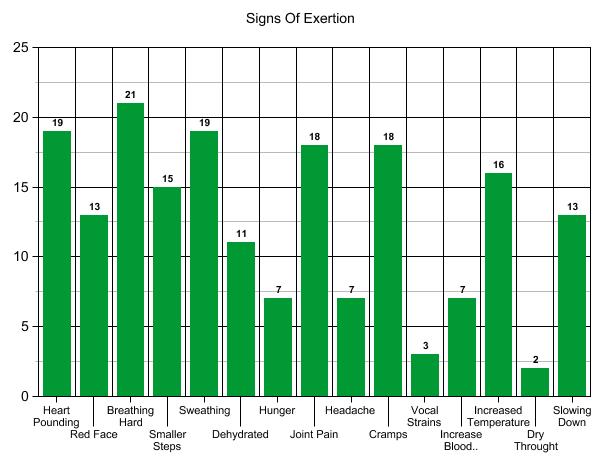
Signs Of Exertion

12/7/2015

0 Comments


Observation 1

I feel pressure in my joints because weight from my body is constantly being placed and removed on them.  I feel pressure on them when weight is put on them.

Observation 2

I am panting because my body is trying to get oxygen.  My lungs use lots of oxygen when I run, and my lungs are trying to get oxygen so I can breath.

Observation 3

My knees are cracking because I am moving them.  Since I am constantly moving the bones around it, the joint cracks repetitively.

Observation 4

I feel pain in my calf because I put pressure on it.  When I put my foot on the ground, weight goes on it, which makes the calf sore.

Observation 5

I feel pain on the bottom of my foot because it gets weight dropped on it.  When it hits the hard inside of my shoe, the weight of my body is placed on my foot, which is right above it.

Observation 6

I am sweating because it helps maintain body temperature by cooling us down.  There are millions of glands in our bodies, and when we start getting overheated, we sweat.

Observation 7

I am getting slower because I am getting tired.  I am burning my energy and when that happens, it makes me want to recharge it by resting.

Observation 8

I feel pain on shoulders because they are constantly moving.  The joints are tiring, making them hurt.

Observation 9

I feel my heart pounding because it needs oxygen-rich blood.  Since I need it and the heart has a shorter amount of time to get it, it beats faster.

Observation 10

My face is hot because blood is rushing to my head.  Also, capillaries are trying to move my body heat to my skin.

Observation 11

I am very hot because I am sweating.  To cool down, the body absorbs all the sweat we produce after a bit, causing heat to be released.

Observation 12

My throat is dry because I am dehydrated.  Some of the water in my body is being used to sweat, including my saliva, which results in having little of it in my throat.
Picture
       

  1. ​What three basic things do our bodies need in order survive?
  2. If we exert ourselves, what are three (or more) signs that our bodies are in distress? Explain why our body does that (research it if you need to).
  3. What can we do to make these signs go away?
1.    First, we need food.  Food gives us nutrients to keep our muscles and bones strong.  Second, we need water because of many reasons.  Over half of our bodies are made up of water, and for our brain and lungs to function, there needs to be water in them.  Last, we need oxygen.  Oxygen is key to the lungs, due to the lack of it resulting in the lungs failing.
 
2.    You feel pain in my calf because you put pressure on it.  When you put your foot on the ground, weight goes on it, which makes the calf sore.  Also, you get slower because you get tired.  When you burn energy, your body wants to slow down to recharge it.  You might also feel pressure in your joints because weight from your body is constantly being placed and removed on them.  You feel that pressure on them when weight is put on them.  You probably will sweat because it helps maintain body temperature by cooling you down.  There are millions of glands in our bodies, and when you start getting overheated, you sweat.

3.    The best way is to stop moving, sit down in a fairly cool place, and drink lots of water or eat something with sugar in it, like fruit.  Relaxing will take pressure of of your joints and muscles, while staying in a cool place will cool you down.  By eating some type of sugar, you recharge your energy.

0 Comments

WEXPN4 - Word Choice

12/3/2015

0 Comments


Skill Drill

Before:
  1. Jimmy is a really good artist.
  2. We brought lots of things with us on the trip.
  3. I think Cindy did a great job on her research paper!
  4. The ball was passed to Bobby by Luke.
  5. The baby cried very loudly!
   
After:
  1. Jimmy is an amazing artist.
  2. We brought our camping material with us on the trip.
  3. Cindy did a fantastic job on her research paper!
  4. Luke passed the ball to Bobby.
  5. The baby wailed loudly.
First, I would like to start with Charlotte.  When you disagree, with her, she will always try to compromise with you.  She never demands to have things her way, but will keep a good balance of your ideas and hers.  She is always a joy to work with because in serious  situations, she will work hard without goofing off too much.  She has never let me down.  Charlotte always looks on the bright side of everything.  Ryan always brings the fun into any situation, mainly group activities.  He helps maintain the healthy balance of working hard but having fun.  He will always find a way to cheer you up.  Whether it is standing in line or doing some research, he is bound to crack a small joke that will make you laugh.  Aiden will always work hard when told to.  He can whip out a 3 page essay in 4 days of studying.  He also always works rapidly and efficiently.  You can ask him for help in any subject, especially math, and he will give you any information you need, whether it’s a formula or simply if you are doing something correctly.  He also will always listen to you when you share ideas, along with adding his own thoughts to make them better.
0 Comments
<<Previous
Forward>>

    Author

    Write something about yourself. No need to be fancy, just an overview.

    Archives

    June 2016
    May 2016
    April 2016
    March 2016
    February 2016
    January 2016
    December 2015
    November 2015
    October 2015
    September 2015
    August 2015

    Categories

    All
    Poetry
    Reading

    RSS Feed

Powered by Create your own unique website with customizable templates.