What's going on in Mr. Solarz' Class?
What's going on in Mr. Solarz's Class?
  • Parents (Newsletter)
    • Our Online Photo Album >
      • 2018-2019 Photo Album
      • 2017-2018 Photo Album
      • 2016-2017 Daily Photo Journal
      • 2016-2017 Daily Photo Journal - Album 2
      • 2015-2016 Daily Photo Journal
      • 2015-2016 Yearbook
      • 2014-2015 Daily Photo Journal
    • Our YouTube Channels >
      • 2018-2019 YouTube Channel
      • 2017-2018 YouTube Channel
      • 2016-2017 YouTube Channel
      • 2015-2016 YouTube Channel
      • 2014-2015 YouTube Channel
      • 2013-2014 YouTube Channel
      • 2012-2013 YouTube Channel
      • YouTube videos over the years
      • Learn Like a PIRATE videos
    • Calendar
    • Our Weekly Schedule
    • FAQ about our classroom
    • Curriculum Night Presentation
  • Educators
    • Danielson Framework >
      • Domain 1 - Planning & Preparation
      • Domain 2 - Classroom Environment
      • Domain 3 - Instruction
      • Domain 4 - Professional Responsibilities
      • Professional ePortfolio
      • Instructional Coach Evidence
      • Experience Logs
    • FAQ about our Classroom
    • Workshops
    • Our Classroom Library is for Sale
  • Curriculum
    • Science Units >
      • 5th Grade >
        • Human Body Unit >
          • Human Body Links
        • Ecosystems >
          • Ecosystems - Legends of Learning
        • Watery Earth >
          • Watery Earth Links
        • Earth in Space
        • Investigating Matter
      • 4th Grade >
        • Energy >
          • Energy Unit Notes
          • Energy Debates
          • Energy Debate Organizers
        • Our Geosphere
        • Waves
      • Science Fair
      • STEM Investigations!
      • Try Engineering Together
    • Social Studies Units >
      • 5th Grade >
        • Revolutionary War >
          • Liberty's Kids Videos
          • Revolutionary War Hero Project >
            • RWHP Directions
        • U.S. Constitution & Government >
          • Mini Lessons
          • Colonize Mars! >
            • Claiming Mars for Ourselves >
              • 2017-2018 Creating our Country on Mars
              • 2016-2017 Mars Decisions
              • 2015-2016 Claiming Mars for Ourselves
              • 2014-2015 Claiming Mars for Ourselves 2015
            • Solutions to Problems on Mars >
              • 2017-2018 Our Solutions to Problems on Mars
              • 2016-2017 Problems & Solutions
              • 2015-2016 Our Solutions to Problems
              • 2014-2015 Our Solutions to Problems
            • 2014-2015 "Mission: Mars" Video Discussions 2015
          • Project Citizen
        • Westward Expansion >
          • Oregon Trail Simulation
          • Oregon Trail Readings
          • Reflection Rotation >
            • 2017-2018 Reflections >
              • ThingLink Photo Stories
              • Green Screen Tableaux Vivants
              • Fictional Travel Blog
              • Canva Concept Cards
              • YouTube Newscasts
              • Google Slide Show
              • Daily Travel Blog
              • Act-It-Outs
            • 2016-2017 Reflections
            • 2015-2016 Reflections >
              • Voki Reflections >
                • Voki Blog
            • 2014-2015 Reflections >
              • Act-It-Outs
              • Timeline Spreadsheet
              • Newscasts
              • ThingLink >
                • ThingLink Images
                • Sign up for ThingLink
              • Google Slideshow
              • Fictional Travel Log
              • Daily Travel Log
              • Tableaux Vivants
              • Photo Stories
      • 4th Grade >
        • Geography
        • Explorers
        • Native Americans
        • Colonization
        • State of Sustainability
      • Presidential Election Simulation - 2012 >
        • Presidential Election Simulation - 2016
      • Current Events
    • Reading >
      • 5th Grade Units >
        • Literature Circles >
          • Literature Circles >
            • Video Discussions
          • Literature Circles >
            • Video Discussions
            • Activities
        • Schoolwide Launch
        • Schoolwide Fiction
        • Schoolwide Non-Fiction
        • Schoolwide Ecosystems
        • Schoolwide Poetry
        • Wonder >
          • Wonder
        • The Phantom Tollbooth >
          • Phantom Tollbooth Assignments
      • 4th Grade Units >
        • Schoolwide Launch
        • Schoolwide Fiction
        • Schoolwide Non-Fiction
        • Schoolwide Poetry
        • Schoolwide Energy
    • Writing, Spelling & Grammar >
      • Writing >
        • Writing City
        • WEX
        • WriteAbout
        • Reflection Writing
        • JoonBugz
      • Spelling >
        • Words Their Way
      • Grammar >
        • Grammar
    • Math >
      • Money Island
      • Math in Focus
    • Miscellaneous >
      • Activities >
        • Short-Term Projects
        • Challenges!
        • Special Events
        • Projects & Mini Lessons
        • Bonus Activities
        • Miscellaneous >
          • Honor Badges
          • Growing a Growth Mindset
      • Imagination Club >
        • Schedule
        • Daily Ritual
        • Mini-Lessons
        • Photo Journal
        • Student Creations Round 1
      • Mystery Skype
      • Entrepreneurship Unit >
        • Entrepreneurship - Creating Our Own Businesses!
      • Self-Reflection
      • KinderPals
  • Student ePortfolios
    • 2018-2019 ePortfolios >
      • Students 1-7 >
        • 1 - Isabel
        • 2 - Alexis
        • 3 - Oscar
        • 4 - Adrian
        • 5 - Edy
        • 6 - Matthew
        • 7 - Molly
      • Students 8-14 >
        • 8 - Joey
        • 9 - Jeremiah
        • 10 - Emmalina
        • 11 - Sama
        • 12 - Hazel
        • 13 - Nick
        • 14 - Filip
      • Students 15-21 >
        • 15 - Nellie
        • 16 - Landon
        • 17 - Molly
        • 18 - Harrison
        • 19 - Kali
        • 20 - Inti
        • 21 - Ryan
        • 22 - Pavel
      • Blog Assignments
    • 2017-2018 ePortfolios >
      • Students 1-9 >
        • Elle
        • Daniel
        • Tommy
        • Alyssa
        • Gavin
        • Milosz
        • Mikey F
        • Caitlin
        • Brynna
      • Students 10-17 >
        • Kya
        • Olivia
        • Ian
        • Colin
        • Owen
        • Gianna
        • Isabella
        • Carmen P
      • Students 18-25 >
        • Lucy
        • Caleb
        • Mikey S
        • Wes
        • Martin
        • Will
        • Shaun
        • Carmen W
      • Blog Assignments
    • 2016-2017 ePortfolios >
      • Students 1-8 >
        • Hailie
        • Jody
        • Madison
        • Dylan
        • Calvin
        • Connor
        • Louisa
        • Harvey
      • Students 9-16 >
        • Anna
        • Jack
        • Ben
        • Elijah
        • Catelyn
        • Cole
        • Abby
        • Ashley
      • Students 17-23 >
        • Charles
        • Michelle
        • Charlie
        • Daniel
        • Sam
        • Chingoon
        • Kyren
      • Blog Assignments
    • 2015-2016 ePortfolios >
      • Students 1-9 >
        • TJ
        • JJ
        • Bridget
        • Alex
        • Mason
        • Ryan
        • Lucas
        • Shreya
        • Logan
      • Students 10-18 >
        • Charlotte
        • Addie
        • Aidan
        • Andrew
        • Jeremy
        • Rachel
        • Russell
        • Addy
        • Cassidy
      • Students 19-26 >
        • Audrey
        • Regan
        • Giuliana
        • Brady
        • Stephen
        • Matthew
        • Ben
        • Tyler
        • Thomas
      • Blog Assignments
    • 2014-2015 ePortfolios >
      • Students 1-7 >
        • 1 - Michael
        • 2 - Charlie
        • 3 - Nicole
        • 4 - Stacy
        • 5 - Bela
        • 6 - Kendall
        • 7 - Demetri
      • Students 8-14 >
        • 8 - Emily
        • 9 - Nicky
        • 10 - Hanna
        • 11 - Payton
        • 12 - Hasanain
        • 13 - Tucker
        • 14 - Chris
      • Students 15-21 >
        • 15 - Madi
        • 16 - Aidan
        • 17 - Luke
        • 18 - Kaela
        • 19 - Ryan
        • 20 - Alison
        • 21 - Lucas
      • Blog Assignments
  • Passion Time
    • Passion Time Resources >
      • ALL Passion Time Resources
      • Step-By-Step Directions
      • Submit Your Essential Question
      • Our Trello Page
      • Our Passion Projects over the years
      • Our Trello Board
      • SAMPLE Blog Post Format
      • YouTube Upload Page
      • Mini-Lessons
    • 2018-2019 Projects >
      • Round 1
      • Round 2
      • Round 3
      • Round 4
    • 2017-2018 Projects >
      • Round 1
      • Round 2
      • Round 3
      • Round 4
      • Round 5
    • 2016-2017 Projects >
      • Submit Your Essential Question
      • Mini-Lessons
      • Round 1
      • Round 2
      • Round 3
      • Round-4
      • Round 5
      • Round 6
    • 2015-2016 Projects >
      • Round 1
      • Round 2
      • Round 3
      • Round 4
    • 2014-2015 Projects >
      • Round 1
      • Round 2
      • Round 3
      • Round 4
      • Round 5
      • Round 6
  • Student-Led Classroom Info
    • Our Learning Experiences
    • 21st Century Skills
    • Whole Class Goals
    • Individual Goals
    • Classroom Jobs
    • Collaborative Responsibilities
    • Rituals & Routines
    • Uses of "Give Me Five"
    • Student-Led Mini-Lessons
    • Lit Circle Signposts
    • Mystery Skype Jobs

2a - Creating an Environment of Respect and Rapport

3/28/2019

0 Comments

 
Picture
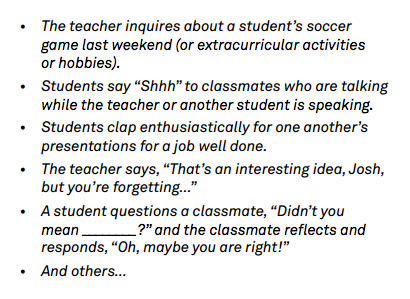
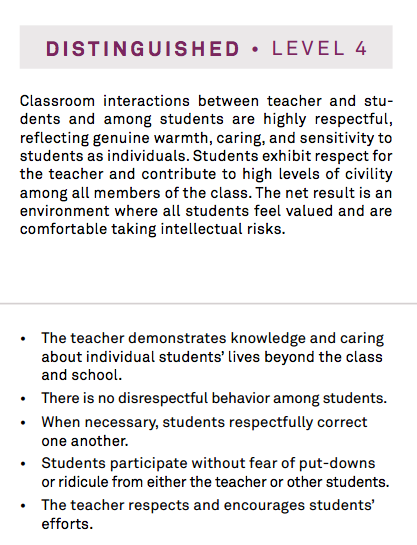
Examples from Charlotte Danielson:
Picture

Evidence from 2017-2018 and 2018-2019 School Years:

Classroom interactions between teacher and students and among students are highly respectful, reflecting genuine warmth, caring, and sensitivity to students as individuals:
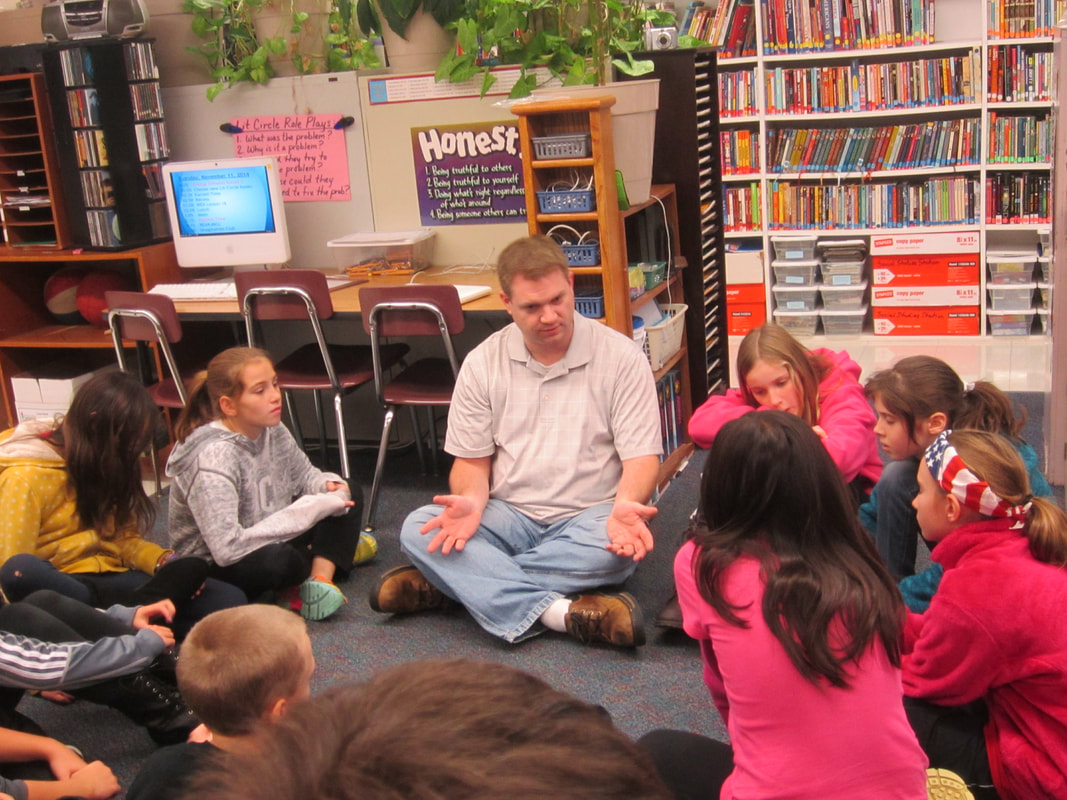
  • Relationships are DEFINITELY #1 in our classroom. If a relationship between the teacher and a student or between a student and a student is in danger, everything stops until it can be fixed. Time might be spent sitting together on the floor to work out the misunderstanding or to help the child(ren) realize that feelings were hurt but no one did anything on purpose.
  • I start out the year talking about the importance of liking each other "no matter what." And that means that no matter how hard we make it on each other, we all work to like each other so that we can have a productive year together. Students and I truly take that to heart.
Picture
Picture
Picture

Students exhibit respect for the teacher and contribute to high levels of civility among all members of the class. The net result is an environment where all students feel valued and are comfortable taking intellectual risks:
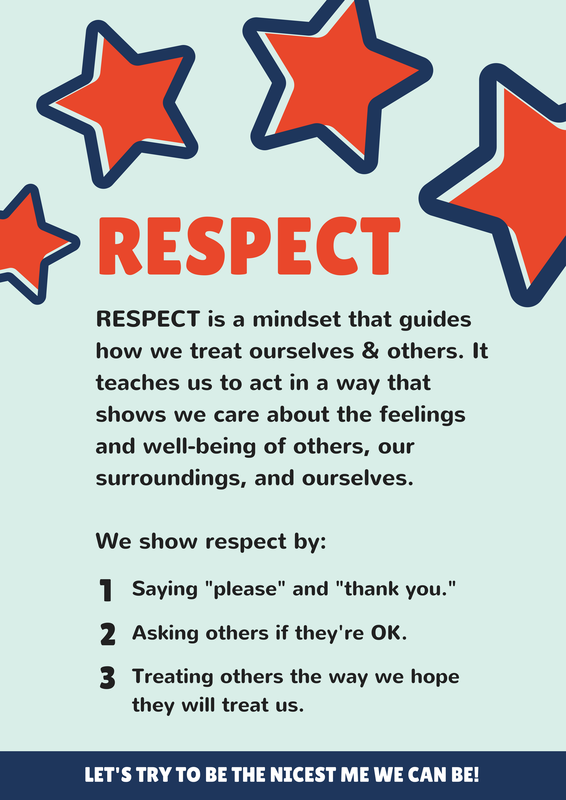
  • Our classroom is a place where students learn how to treat each other with respect, kindness, and patience. We learn how to have fun together and we read each other to ensure that our intentions are never misunderstood.
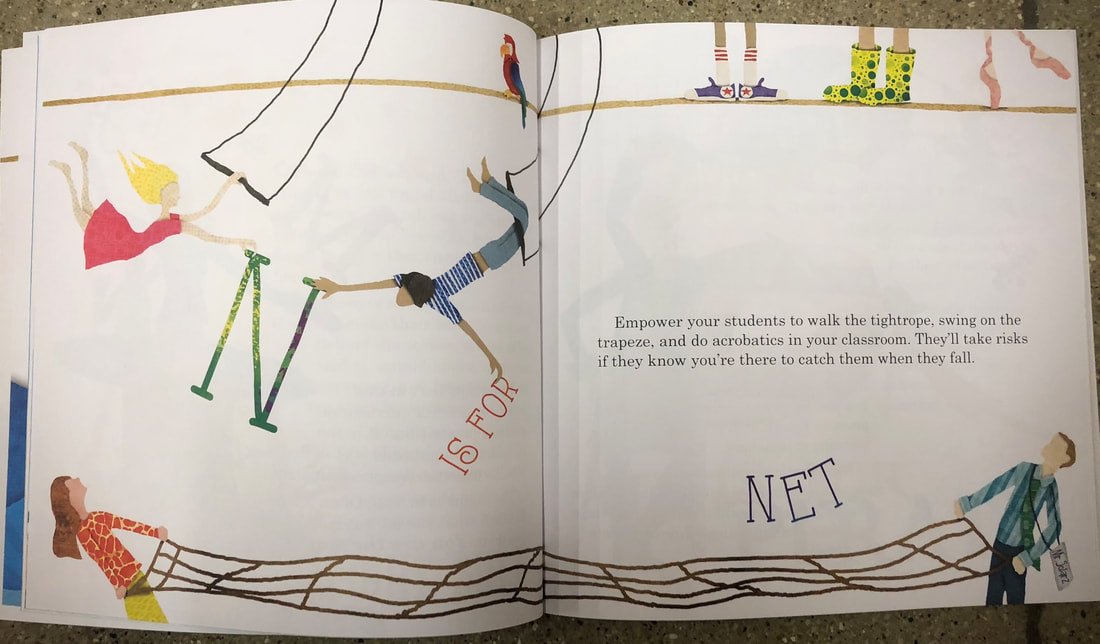
  • Students know they are expected to take academic and behavioral risks. When they make mistakes or fail, they know their risk will be appreciated and that no hard feelings will linger. Those who fear risk-taking, learn over the course of the year that the most learning occurs for those who are willing to try new things!
Picture
Picture
Picture

Read More
0 Comments

2b - Establishing a Culture for Learning

3/27/2019

0 Comments

 
Picture
Examples from Charlotte Danielson:
Picture

Evidence from 2017-2018 and 2018-2019 School Years:

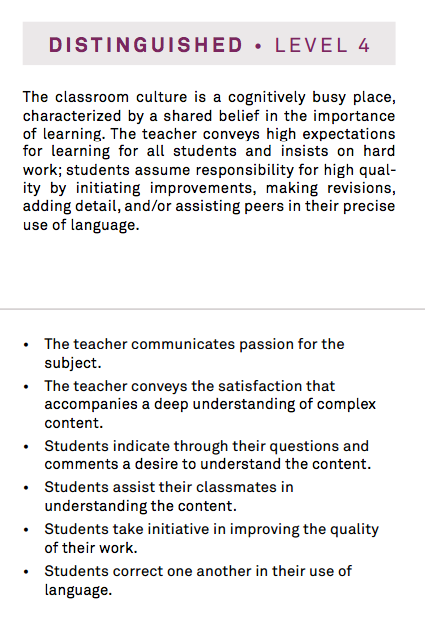
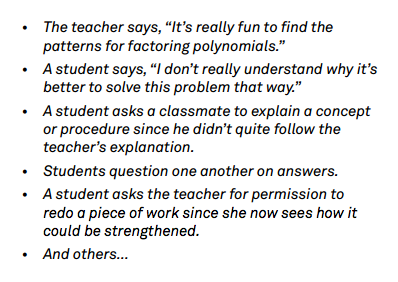
The classroom culture is a cognitively busy place, characterized by a shared belief in the importance of learning:

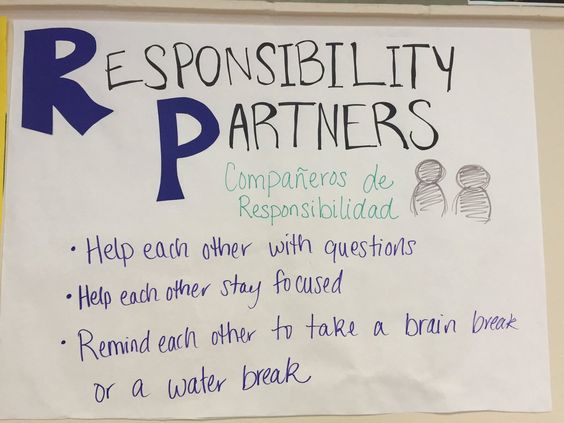
  • In our classroom, we have Classroom Meetings to discuss the importance of hard work, metacognition, and staying focused for long stretches of time. Students are assigned Responsibility Partners to help each other manage behavior and time on task.
Picture

The teacher conveys high expectations for learning for all students and insists on hard work; students assume responsibility for high quality by initiating improvements, making revisions, adding detail, and/or assisting peers in their precise use of language:

  • In our classroom, we focus on incremental improvement, rather than perfection. Students are asked to learn new skills or concepts, practice them, and after reflecting or receiving feedback, revise and improve their work. Over time, this becomes a habit which leads to a recursive process of learning while maintaining high self-esteem.
Picture
Picture
Picture
Picture

Read More
0 Comments

2c - Managing Classroom Procedures

3/26/2019

0 Comments

 
Picture
Examples from Charlotte Danielson:
Picture

Evidence from 2017-2018 and 2018-2019 School Years:

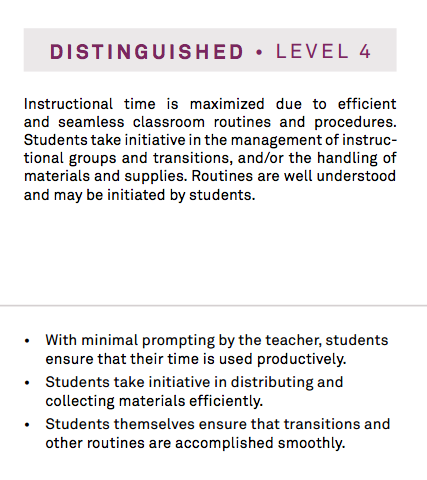
Instructional time is maximized due to efficient and seamless classroom routines and procedures:

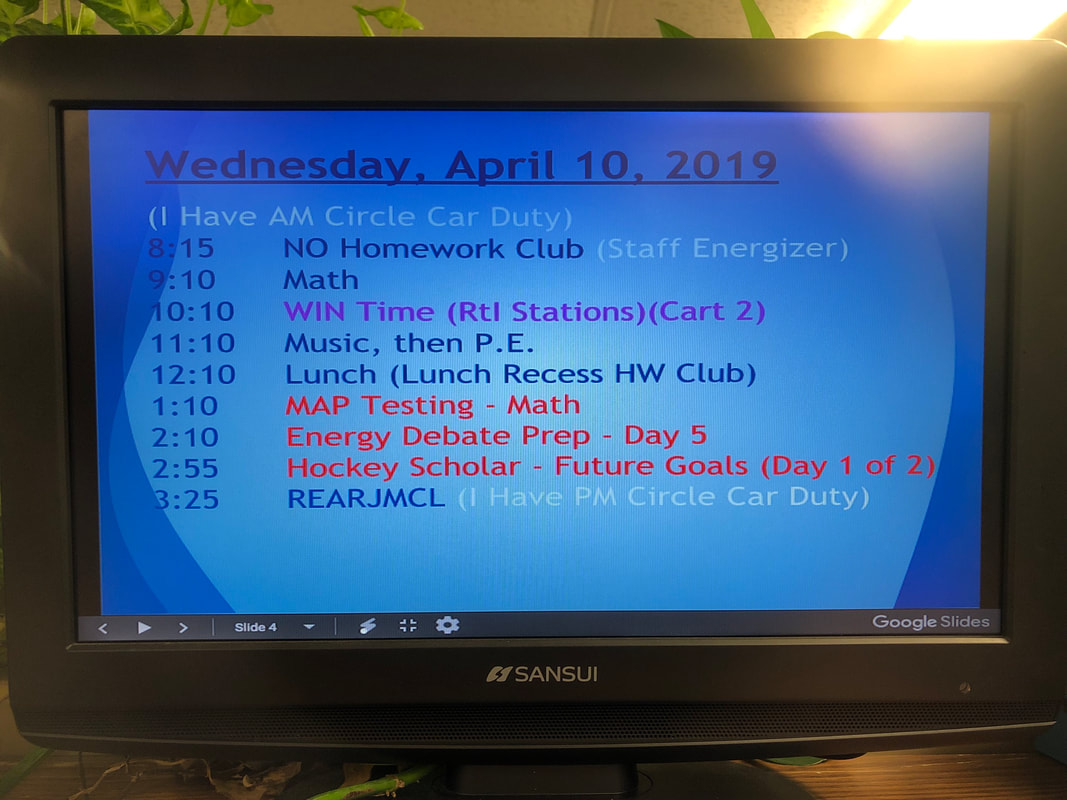
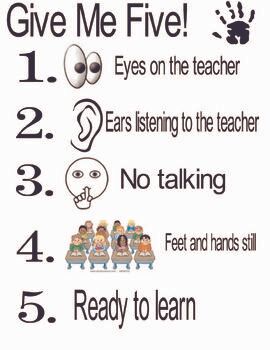
  • This is one area where I am extremely proud of my students! I rarely look at the clock, but because the schedule is posted on a monitor, students know when it's time to transition to the next subject, and call out "Give Me Five!" to announce the transition.
  • Because we are a student-led classroom, we rely on rituals and routines to be successful. Therefore, procedures are explicitly stated & practiced until perfected. This ensures that time on task is maximized.
Picture
Picture

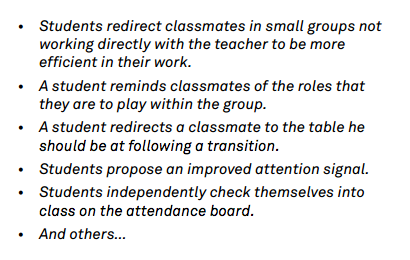
Students take initiative in the management of instructional groups and transitions, and/or the handling of materials and supplies:

  • My students handle the management of all of our groups, ensuring that materials and technology is ready when the group is ready to work.
  • One of our main focuses is on "bringing everyone to the top of the mountain with us, so we're not standing up there all alone!" This ensures that students don't race through their work, but instead focus on work and helping others at all times.
Picture
Picture

Routines are well understood and may be initiated by students:

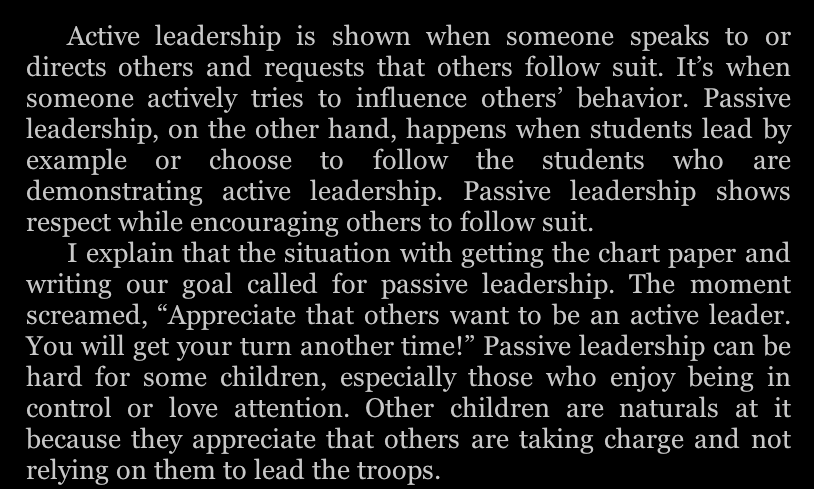
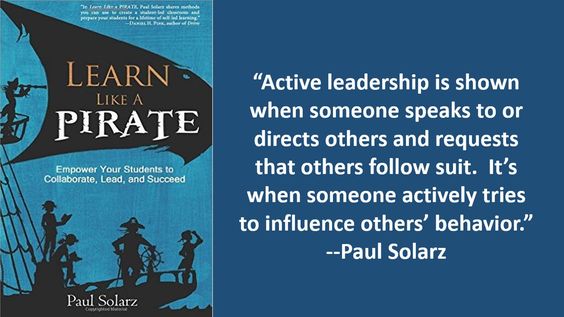
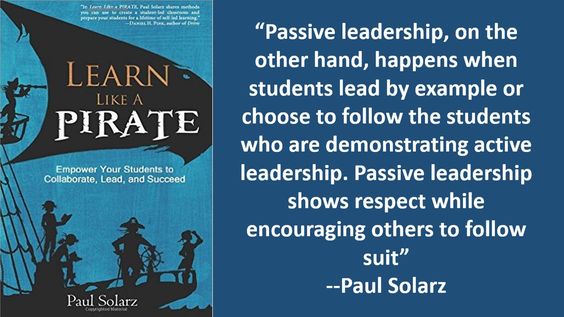
  • Routines and rituals are very well understood by all students. Not everyone is required to be an active leader, loudly announcing what everyone should do. Instead, we value students who are also passive leaders, following the direction from other students and being a good role model.
Picture
Picture
Picture


Read More
0 Comments

2d - Managing Student Behavior

3/25/2019

0 Comments

 
Picture
Examples from Charlotte Danielson:
Picture

Evidence from 2017-2018 and 2018-2019 School Years:

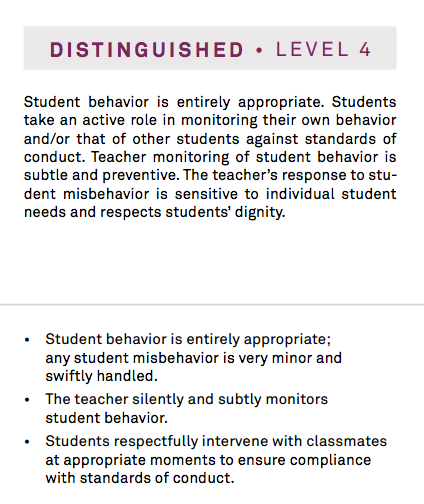
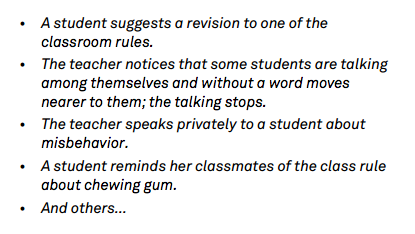
Student behavior is entirely appropriate. ​Students take an active role in monitoring their own behavior and/or that of other students against standards of conduct:

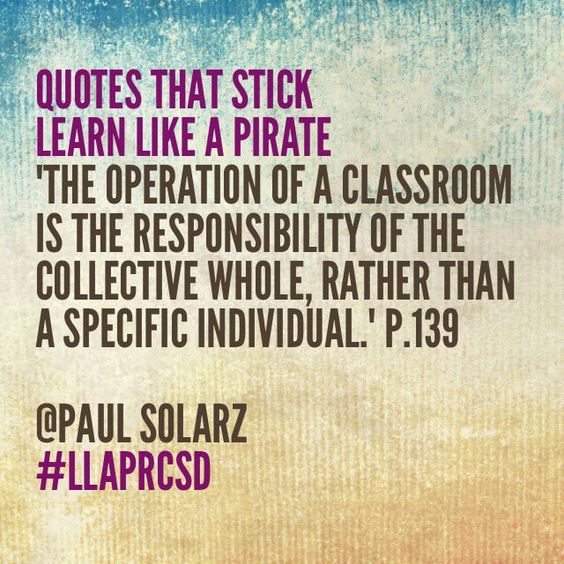
  • In our classroom, students know their limits and know my expectations. They know that we can be silly at appropriate times and have to be extremely focused and hard-working at other times. Ultimately, we all share in the responsibility of ensuring that our classroom is a safe and enjoyable place to be. That means we need to monitor our own behavior, as well as help others monitor theirs. We do this in a positive, constructive way. Never in a negative, belittling way.


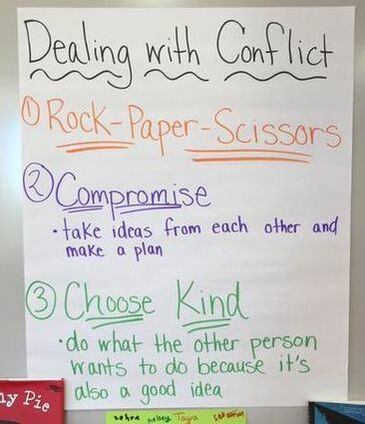
  • Students are taught how to deal with conflict on their own without the need of an adult. We do this through a classroom meeting at the beginning of the year where I introduce three strategies for dealing with conflict. We also learn Second Step lessons that deal with conflict management.


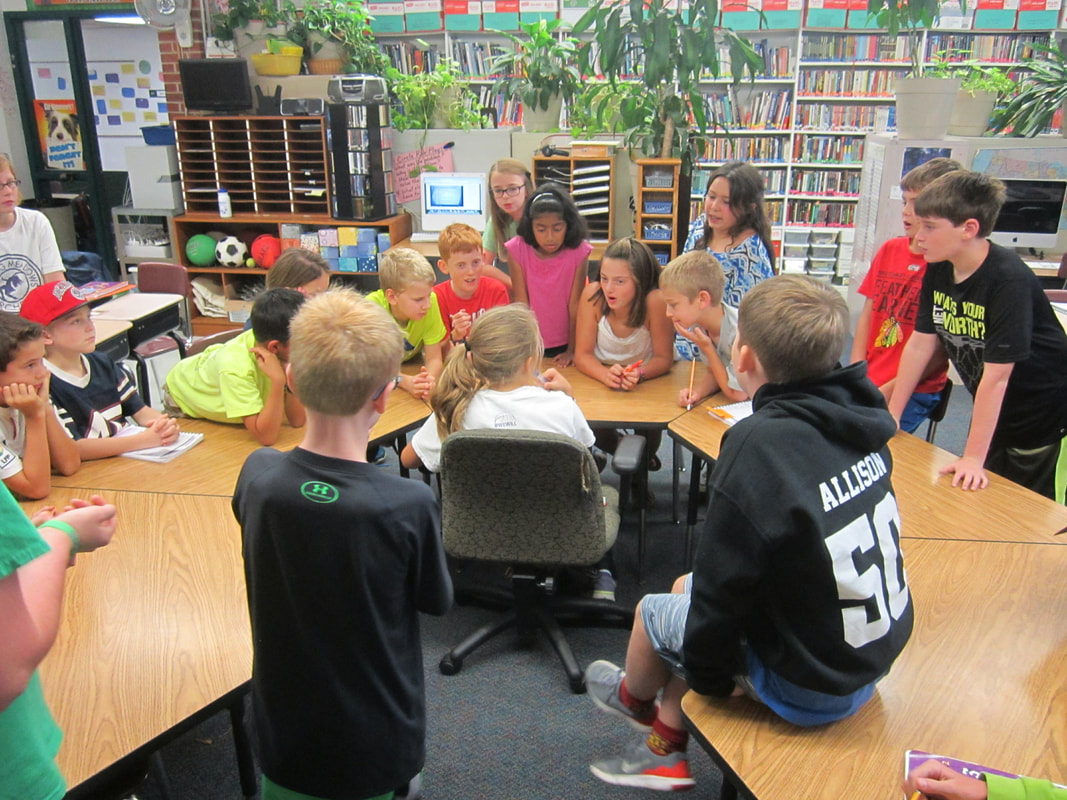
  • Students participate in "Evaluate" at the end of each day. A student runs it. Everyone comes to the center tables and participates (except for patrol - they're getting ready to leave & a few people who have jobs to do at this time).


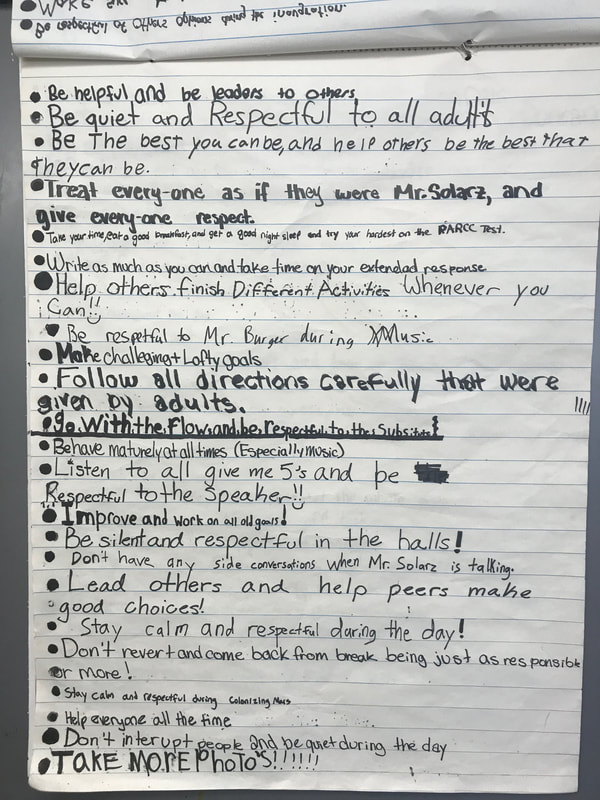
  • They ask, "What did we do well today and what did we do poorly?" The students share their ideas and the Evaluator chooses one of the things we did poorly to make as our Whole-Class Goal for the next day. Someone writes it down on our chart paper and on our white board, and then we refer to it throughout the next day.


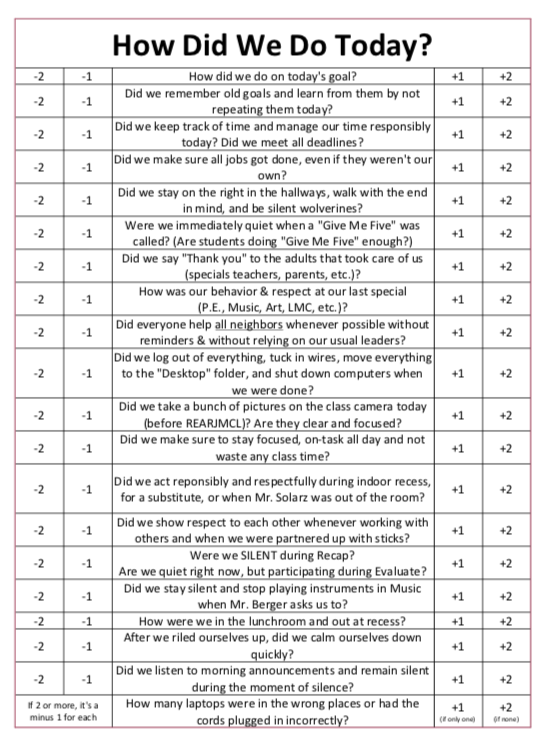
  • After the goal is set, the Evaluator runs the class through a rubric of behaviors & expectations. They ask their peers was it a "Positive" or "Negative" day with each behavior. The students respond chorally and the Evaluator makes a decision. Then, they ask "Positive 1 or Positive 2?" (Or negative). Students chorally reply and the Evaluator makes a decision on our rubric. At the end, they tally up the points and it goes towards a fun learning activity in the classroom.
Picture
Picture
Picture
Picture
Picture

Teacher monitoring of student behavior is subtle and preventive. The teacher's response to student misbehavior is sensitive to individual student needs and respects student's dignity:

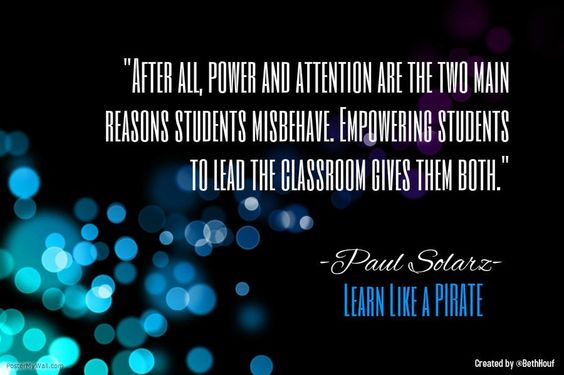
  • By empowering my students to lead in our classroom, and by giving them all the attention and power that they desire, I rarely have to deal with misbehaviors.


  • We talk about the importance of mutual respect, how much I care about each and every one of them, and how important it is that we all work very hard at our relationships. They in turn, give me a great effort, behave the best they can, and apologize sincerely when they make behavioral mistakes.


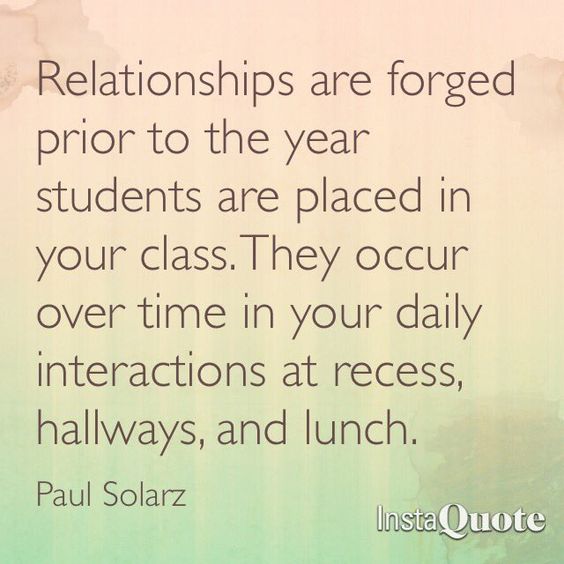
  • I developed relationships with many of my current students years before they were in my classroom. Some were developed in the bus line. Some were because I had their brother or sister. One of them is even the son of the principal who hired me 20 years ago!


​
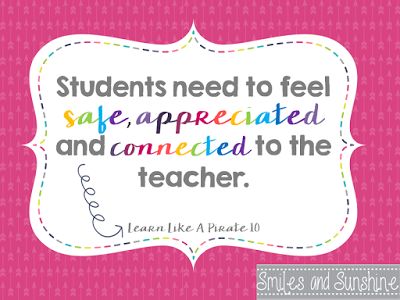
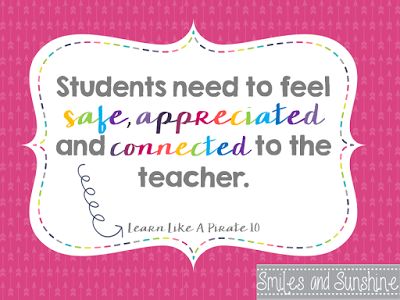
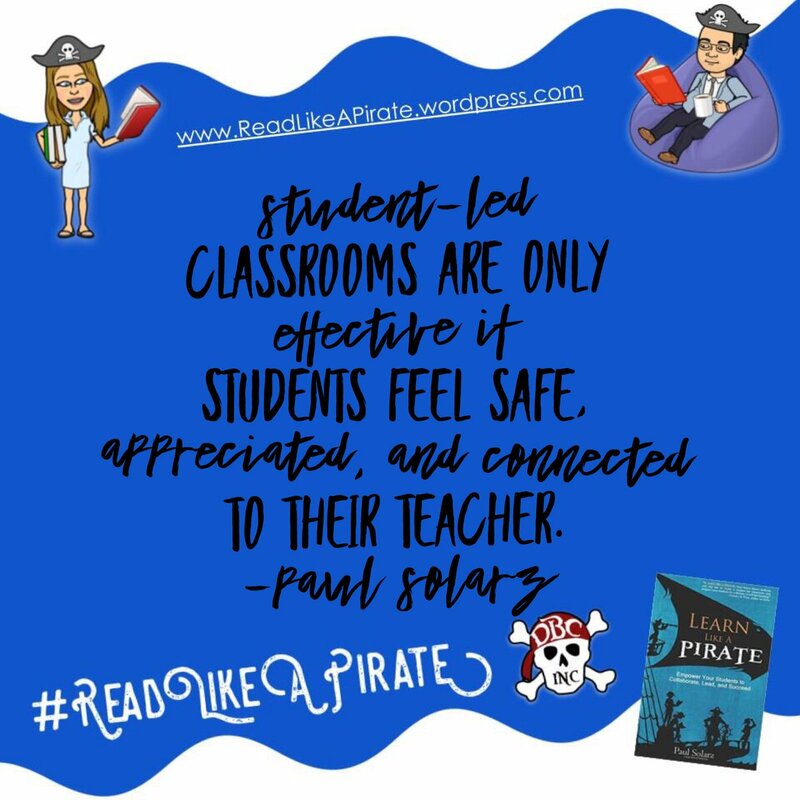
  • We work hard at making sure everyone feels safe, appreciated, and connected with each other. I sit with everyone and have small talk, help them with the areas they are most sensitive about, and teach them that NO ONE is perfect so we should get comfortable working on our 
Picture
Picture
Picture
Picture
Picture

Read More
0 Comments

2e - Organizing Physical Space

3/24/2019

0 Comments

 
Picture
Examples from Charlotte Danielson:
Picture

Evidence from 2017-2018 and 2018-2019 School Years:

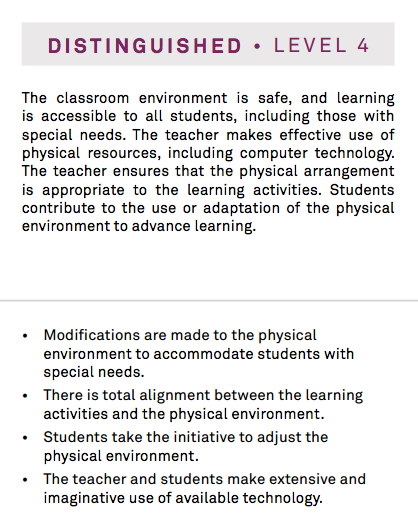
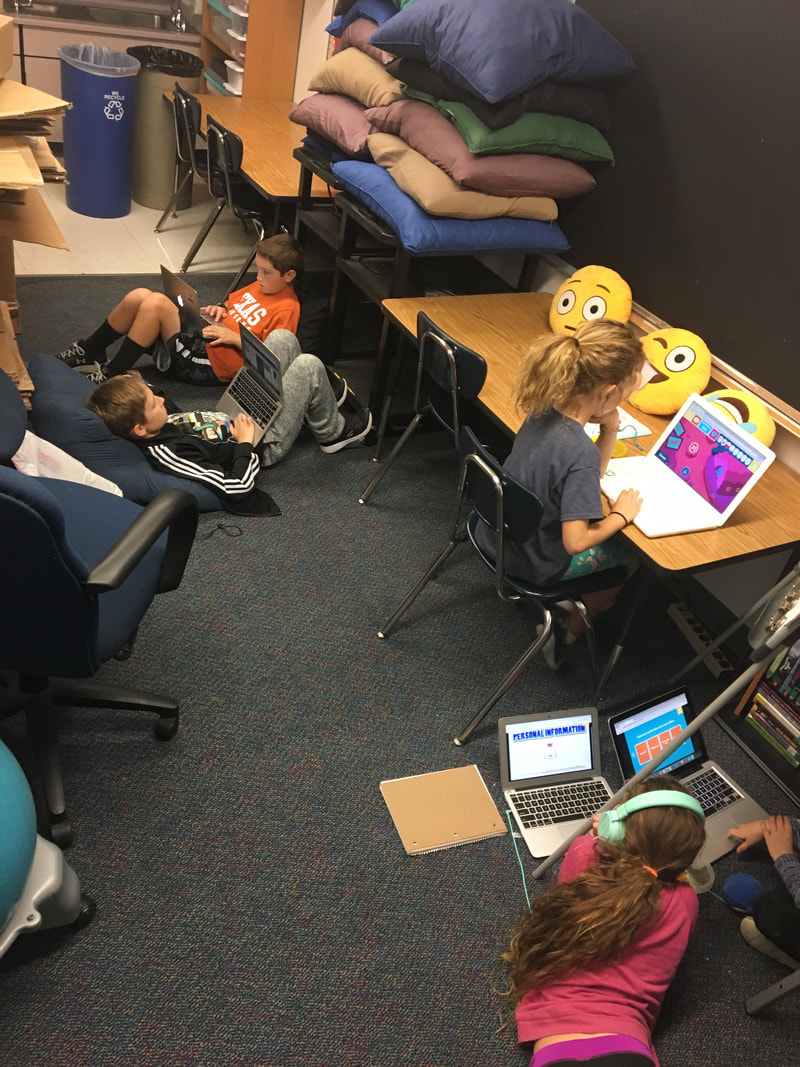
The classroom environment is safe and learning is accessible to all students, including those with special needs:

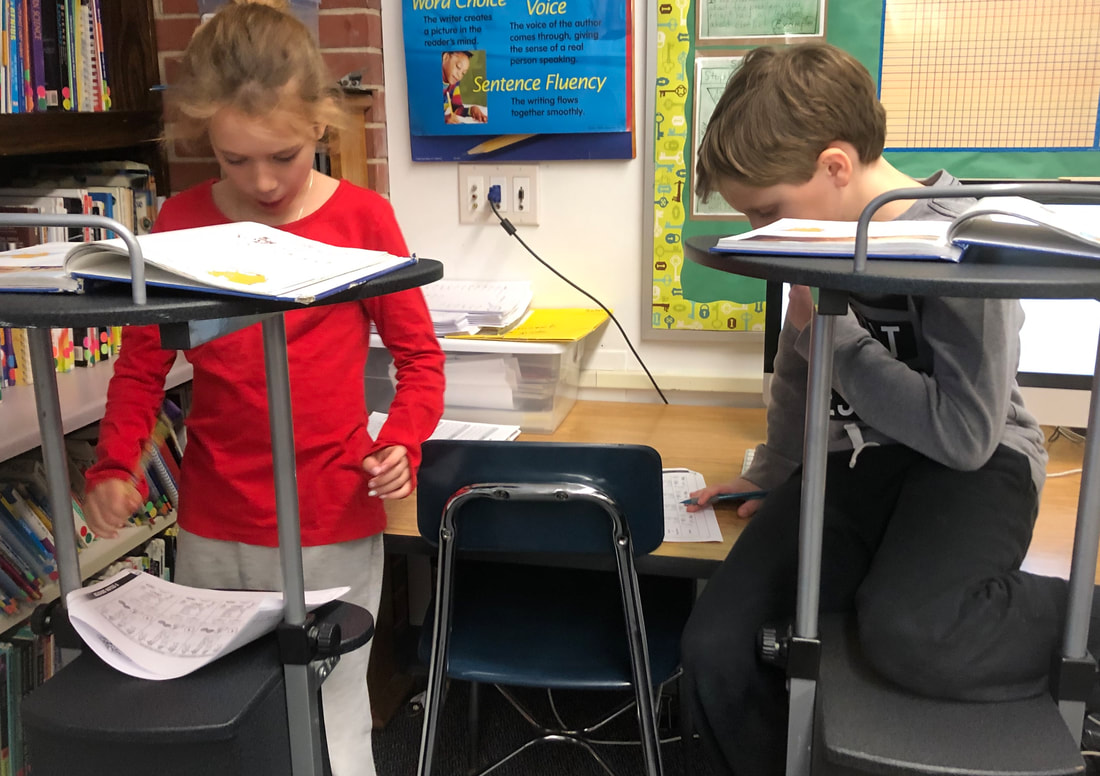
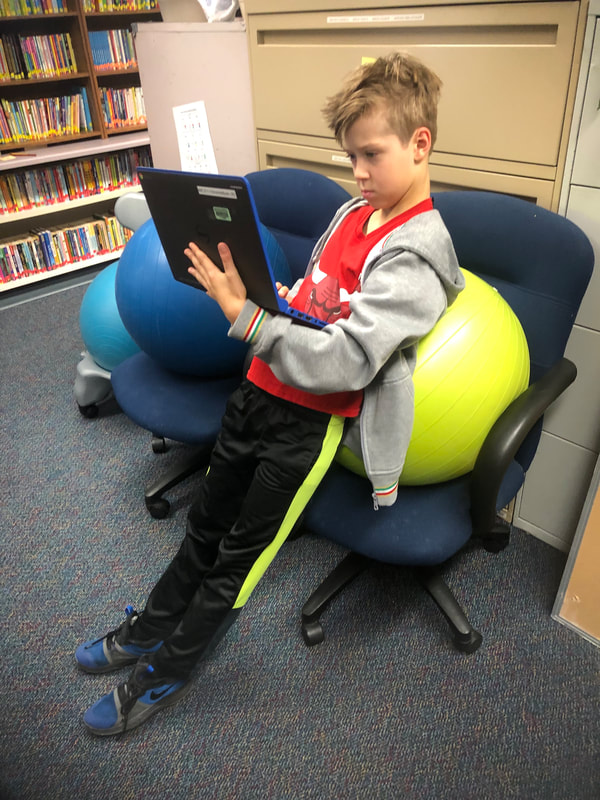
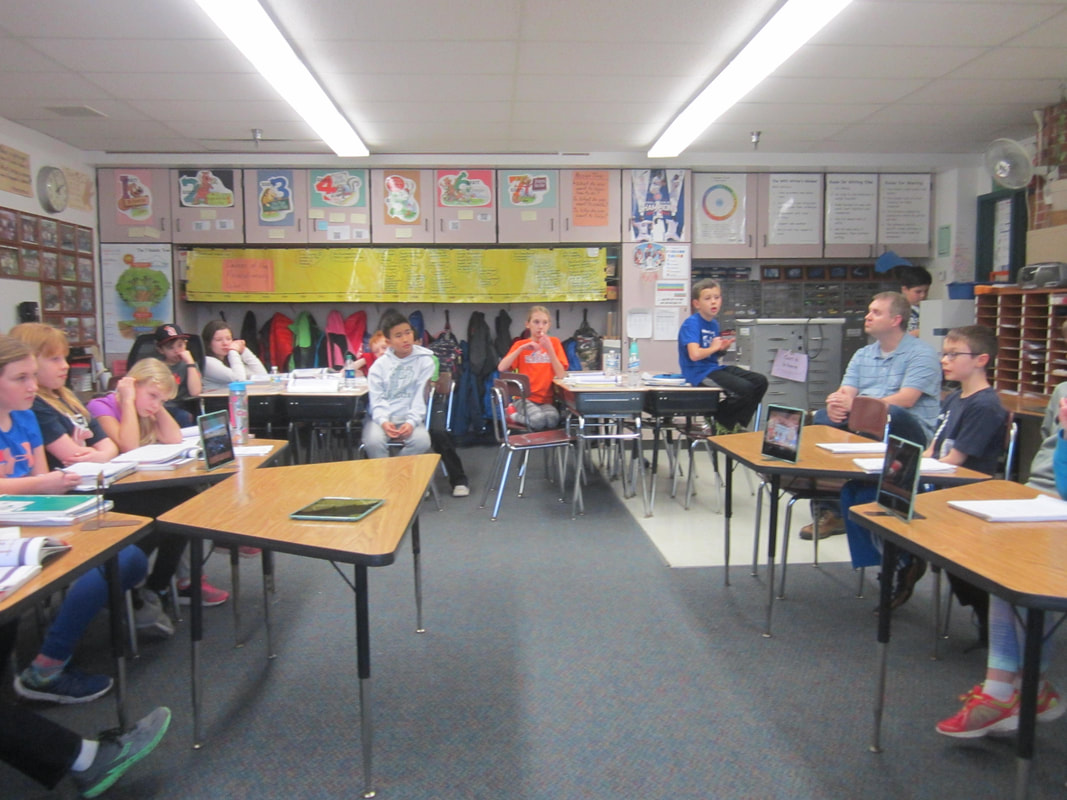
  • We have flexible seating in our classroom. Students are allowed to sit anywhere in the classroom while working with partners. Some choose to sit at tables, some prefer the floor. Others want pillows or standing desks or ball chairs or comfy chairs or their own desk!


​
  • These two standing desks are a bit tall for these two friends, but they're making it work! :)


​
  • Some have their own idea of what's best for them!


​
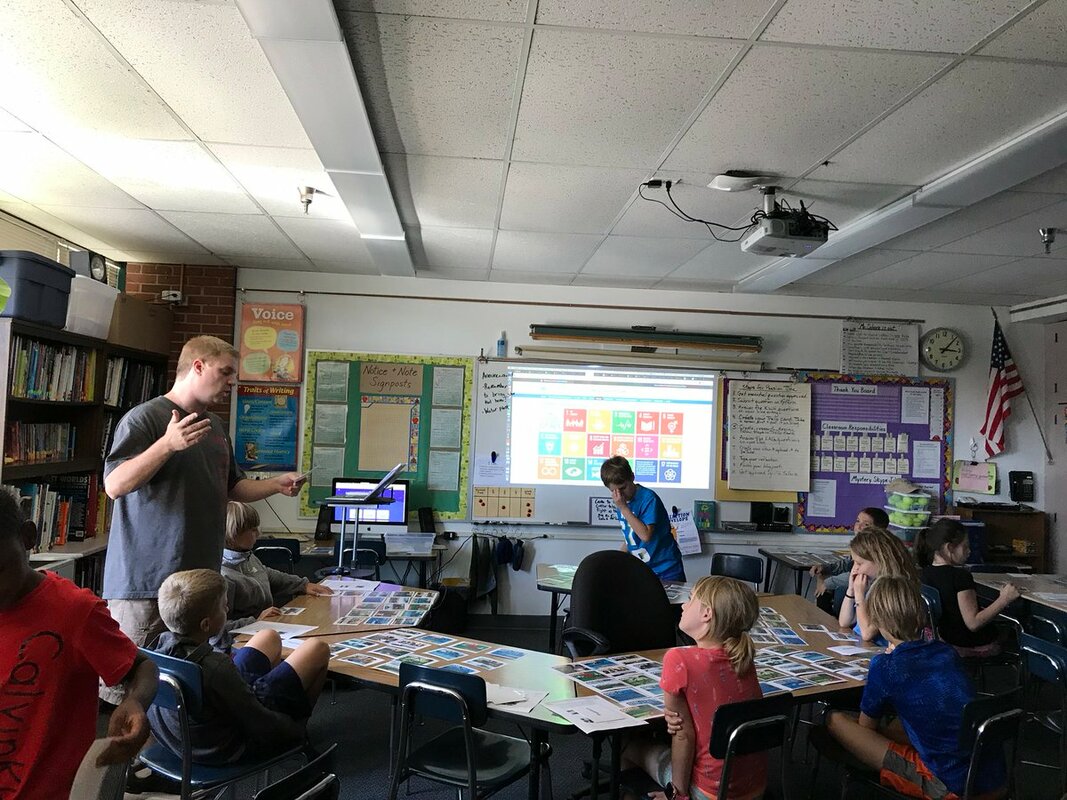
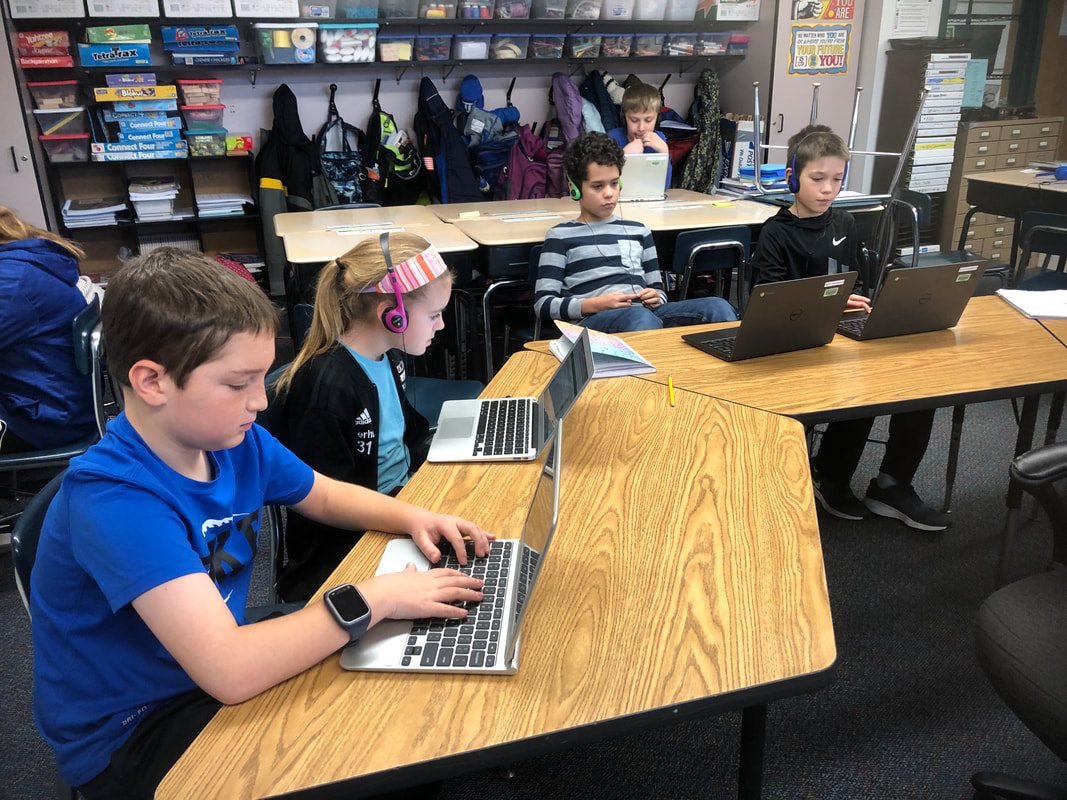
  • I just LOVE my trapezoid tables, because they're great for working with small groups of students or as a place for kiddos to spread out!
Picture
Picture
Picture
Picture

The teacher makes effective use of the physical resources, including computer technology:

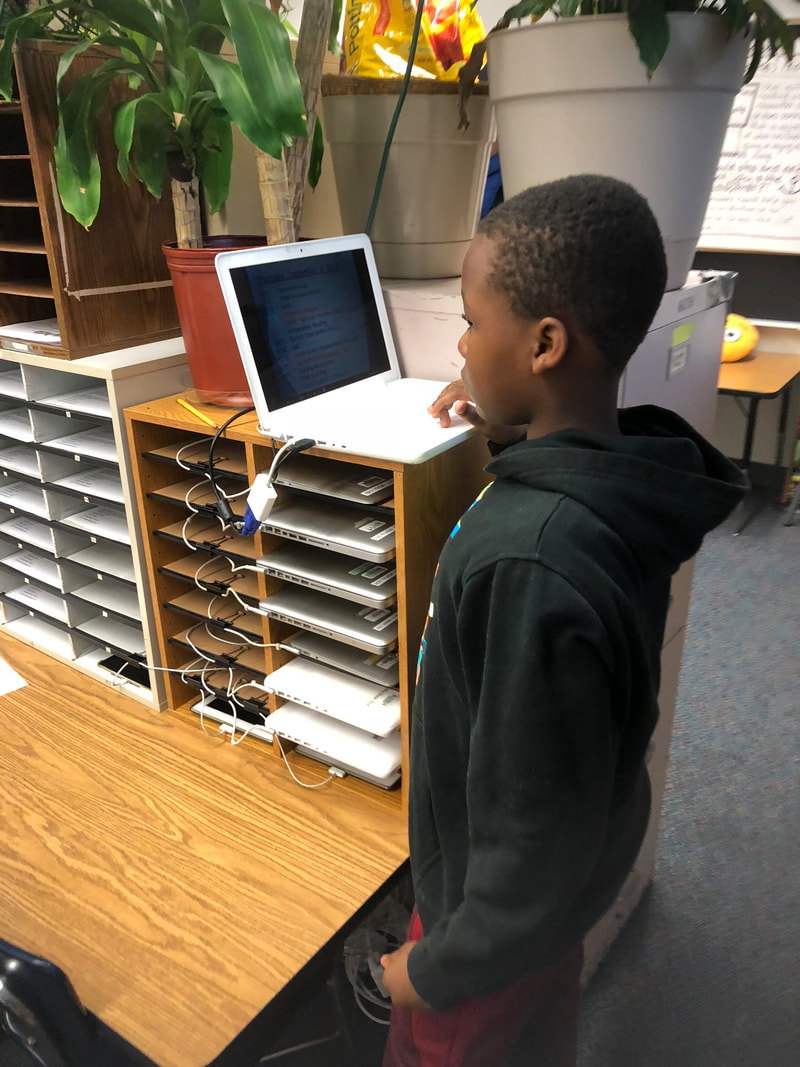
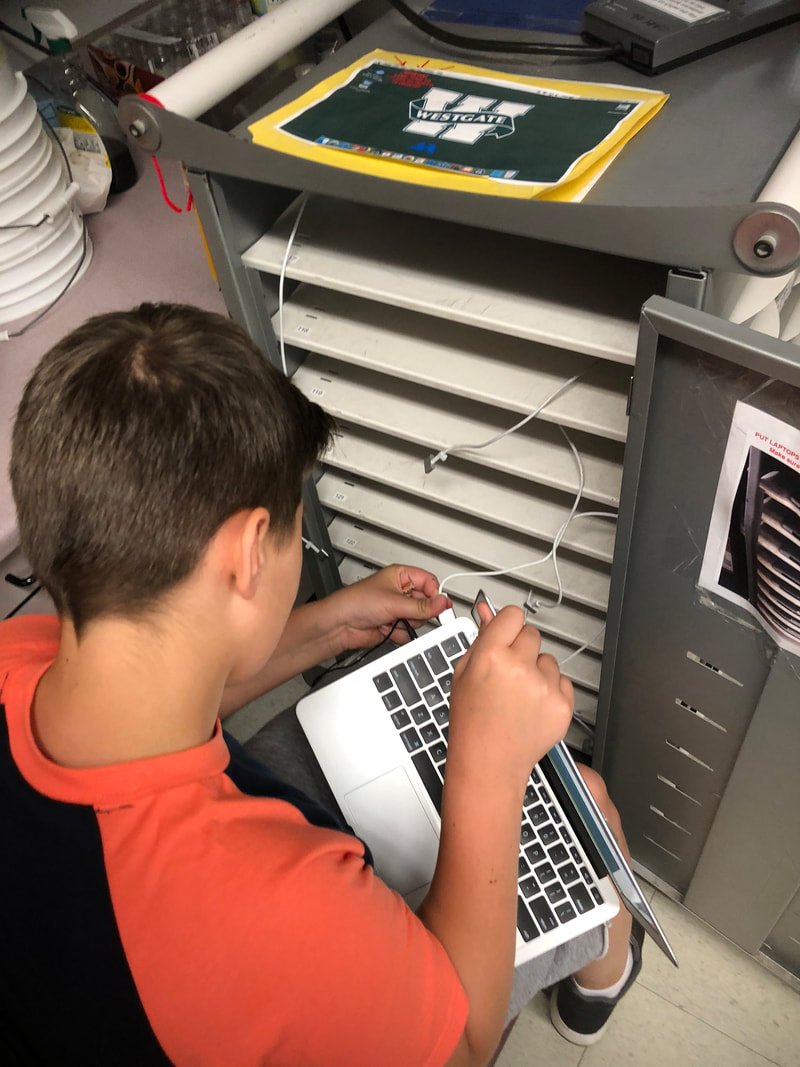
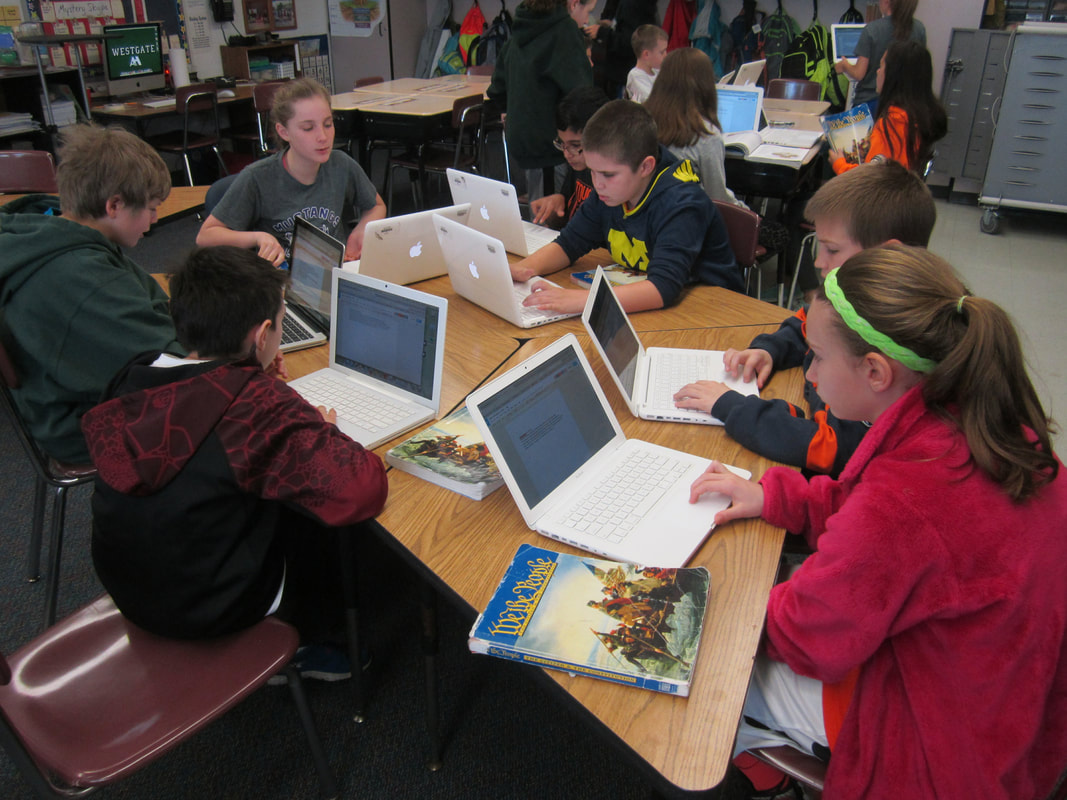
  • My students use laptops for approximately half of each school day. I put the schedule up for the day (on a monitor) and the students know based on the color of the text which laptop cart we have reserved. They immediately go and get a laptop from the proper cart before the lesson begins.


  • Students are expected to put their laptops back in the correct slots and plug their computers back in when we're finished with them for the day. One students is assigned the task of ensuring that everyone does it, but all students help remind each other.


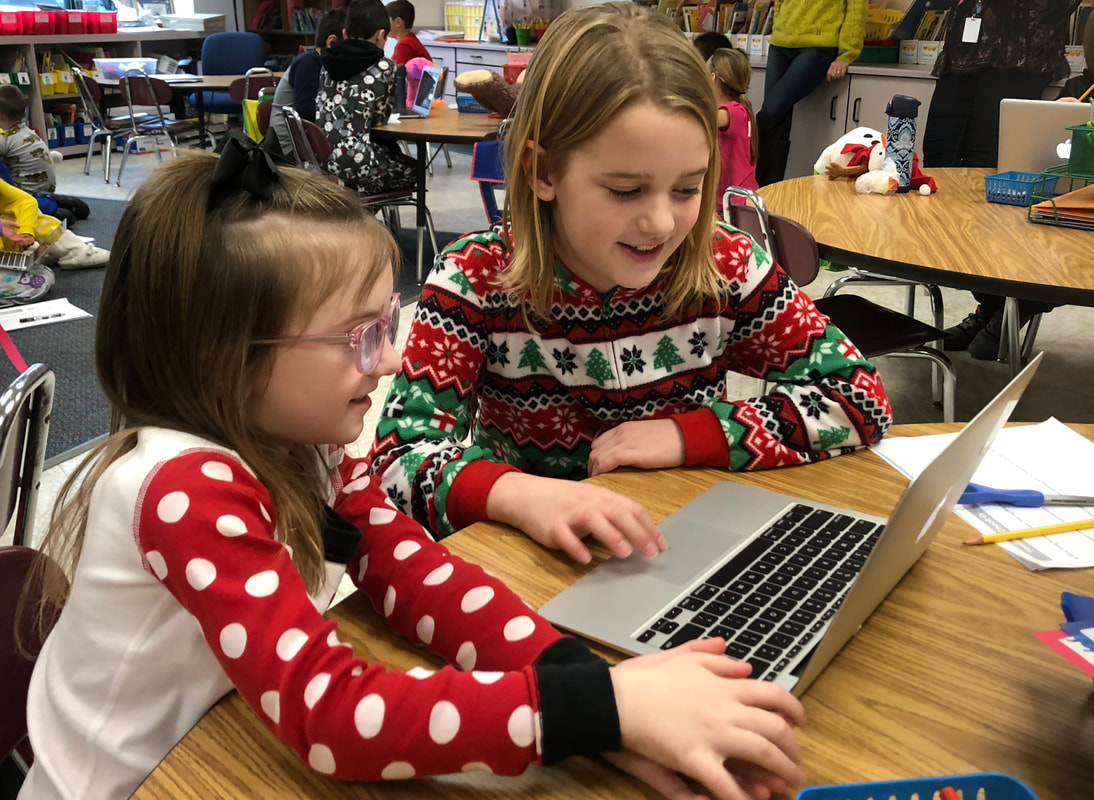
  • We meet with our KinderPals at least once per month, and each time we visit, we bring laptops so we can read them a story online and participate in various activities. Our kids teach the younger kids how to use the technology effectively as part of the experience.


​
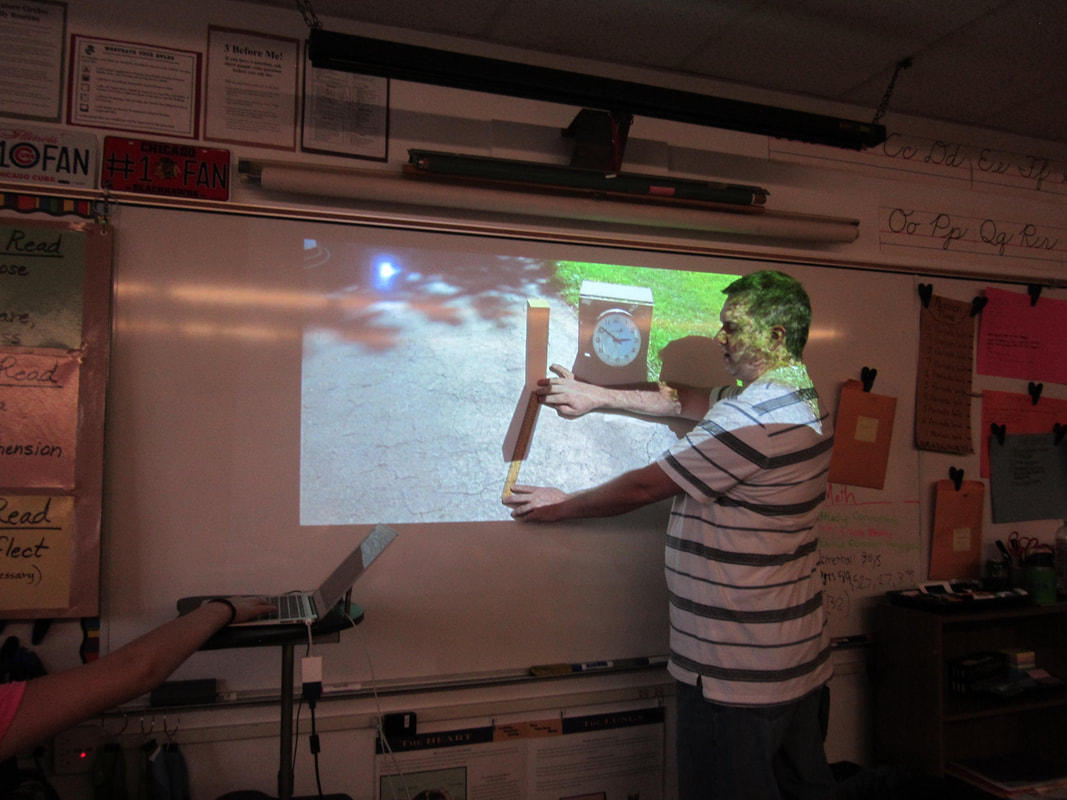
  • The LCD projector is one of my favorite tech tools to use in the classroom. I've found that I can show my work better when writing on paper at a table and projecting it with a document camera (than using the whiteboard). I also show videos, project directions for lessons, and show how to use tech tools on our projector.
Picture
Picture
Picture
Picture

The teacher ensures that the physical arrangement is appropriate to the learning activities:

  • Whenever we have debates or skits that require a back and forth between opposing sides, we move the trapezoid tables to opposite ends of the center of the classroom. Students who are not in the skit sit on the outside and can see the entire event.


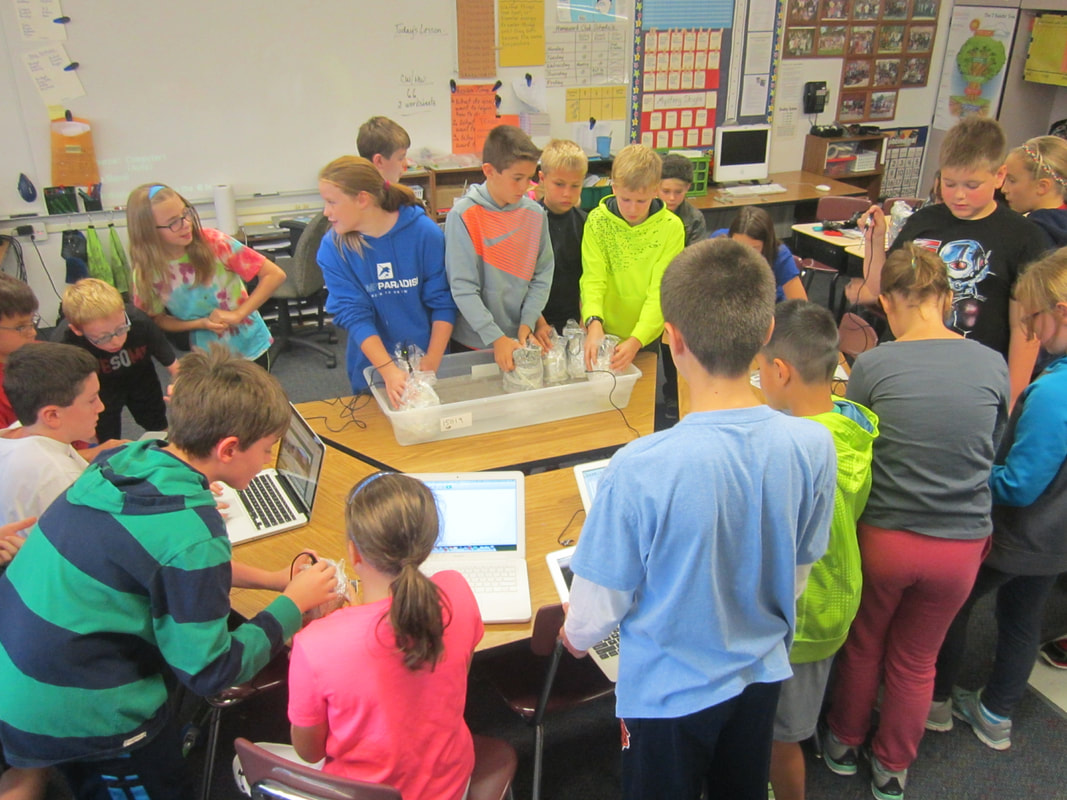
  • Students move trapezoid tables together when working in groups of 5-8 kiddos. It creates a conference table style setting.


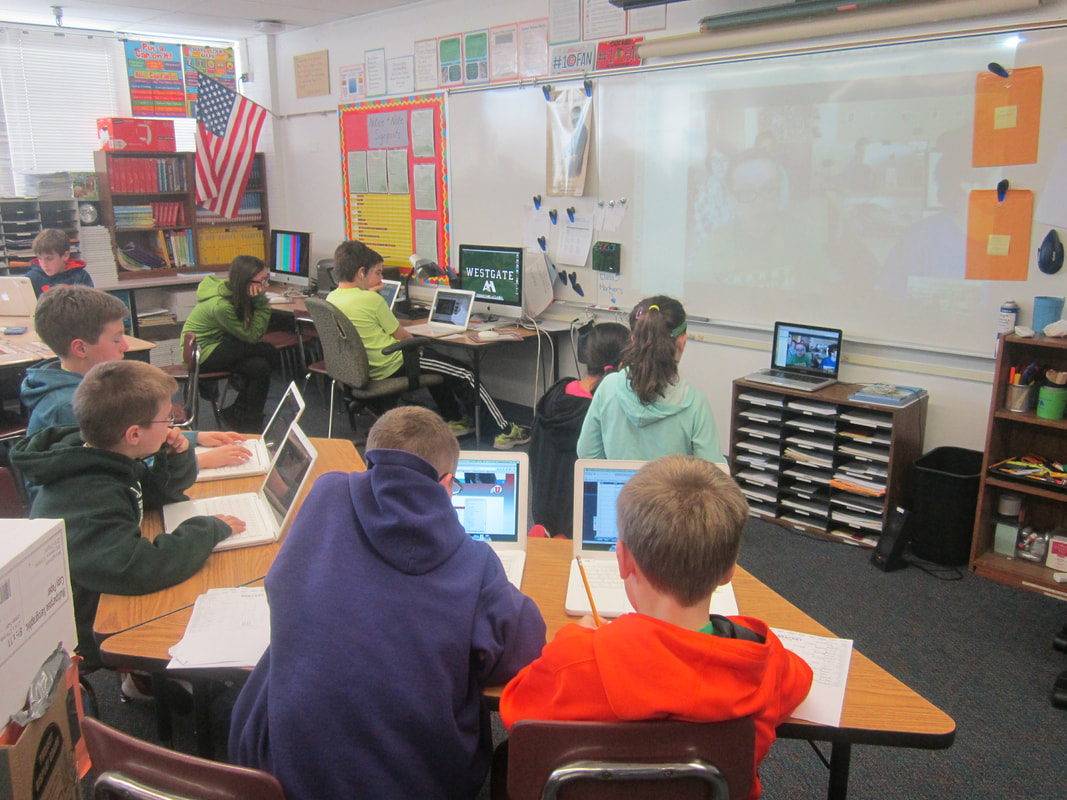
  • Whenever we do Mystery Skype, students move the tables and computer so that we can all see the other class on our projector. Students have assigned spots to sit according to their role. These roles change over time.


​
  • I can work with my students at the center tables by having them sit on the outside and I sit in the middle.
Picture
Picture
Picture
Picture

Students contribute to the use or adaptation of the physical environment to advance learning:

  • Students have the power (and are expected to) re-arrange the furniture for each type of activity we have. Our "rituals" are memorized by each student, and when these lessons come up on our schedule, they know exactly what needs to be done.


  • Sometimes, students move tables and chairs to the back of the room so we have a space to sit on the floor for classroom meetings.


  • Sometimes, students move tables to set up space for science experiments.


​
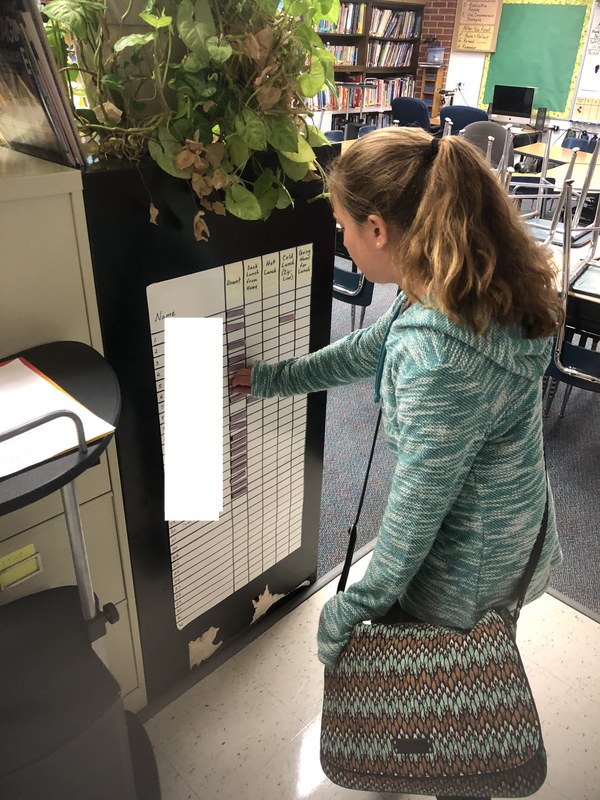
  • Everyday, students move their magnet when they first walk into the classroom from "Absent" to whatever lunch they're having. When they return from lunch recess, they move their magnet back.
Picture
Picture
Picture
Picture

Additional Notes:

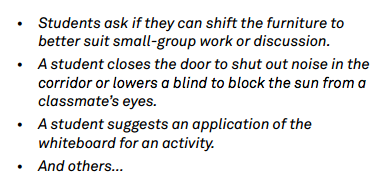
  • Students open and close the door, as needed, to allow for air flow or to eliminate noise from the hallway.
  • Students turn fans on and off, as needed.
  • Students turn the classroom lights on and off, as needed.
  • Students erase the board or use the board to explain things to the whole class or partners.
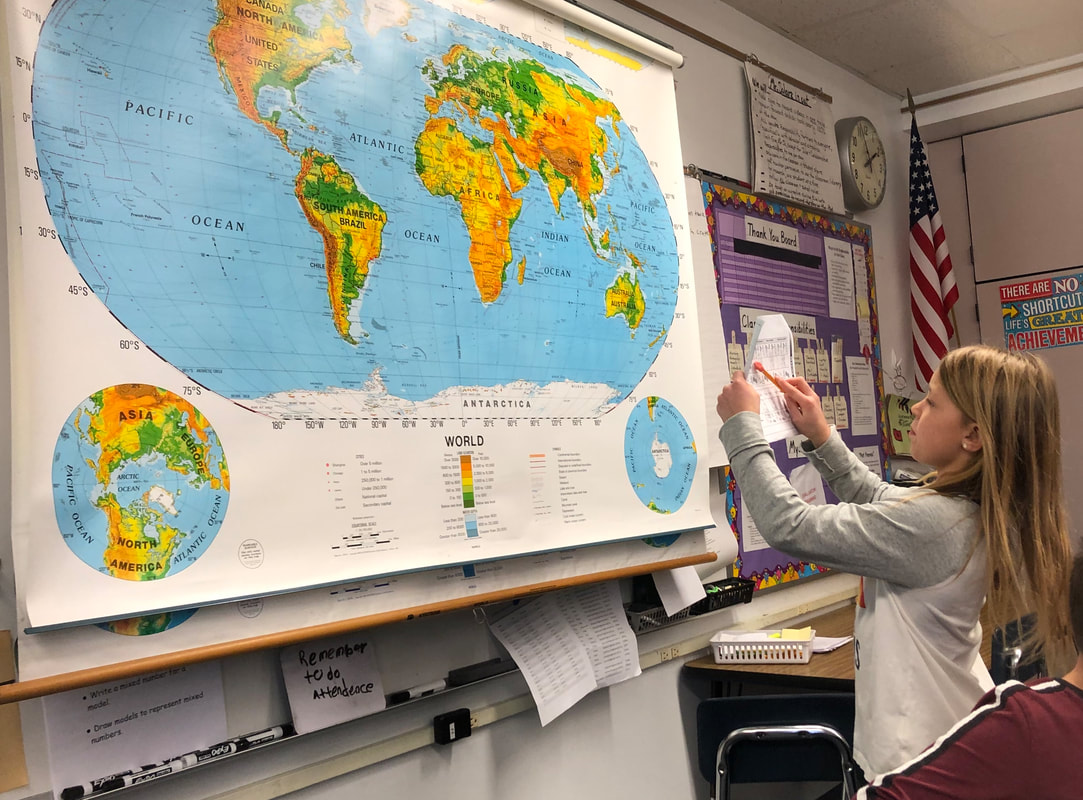
  • Students use our classroom maps to find answers to questions or explain ideas.
  • Students know where equipment and supplies are stored and regularly go into cabinets to refill Kleenex, get a loaner set of headphones, or refill our Band-Aids.
Picture

Read More
0 Comments

    Domain 2: The Classroom Environment​

    Teachers create a learning environment through positive interpersonal interactions, efficient routines and procedures, clear and consistent standards of conduct, and a safe physical environment that supports the learning purposes. In addition, the environment encourages students to take pride in their work and to assume responsibility for their learning. Students respond to the warmth and caring of teachers, their high expectations for achievement, and their commitment to students. Students feel safe with these teachers and know that they can count on the teachers to be fair and, when necessary, compassionate. Students are also sensitive to the subtle messages they receive from teachers as to their capabilities. The components of Domain 2 are not associated with the learning of any particular content; instead, they set the stage for all learning. The teacher establishes a comfortable and respectful classroom environment, which cultivates a culture for learning and creates a safe place for risk-taking. The atmosphere is businesslike, with non instructional routines and procedures handled efficiently; student behavior is cooperative and non disruptive; and the physical environment conducive to learning.

    Archives

    March 2019

    Categories

    All

    RSS Feed

Powered by Create your own unique website with customizable templates.