What's going on in Mr. Solarz' Class?
What's going on in Mr. Solarz's Class?
  • Parents (Newsletter)
    • Our Online Photo Album >
      • 2018-2019 Photo Album
      • 2017-2018 Photo Album
      • 2016-2017 Daily Photo Journal
      • 2016-2017 Daily Photo Journal - Album 2
      • 2015-2016 Daily Photo Journal
      • 2015-2016 Yearbook
      • 2014-2015 Daily Photo Journal
    • Our YouTube Channels >
      • 2018-2019 YouTube Channel
      • 2017-2018 YouTube Channel
      • 2016-2017 YouTube Channel
      • 2015-2016 YouTube Channel
      • 2014-2015 YouTube Channel
      • 2013-2014 YouTube Channel
      • 2012-2013 YouTube Channel
      • YouTube videos over the years
      • Learn Like a PIRATE videos
    • Calendar
    • Our Weekly Schedule
    • FAQ about our classroom
    • Curriculum Night Presentation
  • Educators
    • Danielson Framework >
      • Domain 1 - Planning & Preparation
      • Domain 2 - Classroom Environment
      • Domain 3 - Instruction
      • Domain 4 - Professional Responsibilities
      • Professional ePortfolio
      • Instructional Coach Evidence
      • Experience Logs
    • FAQ about our Classroom
    • Workshops
    • Our Classroom Library is for Sale
  • Curriculum
    • Science Units >
      • 5th Grade >
        • Human Body Unit >
          • Human Body Links
        • Ecosystems >
          • Ecosystems - Legends of Learning
        • Watery Earth >
          • Watery Earth Links
        • Earth in Space
        • Investigating Matter
      • 4th Grade >
        • Energy >
          • Energy Unit Notes
          • Energy Debates
          • Energy Debate Organizers
        • Our Geosphere
        • Waves
      • Science Fair
      • STEM Investigations!
      • Try Engineering Together
    • Social Studies Units >
      • 5th Grade >
        • Revolutionary War >
          • Liberty's Kids Videos
          • Revolutionary War Hero Project >
            • RWHP Directions
        • U.S. Constitution & Government >
          • Mini Lessons
          • Colonize Mars! >
            • Claiming Mars for Ourselves >
              • 2017-2018 Creating our Country on Mars
              • 2016-2017 Mars Decisions
              • 2015-2016 Claiming Mars for Ourselves
              • 2014-2015 Claiming Mars for Ourselves 2015
            • Solutions to Problems on Mars >
              • 2017-2018 Our Solutions to Problems on Mars
              • 2016-2017 Problems & Solutions
              • 2015-2016 Our Solutions to Problems
              • 2014-2015 Our Solutions to Problems
            • 2014-2015 "Mission: Mars" Video Discussions 2015
          • Project Citizen
        • Westward Expansion >
          • Oregon Trail Simulation
          • Oregon Trail Readings
          • Reflection Rotation >
            • 2017-2018 Reflections >
              • ThingLink Photo Stories
              • Green Screen Tableaux Vivants
              • Fictional Travel Blog
              • Canva Concept Cards
              • YouTube Newscasts
              • Google Slide Show
              • Daily Travel Blog
              • Act-It-Outs
            • 2016-2017 Reflections
            • 2015-2016 Reflections >
              • Voki Reflections >
                • Voki Blog
            • 2014-2015 Reflections >
              • Act-It-Outs
              • Timeline Spreadsheet
              • Newscasts
              • ThingLink >
                • ThingLink Images
                • Sign up for ThingLink
              • Google Slideshow
              • Fictional Travel Log
              • Daily Travel Log
              • Tableaux Vivants
              • Photo Stories
      • 4th Grade >
        • Geography
        • Explorers
        • Native Americans
        • Colonization
        • State of Sustainability
      • Presidential Election Simulation - 2012 >
        • Presidential Election Simulation - 2016
      • Current Events
    • Reading >
      • 5th Grade Units >
        • Literature Circles >
          • Literature Circles >
            • Video Discussions
          • Literature Circles >
            • Video Discussions
            • Activities
        • Schoolwide Launch
        • Schoolwide Fiction
        • Schoolwide Non-Fiction
        • Schoolwide Ecosystems
        • Schoolwide Poetry
        • Wonder >
          • Wonder
        • The Phantom Tollbooth >
          • Phantom Tollbooth Assignments
      • 4th Grade Units >
        • Schoolwide Launch
        • Schoolwide Fiction
        • Schoolwide Non-Fiction
        • Schoolwide Poetry
        • Schoolwide Energy
    • Writing, Spelling & Grammar >
      • Writing >
        • Writing City
        • WEX
        • WriteAbout
        • Reflection Writing
        • JoonBugz
      • Spelling >
        • Words Their Way
      • Grammar >
        • Grammar
    • Math >
      • Money Island
      • Math in Focus
    • Miscellaneous >
      • Activities >
        • Short-Term Projects
        • Challenges!
        • Special Events
        • Projects & Mini Lessons
        • Bonus Activities
        • Miscellaneous >
          • Honor Badges
          • Growing a Growth Mindset
      • Imagination Club >
        • Schedule
        • Daily Ritual
        • Mini-Lessons
        • Photo Journal
        • Student Creations Round 1
      • Mystery Skype
      • Entrepreneurship Unit >
        • Entrepreneurship - Creating Our Own Businesses!
      • Self-Reflection
      • KinderPals
  • Student ePortfolios
    • 2018-2019 ePortfolios >
      • Students 1-7 >
        • 1 - Isabel
        • 2 - Alexis
        • 3 - Oscar
        • 4 - Adrian
        • 5 - Edy
        • 6 - Matthew
        • 7 - Molly
      • Students 8-14 >
        • 8 - Joey
        • 9 - Jeremiah
        • 10 - Emmalina
        • 11 - Sama
        • 12 - Hazel
        • 13 - Nick
        • 14 - Filip
      • Students 15-21 >
        • 15 - Nellie
        • 16 - Landon
        • 17 - Molly
        • 18 - Harrison
        • 19 - Kali
        • 20 - Inti
        • 21 - Ryan
        • 22 - Pavel
      • Blog Assignments
    • 2017-2018 ePortfolios >
      • Students 1-9 >
        • Elle
        • Daniel
        • Tommy
        • Alyssa
        • Gavin
        • Milosz
        • Mikey F
        • Caitlin
        • Brynna
      • Students 10-17 >
        • Kya
        • Olivia
        • Ian
        • Colin
        • Owen
        • Gianna
        • Isabella
        • Carmen P
      • Students 18-25 >
        • Lucy
        • Caleb
        • Mikey S
        • Wes
        • Martin
        • Will
        • Shaun
        • Carmen W
      • Blog Assignments
    • 2016-2017 ePortfolios >
      • Students 1-8 >
        • Hailie
        • Jody
        • Madison
        • Dylan
        • Calvin
        • Connor
        • Louisa
        • Harvey
      • Students 9-16 >
        • Anna
        • Jack
        • Ben
        • Elijah
        • Catelyn
        • Cole
        • Abby
        • Ashley
      • Students 17-23 >
        • Charles
        • Michelle
        • Charlie
        • Daniel
        • Sam
        • Chingoon
        • Kyren
      • Blog Assignments
    • 2015-2016 ePortfolios >
      • Students 1-9 >
        • TJ
        • JJ
        • Bridget
        • Alex
        • Mason
        • Ryan
        • Lucas
        • Shreya
        • Logan
      • Students 10-18 >
        • Charlotte
        • Addie
        • Aidan
        • Andrew
        • Jeremy
        • Rachel
        • Russell
        • Addy
        • Cassidy
      • Students 19-26 >
        • Audrey
        • Regan
        • Giuliana
        • Brady
        • Stephen
        • Matthew
        • Ben
        • Tyler
        • Thomas
      • Blog Assignments
    • 2014-2015 ePortfolios >
      • Students 1-7 >
        • 1 - Michael
        • 2 - Charlie
        • 3 - Nicole
        • 4 - Stacy
        • 5 - Bela
        • 6 - Kendall
        • 7 - Demetri
      • Students 8-14 >
        • 8 - Emily
        • 9 - Nicky
        • 10 - Hanna
        • 11 - Payton
        • 12 - Hasanain
        • 13 - Tucker
        • 14 - Chris
      • Students 15-21 >
        • 15 - Madi
        • 16 - Aidan
        • 17 - Luke
        • 18 - Kaela
        • 19 - Ryan
        • 20 - Alison
        • 21 - Lucas
      • Blog Assignments
  • Passion Time
    • Passion Time Resources >
      • ALL Passion Time Resources
      • Step-By-Step Directions
      • Submit Your Essential Question
      • Our Trello Page
      • Our Passion Projects over the years
      • Our Trello Board
      • SAMPLE Blog Post Format
      • YouTube Upload Page
      • Mini-Lessons
    • 2018-2019 Projects >
      • Round 1
      • Round 2
      • Round 3
      • Round 4
    • 2017-2018 Projects >
      • Round 1
      • Round 2
      • Round 3
      • Round 4
      • Round 5
    • 2016-2017 Projects >
      • Submit Your Essential Question
      • Mini-Lessons
      • Round 1
      • Round 2
      • Round 3
      • Round-4
      • Round 5
      • Round 6
    • 2015-2016 Projects >
      • Round 1
      • Round 2
      • Round 3
      • Round 4
    • 2014-2015 Projects >
      • Round 1
      • Round 2
      • Round 3
      • Round 4
      • Round 5
      • Round 6
  • Student-Led Classroom Info
    • Our Learning Experiences
    • 21st Century Skills
    • Whole Class Goals
    • Individual Goals
    • Classroom Jobs
    • Collaborative Responsibilities
    • Rituals & Routines
    • Uses of "Give Me Five"
    • Student-Led Mini-Lessons
    • Lit Circle Signposts
    • Mystery Skype Jobs

KinderPal's Reflection

5/22/2018

0 Comments


Questions:

  1. What is the KinderPals Program?
  2. In what ways do you think the program benefits the kindergartners? Try to explain several with support.
  3. Why is the KinderPals program beneficial to 5th graders? Believe it or not, you should be getting something out of the program as well!
  4. What challenges did you experience in KinderPals this year?
  5. What improvements could be made to the program for next year?
  6. Do you think the kindergartners enjoyed the stories from Peekapak? Why do you think that? Do you have any evidence to support your answer?

Answers:

  1. KinderPals is a program where kindergarteners get a 5th or 4th grade buddy to teach them about important skills they need to learn in life. So far we have taught them about, Honesty, Courage, Perseverance, Empathy, Kindness, Respect, and Self-Regulation. Those can be big words to kindergarteners but this program simplify it so they can process the lesson.
  2. I think this program benefits kindergarteners because I think of the program as a cool and great way to teach kindergarteners very important life lessons. An example with my KinderPal is, when we were teaching courage she said she isn't always courageous. I gave her an example and asked her if someone was out at recess and they weren't in their class and were lonely, would you go up to them and ask them if they wanted to play with you? I asked her that at the beginning of the lesson and she wasn't sure if she had the courage to do that. When I was done teaching the lesson she said I think I would go up to them even if I hate them or don't know them.
  3. I do get something out of the program, my kinder pal was not very shy as others and she liked to share about herself. I got to know about her through this program and it was really nice comparing a 5th graders life to a kindergartener. It was really cool seeing how much we have in common. I also learned a little about myself, I learned that I am capable of still learning even the most simplest lessons you need to learn in life. This program really helps 5th graders with their collaborating skills and their teaching skills. It helps boost your confidents so you will feel more comfortable with saying a speech or presenting to strangers.
  4. Well for me at first it was really hard to manage my kinder pals energy. She just wanted to do the activities and not so much of the listening. She was very energetic and hyper back then but now she is way better at controlling her own energy and she is a very good listener. At first she didn't really like the books and when I read them to her she didn't really listen. Now she reads the books to me! She improved a lot.
  5. I think that the program is almost perfect how it is. I think that kinder pals could have another worksheet at the end to see if they actually learned anything. They could make really simple questions so that you could see how well your kinder pal is doing and what do you need to teach them in the last few minutes.
  6. I know that my kinder pal loves the stories. At the end she has told me she likes the little poem at the end. She also went from not listening to The story to reading ever word of it. She really loves to read and she says these books are fun and colorful, they also teach her important lessons for her future. 
0 Comments

Testing Plant Growth

5/14/2018

0 Comments

 
Picture
Picture

Independent Variable

  • Plant seeds in different kinds of soil(e.g.,potting soil, perlite, sand, etc.)

Dependent Variables

  • Measure the height of each plant at certain checkpoints.
  • ______________________

Evidence

  • We can record our data using measurements (in cm)
  • ______________________

Reflection/Synthesis:

  1. Name your Control Variables (What will stay the same for each of the three cups)?
  2. Name the Independent Variable (What is it that is different for each of the three cups)?
  3. Name your Dependent Variable (What is it that you are testing & recording data on?)
  4. What data are you collecting to serve as Evidence to show how plants grow in organic material versus inorganic planting material?
  5. Why is everyone starting with the same three cups? Why do we need to test so many plants?
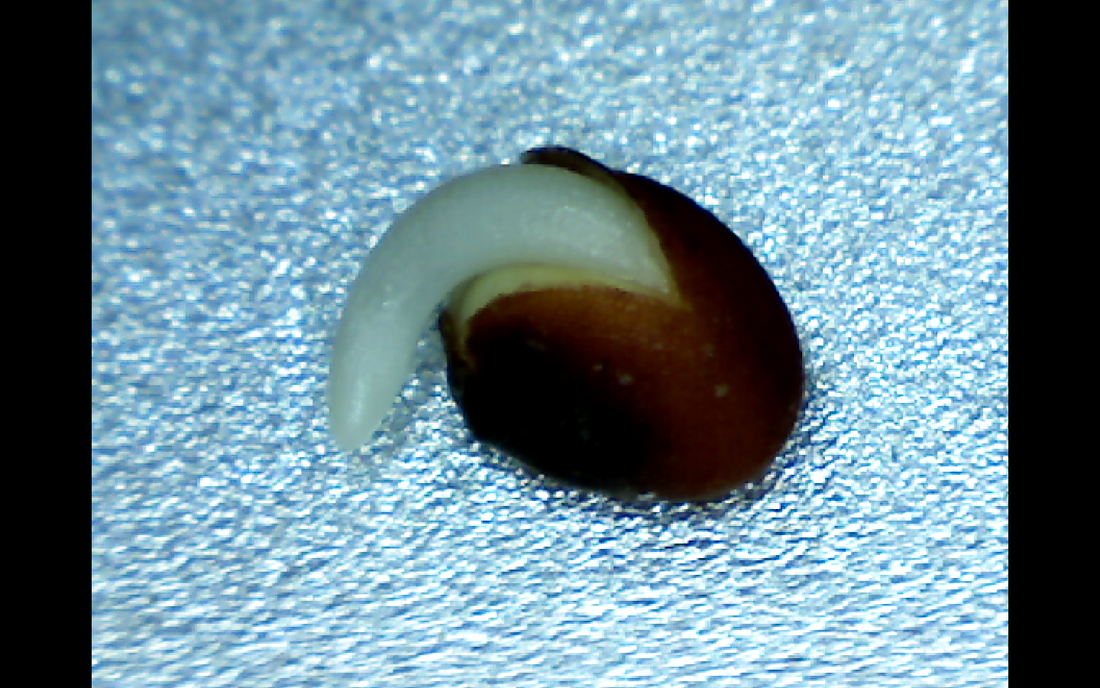
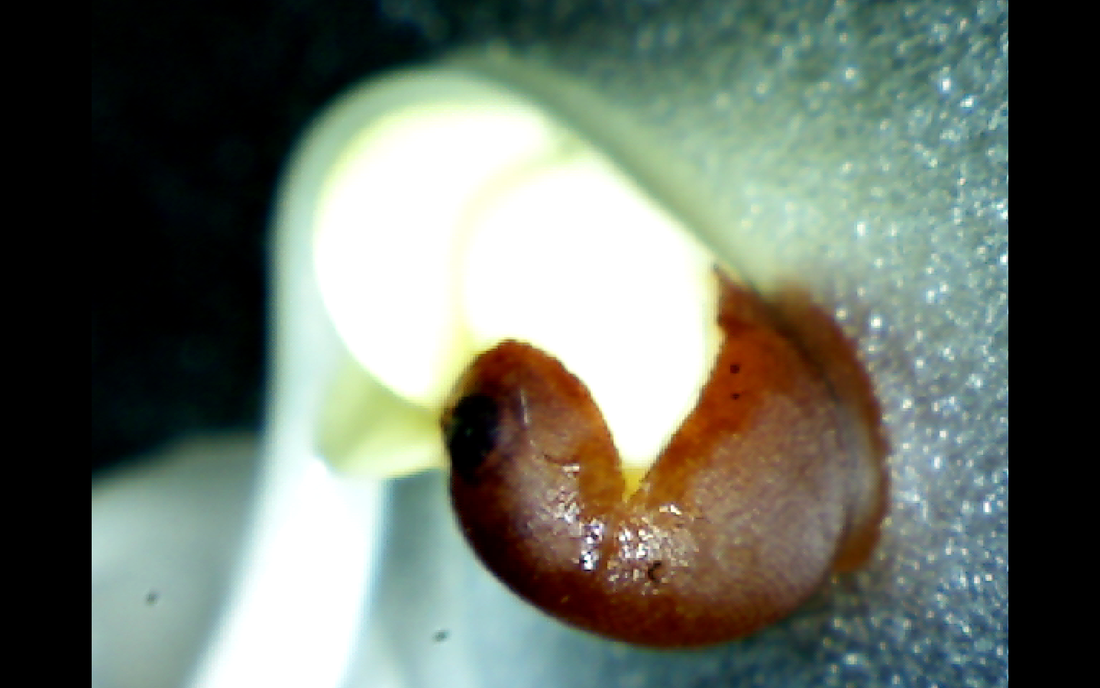
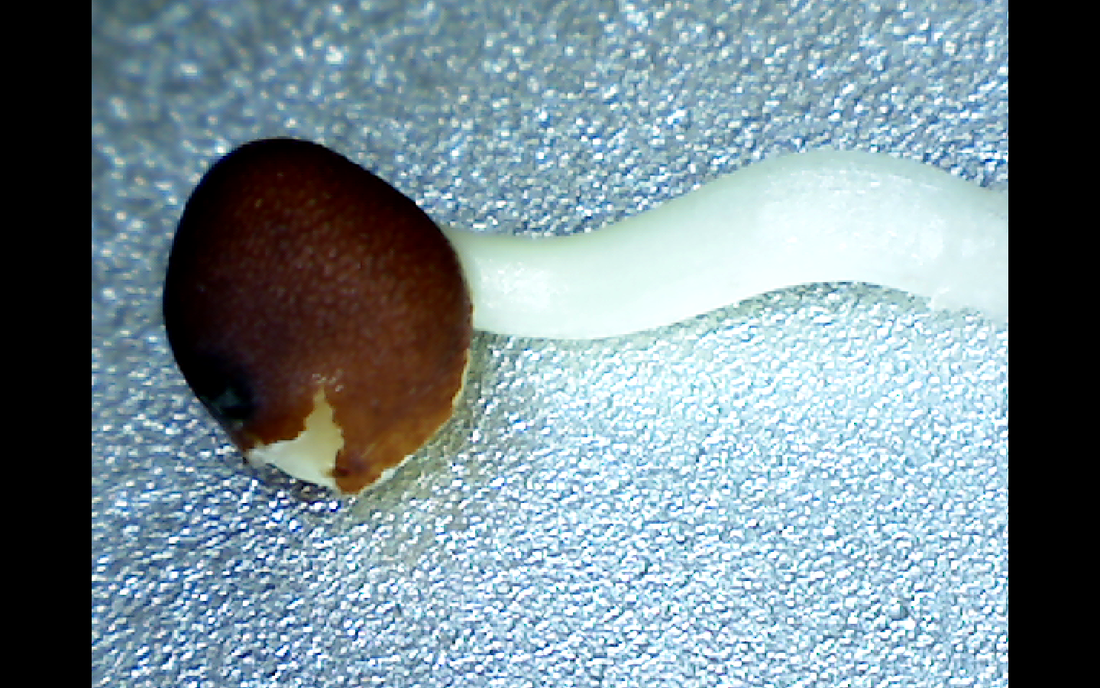
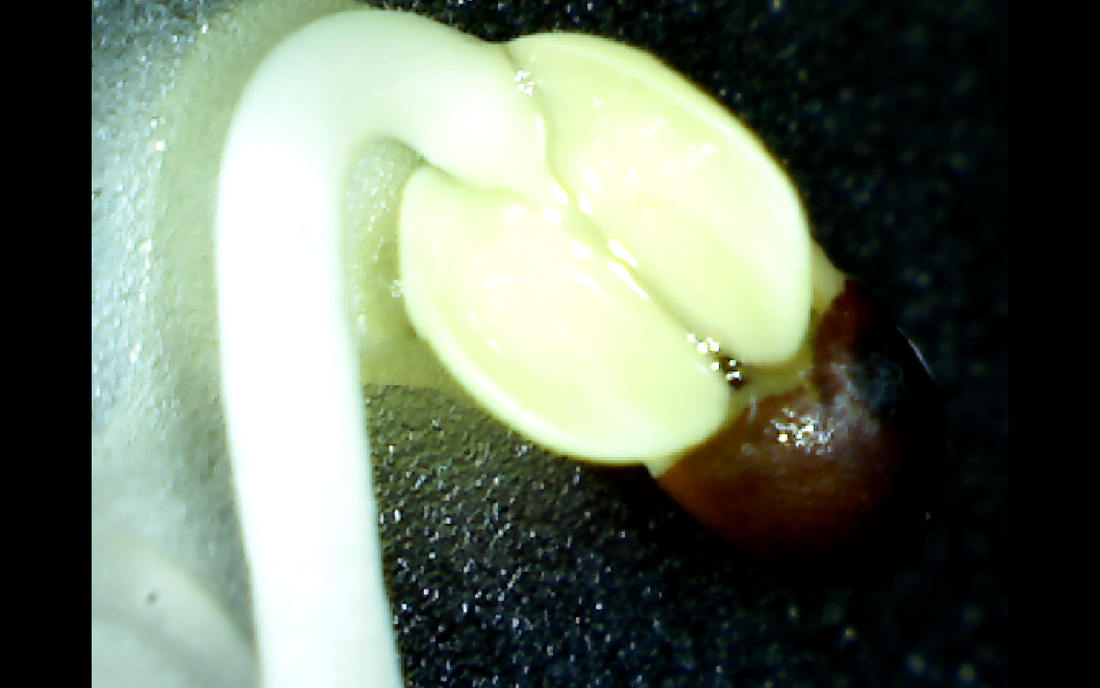
  6. What sprouts first in a seed: the stem or the root?
  7. How do you know? How do the pictures below help explain your answer for #6?
  8. Why do you think it goes in that order?

Answers:

  1. My material I was growing in was perlite, one thing that was the same with all of m groups cup that stayed the same was that the plant was able stay alive but was barely able to live without much water.
  2. The size of the plant is one thing different and that also depended on the size of the plant when we put it in. The size of the plant when we put it in was different then the others in our group, and when the seed was done using all of the nutrients it had in its seed it couldn't survive without other nutrients. So the size when it was put in matters.
  3. We were recording the size it was when it couldn't grow any more in the material we put it in. We were testing which soil did plants really need to survive? Can they survive in non organic material, or only organic material? That is what we were recording and testing.
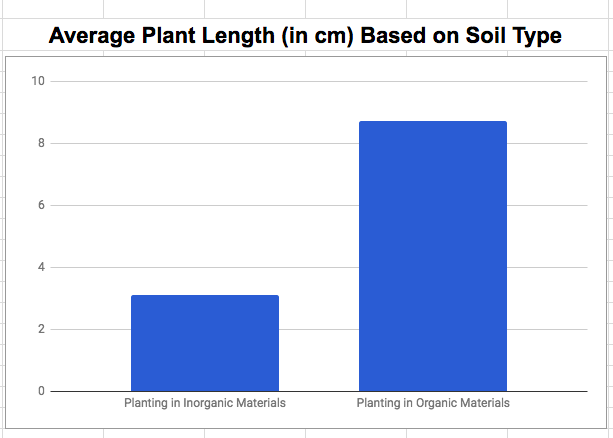
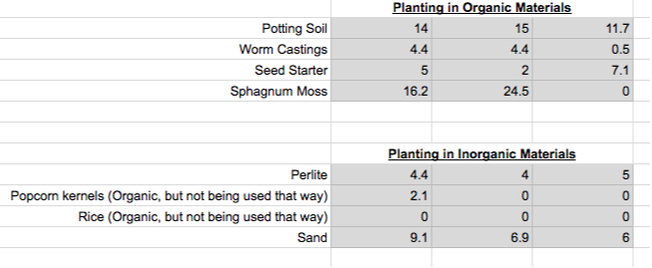
  4. We measured the size of each plant, not just one of the plants from each category all of them so we could get an average of the organic materials and the inorganic materials.(the chart at the top shows the average.)
  5. Well everyone has the same cup because it wouldn't be very accurate if you compare two plants with the same soil in different cups to each other. We needed to test so many plants because what if one plant was already starting to die and nothing could help it? Then we would just assume that the plant would die if we planted it in that material. Also it would be better to plant more plants and then add up the data and get an average. 
  6. The root sprouts first because the plant needs water. As soon as it gets the water it takes it for energy to push up and out of the soil. Once it starts pushing out to the sun the plant grows towards the sun to get energy and the roots start to get more water and the plant grow tall and healthy.
  7. The pictures below helped me because in those pictures I could see that the it was the root. The pictures really helped because you could see that in the first picture it is small and there is something missing if it were to be a stem. Then in the second picture it is bigger but the same thing is missing, same for the third, and the fourth. The leaf or leaves are missing. The plant has no leaves. So it must be a root trying to grow and reach for water.
  8. I think that the pictures go in that order because that is like the order of how the root was coming out of the plant while it was growing. I think if it went in another order it would of been more confusing and it wouldn't help much if it was in another order because I think me and most of the other people will be confused about what is happening to the innocent plant.
Picture
Picture
Picture
Picture
0 Comments

Plants as Producers

5/3/2018

0 Comments

 
Reflection/Synthesis:
  1. Plants need energy and matter to grow. Where do plants get their ENERGY?
  2. Where do plants get their MATTER?
  3. Where do plants get their FOOD (be careful - this is a trick question)?
  4. Why are plants called Producers?
  5. What would happen if plants didn't have a way to get energy?
  6. What would happen to animals if there were no plants to eat?
  7. What are some of the LIVING components of a plant "system"? (A plant "system" is everything that a plant needs to survive and everything it produces.)
  8. What are some of the NON-LIVING components of a plant "system"?
  9. In what ways do the components of the system interact?
  10. What matter is transported in and out of the plant system?
Answers: ​
  1. ​​Plants get their energy from the sun.
  2. Plants get their matter from carbon. The carbon is turned into starch which is stored food.
  3. Plants take carbon dioxide, water, and the sun's nutrients to make food for the plant. The plant takes these things in through different parts of the plant and then they get mixed together for food.
  4. Plants are called producers because they don't eat things that are already made, they make their own food to grow, and animals eat plants to get food for energy. Plants are the start of all of the food chains. 
  5. If plants didn't have a way to get energy from the sun, and water, they would die off and the whole food chain would be ruined. If plants were gone we wouldn't have as much oxygen as we need, and other animals wouldn't have a source of energy, or oxygen to breath either. Then if animals die, we would die of starvation. Just because of one little gap in the food chain.
  6. If there were no plants then animals would have to either have to eat each other, or die. Plants are the most important thing to us, and animals. They are important to us because they give us our oxygen to live and breath. If we didn't have any plants on our earth, then we would die.
  7. The living components in a plant system are: the plant seed, the sun, and CO2.
  8. Some of the non-living components that help a plant grow are: water, oxygen, and the soil. 
  9. The roots of the plant grow in the soil and grow inside the soil, so the plant can grow more. The water gives the plant something to drink, so that the plant doesn't wilt and die. The sun gives the plant energy, which is just as important as the water. The CO2 gives the plant something to breath, which then produces oxygen for us to breath. Everything around the plant that the plant needs, interacts with the plant. The water, sun and CO2 go together and form food for the plant to make/produce energy and make glucose.
  10. In the system CO2 goes from the oxygen into the plant and then gets turned into oxygen from photosynthesis, and comes out as the oxygen that we breath.
0 Comments

Players in an Ecosystem

4/23/2018

0 Comments

 
Picture
Picture
Reflect & Synthesize:
  1. Choose one of your Food Chains that you created and explain how it works.
  2. Can a Food Web be considered a "system"? Why or why not?
  3. What happens if a plant or animal all of a sudden disappears from the food web?
  4. Using this food chain, "sunlight to apple to worm to bird to cat," How do organisms in this food chain get the matter they need for body repair and growth?
  5. Using the same food chain in #4, How do organisms in that food chain get the energy they need for body warmth and motion?
  6. What do you think happens to the matter that is NOT used by the organisms in a food chain or food web? Is it wasted or does something else happen?
Answers:
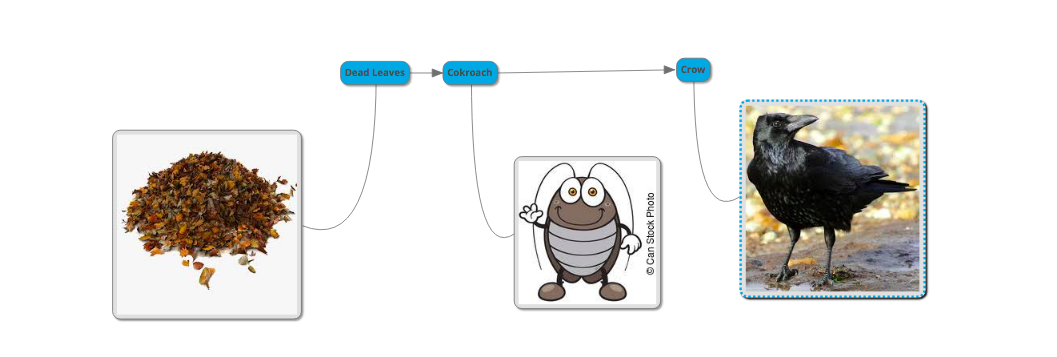
  1. The food chain I created was dead leaves to cockroach to a crow. My chain works like the dead leaves fall into a pile and the cockroach eats the dead leaves to get energy, then the crow eats the cockroach to get energy for himself. 
  2. A food web can be considered a system because it is a system of what an animal eats. It is a system because it shows you what animal eat what to get energy. It also shows how it works like the ox eats the grass and the wolf eats the ox. Just like a system. 
  3. If one little thing dies it will kill off other things because An example is that the ox eats the grass and the wolf eats the ox. If the ox "disappears' then the wolf will ethier "disappear" or go and interfere with other food webs causing more trouble. 
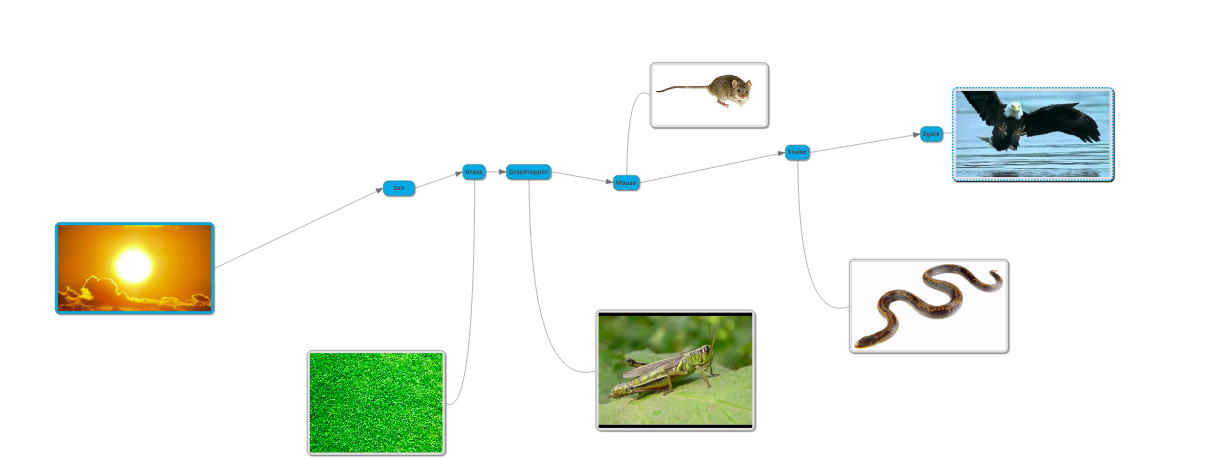
  4. In that example the different organisms get matter from eating or using some energy to grow and body repair. The cat gets matter from the bird who got matter from the worm who got matter from the plant who made matter from the sun. 
  5. They get their energy from eating each other or from the sun. The cat eats the bird for energy and the bird eats the worm and so on. 
  6. The matter that is not used is wasted and then the cycle starts over again. Like if a monkey eats a berry he will waste the seeds and they will plant into a tree and the monkey will eat it again. It will go over and over again. If the monkey doesn't waste then something will eat it and get some of the matter. 
0 Comments

Food - Matter & Energy

4/17/2018

0 Comments


Reflect & Synthesize:

  1. What does food provide to animals, including humans?
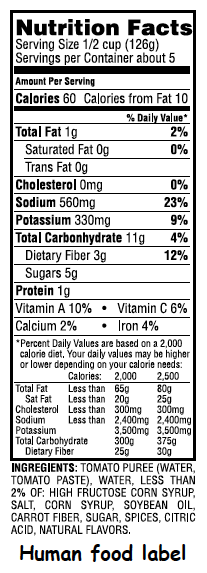
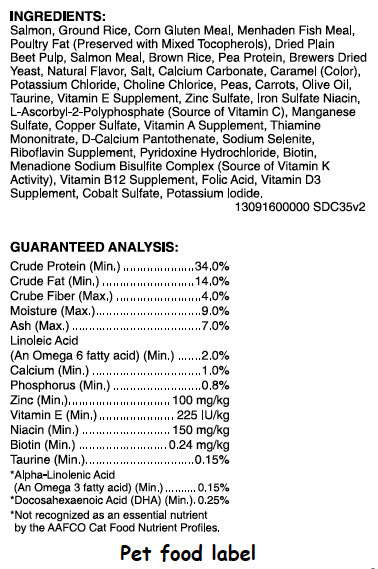
  2. Do the pet food and human food have the same nutrients? In what ways are they different?
  3. Does a higher calorie count mean a food is better for pets to eat? What makes pet owners think that?
  4. What is it in food that helps us repair our bodies and grow?
  5. What in food helps us move and stay warm?
  6. In what way does energy transfer when animals eat food?
  7. Look at the nutrition label below for milk. How much energy is in the food?
  8. What matter is in the food?

​Answers:

  1. Food provides energy which allows us to work and our body function to work. Also it provides matter which helps with body repair, helps us to grow, and it helps us to stay warm. 
  2. The pet food and human food below have some of the same nutrients but the pet food has some different ones then the human food. The labels that both foods have in them have different percent's on them.
  3. No, more calories in pet food is not better but its not terribly worse unless you give way more then their body can take. I think that pet owners think that more calories are better because dogs are so active and run around a lot and go for long walks sometimes. But they don't need the extra calories, they will just gain weight. I see why owners might think this but it is not better for them. 
  4. Matter( carbohydrates, fats, proteins, vitamins, and minerals). Matter in the foods we eat helps us repair our body and help us grow.
  5. Matter (carbohydrates, fats, proteins, vitamins, and minerals) also helps us to move and stay warm.
  6. Energy transfers through animals like: You eat the cow who eats the grass and the grass absorbs the sun to grow. 
  7. 160% energy is in the food because there is 160% calories.
  8. The matter in the food is the carbohydrates, fats, proteins, vitamins, and minerals. There is all of those I the foods below. 

Questions:

  1. As a result of looking at food labels, what did you learn about food?
  2. Look at the ingredients of one human food label. Write down the food name. What ingredients came from animals?
  3. What ingredients in the above food label came from plants?
  4. What similarities and differences did you notice between the human food and pet food labels you looked at?
  5. Choose an animal/insect from the ecosystem walk. What do you think it eats? Explain what you think it gets from its food.

Answers:

  1. I learned that there are good and bad items in food. You need most of them but you should still eat little bits of the other ones too. I also learned that you shouldn't go on a diet because it messes up your body
  2. Tomato soup, no ingredients came from animals but other foods do. Some foods have more some less some non like the soup. 
  3. ingredients that came from plants are corn syrup, sugar, some spices, carrot fiber, and soybean oil.
  4. In the pet food there is different ingredients and those ingredients are safe and health for foods, while the human foods have foods that are safe and healthy for us. So we both have foods that are good for us and we both have different ingredients.
  5. I chose a bird. I think that the bird eats worms and other bugs. I know that the bird get energy and matter from its food so that it can work and its body function can work. 

Human Food Label: 

  1. How do we find the energy (calories) per serving?
  2. How do we find the matter (carbohydrates, fats, proteins, vitamins, minerals)?
  3. Where can we locate the list of ingredients?
Answers:​​
  1. You find the energy per serving in food is by looking at the label on the back of food box or can. You look at the part of the label where it says "calories" next to the word it will say a percent or number. The percent or number is the amount of calories in the food.
  2. You find the matter by looking at the label at the back of the food items container. The carbohydrates, fats, proteins, vitamins and, minerals are found usually at the back. There is a little section for each label and each label has a percent by it that shows how much of the item is in that food. 
  3. ​Usually the back but around the item too sometimes.

Pet Food Label: 

  1. Where can we locate the list of ingredients?
  2. How do we find the percentage of different types of matter in the food?
Answers:​​
  1. The list of ingredients are located at the back of the can or box.
  2. You find the percents of an ingredient by looking at the list of food label and finding what your looking for. For example in the pet food label below it says Ash (Max) and next to that it has a percent which says: 7.0%. That's means that there is 7.0% of Ash (Max) in that pet food. 
Picture
Picture
0 Comments

Money Island and Vault Reflection.

4/10/2018

0 Comments

 
0 Comments

What is an Ecosystem?

4/10/2018

0 Comments

 
Picture

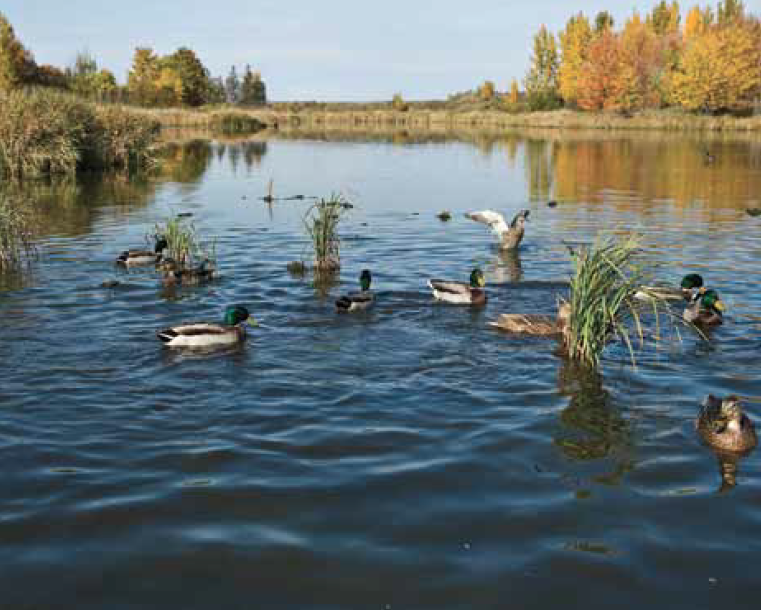
Lake Ecosystem INTERACTIONS

Within a system of living things
  • Ducks eat plants and bugs. 
  • Ducks communicate by quacking.
  • Ducks take care of their ducklings. 
  • The ducks are swimming around plants.
Between living & non-living things
  • ​Ducks breathe air (oxygen).
  • Ducks drink water and swim. 
  • Ducks use grass to make a nest.
  • Ducks fly.
Picture

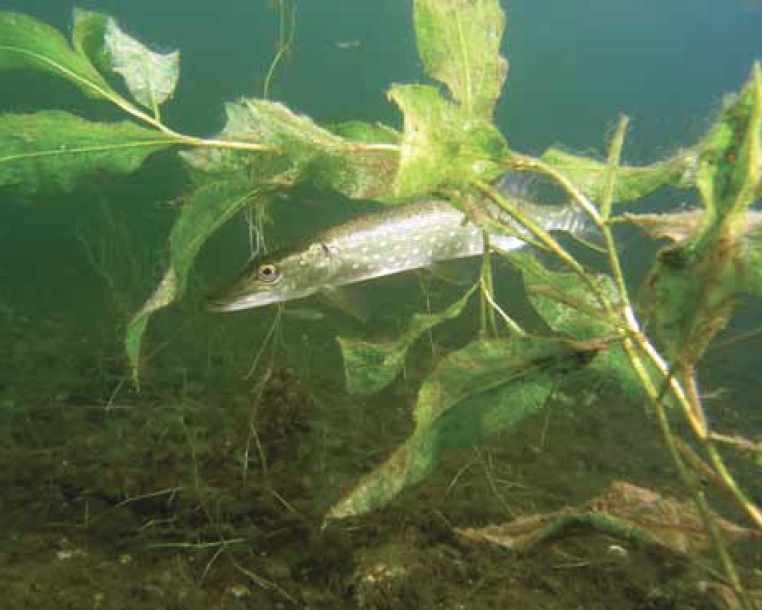
Lake Ecosystem INTERACTIONS

Within a system of living things​
  • The fish eats small fish.
  • The fish is touching plants.
  • ​A bigger fish eats this fish.​​
  • The fisher is fishing with live bait.
Between living & non-living things
  • The fish is swimming in the water. 
  • The fish is swimming over dirt.​
  • The plant is growing in the dirt.
  • The algae is growing on the water
Reflection/Synthesis Questions:
  1. What kinds of living things (organisms) do you see in both pictures?
  2. What other living things might be here, even if you can't see them in the photos?
  3. Why might living things in these photos interact with each other?
  4. Read the BIG IDEA below. How do these pictures depict an ecosystem?
Answers
​1. In both pictures there are plants and animals.
2. In these pictures there might be bugs, humans, other fish, and algae.
3. Living things interact with each other in these photos because they need to survive, to communicate with others, and to warn each other.  
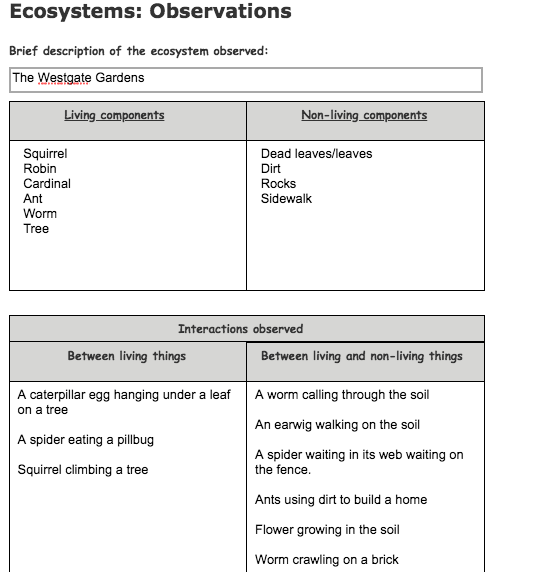
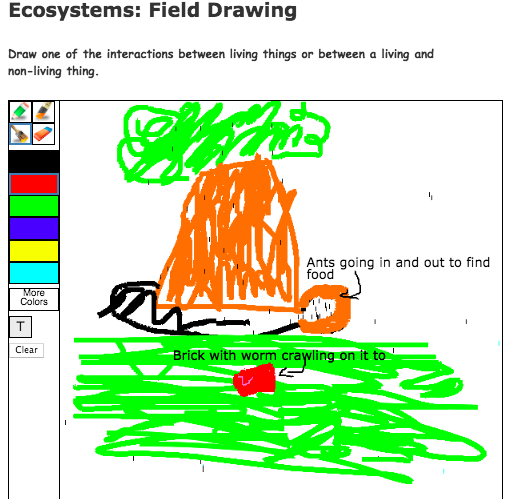
​4. These pictures help to represent the BIG IDEA by showing how organisms interact with non-living things and living things. An example in a picture below is ants interacting with dirt to build a home. Also a worm crawling on a brick to get around it.
Picture
Picture
Picture
Picture

​Reflect & Synthesize:

  1. What do living things get from their ecosystems?
  2. What evidence do you have to support your answer to Question 1?
  3. What does the term ecosystem mean, based on your experience in this lesson? (Don't use the definition from the BIG IDEA here. Put it into your own words.)
  4. Brainstorm at least one question you have about Ecosystems that you hope you learn from this unit.
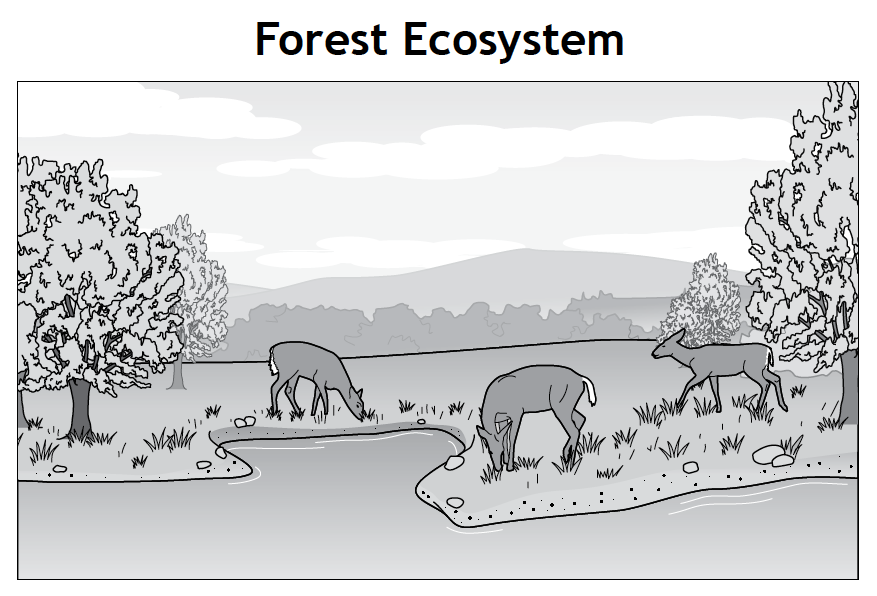
  5. Look at the image below that shows a portion of a forest ecosystem. Name at least five components (living or non-living things) of the ecosystem that you can either observe directly or infer. 
  6. What are three (or more) interactions that might occur in this portion of the forest ecosystem?

Answers:

  1. Living things get what they need to survive. They get their food, to get energy, to hunt or find more food, to get more energy, to do work. They also get shelter and water from their ecosystem so they can hopefully not get eaten and live a long healthy life.
  2. Living things get their energy from their food so they need food so they can go hunt or find more food to do work and to be able to survive. 
  3. An ecosystem is a place where organisms interact with the living and non-living items in the area of their home to survive.
  4. My question is, since birds fly south for the winter do they get energy along the way? Do they build homes or just sleep anywhere?
  5. I see deer, trees, fresh healthy grass, a pond with fish in it, and birds searching for a home or food.
  6. Well the deer will eat the grass, the fish will swim and eat food in and from the lake, and the birds will use their ecosystem to build a nest in a tree.
0 Comments

Skills21 - Superhero Rehabilitation Program

4/9/2018

0 Comments

 
0 Comments

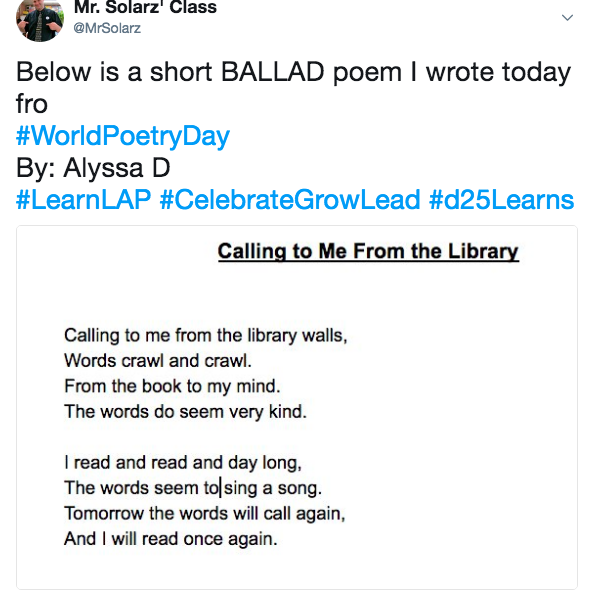
#WorldPoetryDay

3/21/2018

0 Comments

 
Picture
0 Comments

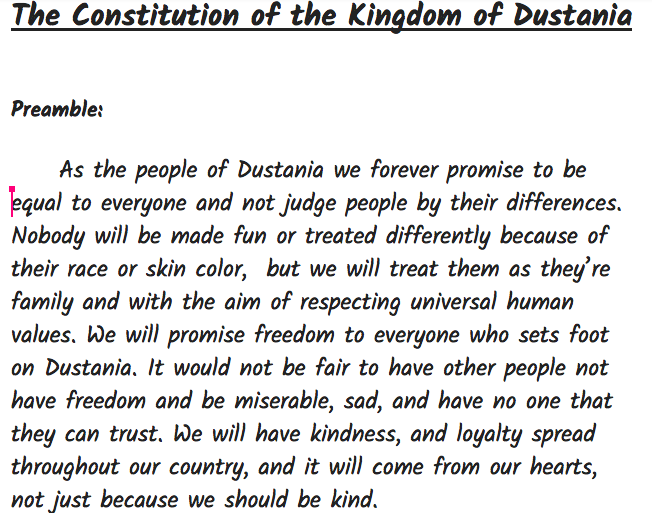
The Constitution of the Kingdom of Dustania

3/21/2018

0 Comments

 
Picture
Mars Constitution
Reflection Questions
  • ​What was the hardest part of writing your preamble? Explain how you overcame that challenge.
  • What is your favorite part of your preamble? Why is that part powerful and important?
  • What is the purpose of a preamble in a constitution? What does it do?
Answers
  • ​I think that the hardest part of writing this preamble was choosing what to write about our colony and what was important. I over came this by talking to my partner and they helped me to narrow it down.
  • ​My favorite part of the preamble is when it says we should be equal to everyone. I think that is an important part because I think that it is really mean and rude to bully someone just because they are different. 
  • ​This preamble describes our colony and what we do in it. The purpose of a preamble in a constitution is to promise people you will do this and it is like taking a pledge to follow these rules and to do good things for your country not bad. The preamble describes what your colony is about and what you will do for them.
0 Comments
<<Previous

    Author

    Write something about yourself. No need to be fancy, just an overview.

    Archives

    May 2018
    April 2018
    March 2018
    February 2018
    January 2018
    December 2017
    November 2017
    October 2017
    September 2017

    Categories

    All

    RSS Feed

    Picture
Powered by Create your own unique website with customizable templates.