What's going on in Mr. Solarz' Class?
What's going on in Mr. Solarz's Class?
  • Parents (Newsletter)
    • Our Online Photo Album >
      • 2018-2019 Photo Album
      • 2017-2018 Photo Album
      • 2016-2017 Daily Photo Journal
      • 2016-2017 Daily Photo Journal - Album 2
      • 2015-2016 Daily Photo Journal
      • 2015-2016 Yearbook
      • 2014-2015 Daily Photo Journal
    • Our YouTube Channels >
      • 2018-2019 YouTube Channel
      • 2017-2018 YouTube Channel
      • 2016-2017 YouTube Channel
      • 2015-2016 YouTube Channel
      • 2014-2015 YouTube Channel
      • 2013-2014 YouTube Channel
      • 2012-2013 YouTube Channel
      • YouTube videos over the years
      • Learn Like a PIRATE videos
    • Calendar
    • Our Weekly Schedule
    • FAQ about our classroom
    • Curriculum Night Presentation
  • Educators
    • Danielson Framework >
      • Domain 1 - Planning & Preparation
      • Domain 2 - Classroom Environment
      • Domain 3 - Instruction
      • Domain 4 - Professional Responsibilities
      • Professional ePortfolio
      • Instructional Coach Evidence
      • Experience Logs
    • FAQ about our Classroom
    • Workshops
    • Our Classroom Library is for Sale
  • Curriculum
    • Science Units >
      • 5th Grade >
        • Human Body Unit >
          • Human Body Links
        • Ecosystems >
          • Ecosystems - Legends of Learning
        • Watery Earth >
          • Watery Earth Links
        • Earth in Space
        • Investigating Matter
      • 4th Grade >
        • Energy >
          • Energy Unit Notes
          • Energy Debates
          • Energy Debate Organizers
        • Our Geosphere
        • Waves
      • Science Fair
      • STEM Investigations!
      • Try Engineering Together
    • Social Studies Units >
      • 5th Grade >
        • Revolutionary War >
          • Liberty's Kids Videos
          • Revolutionary War Hero Project >
            • RWHP Directions
        • U.S. Constitution & Government >
          • Mini Lessons
          • Colonize Mars! >
            • Claiming Mars for Ourselves >
              • 2017-2018 Creating our Country on Mars
              • 2016-2017 Mars Decisions
              • 2015-2016 Claiming Mars for Ourselves
              • 2014-2015 Claiming Mars for Ourselves 2015
            • Solutions to Problems on Mars >
              • 2017-2018 Our Solutions to Problems on Mars
              • 2016-2017 Problems & Solutions
              • 2015-2016 Our Solutions to Problems
              • 2014-2015 Our Solutions to Problems
            • 2014-2015 "Mission: Mars" Video Discussions 2015
          • Project Citizen
        • Westward Expansion >
          • Oregon Trail Simulation
          • Oregon Trail Readings
          • Reflection Rotation >
            • 2017-2018 Reflections >
              • ThingLink Photo Stories
              • Green Screen Tableaux Vivants
              • Fictional Travel Blog
              • Canva Concept Cards
              • YouTube Newscasts
              • Google Slide Show
              • Daily Travel Blog
              • Act-It-Outs
            • 2016-2017 Reflections
            • 2015-2016 Reflections >
              • Voki Reflections >
                • Voki Blog
            • 2014-2015 Reflections >
              • Act-It-Outs
              • Timeline Spreadsheet
              • Newscasts
              • ThingLink >
                • ThingLink Images
                • Sign up for ThingLink
              • Google Slideshow
              • Fictional Travel Log
              • Daily Travel Log
              • Tableaux Vivants
              • Photo Stories
      • 4th Grade >
        • Geography
        • Explorers
        • Native Americans
        • Colonization
        • State of Sustainability
      • Presidential Election Simulation - 2012 >
        • Presidential Election Simulation - 2016
      • Current Events
    • Reading >
      • 5th Grade Units >
        • Literature Circles >
          • Literature Circles >
            • Video Discussions
          • Literature Circles >
            • Video Discussions
            • Activities
        • Schoolwide Launch
        • Schoolwide Fiction
        • Schoolwide Non-Fiction
        • Schoolwide Ecosystems
        • Schoolwide Poetry
        • Wonder >
          • Wonder
        • The Phantom Tollbooth >
          • Phantom Tollbooth Assignments
      • 4th Grade Units >
        • Schoolwide Launch
        • Schoolwide Fiction
        • Schoolwide Non-Fiction
        • Schoolwide Poetry
        • Schoolwide Energy
    • Writing, Spelling & Grammar >
      • Writing >
        • Writing City
        • WEX
        • WriteAbout
        • Reflection Writing
        • JoonBugz
      • Spelling >
        • Words Their Way
      • Grammar >
        • Grammar
    • Math >
      • Money Island
      • Math in Focus
    • Miscellaneous >
      • Activities >
        • Short-Term Projects
        • Challenges!
        • Special Events
        • Projects & Mini Lessons
        • Bonus Activities
        • Miscellaneous >
          • Honor Badges
          • Growing a Growth Mindset
      • Imagination Club >
        • Schedule
        • Daily Ritual
        • Mini-Lessons
        • Photo Journal
        • Student Creations Round 1
      • Mystery Skype
      • Entrepreneurship Unit >
        • Entrepreneurship - Creating Our Own Businesses!
      • Self-Reflection
      • KinderPals
  • Student ePortfolios
    • 2018-2019 ePortfolios >
      • Students 1-7 >
        • 1 - Isabel
        • 2 - Alexis
        • 3 - Oscar
        • 4 - Adrian
        • 5 - Edy
        • 6 - Matthew
        • 7 - Molly
      • Students 8-14 >
        • 8 - Joey
        • 9 - Jeremiah
        • 10 - Emmalina
        • 11 - Sama
        • 12 - Hazel
        • 13 - Nick
        • 14 - Filip
      • Students 15-21 >
        • 15 - Nellie
        • 16 - Landon
        • 17 - Molly
        • 18 - Harrison
        • 19 - Kali
        • 20 - Inti
        • 21 - Ryan
        • 22 - Pavel
      • Blog Assignments
    • 2017-2018 ePortfolios >
      • Students 1-9 >
        • Elle
        • Daniel
        • Tommy
        • Alyssa
        • Gavin
        • Milosz
        • Mikey F
        • Caitlin
        • Brynna
      • Students 10-17 >
        • Kya
        • Olivia
        • Ian
        • Colin
        • Owen
        • Gianna
        • Isabella
        • Carmen P
      • Students 18-25 >
        • Lucy
        • Caleb
        • Mikey S
        • Wes
        • Martin
        • Will
        • Shaun
        • Carmen W
      • Blog Assignments
    • 2016-2017 ePortfolios >
      • Students 1-8 >
        • Hailie
        • Jody
        • Madison
        • Dylan
        • Calvin
        • Connor
        • Louisa
        • Harvey
      • Students 9-16 >
        • Anna
        • Jack
        • Ben
        • Elijah
        • Catelyn
        • Cole
        • Abby
        • Ashley
      • Students 17-23 >
        • Charles
        • Michelle
        • Charlie
        • Daniel
        • Sam
        • Chingoon
        • Kyren
      • Blog Assignments
    • 2015-2016 ePortfolios >
      • Students 1-9 >
        • TJ
        • JJ
        • Bridget
        • Alex
        • Mason
        • Ryan
        • Lucas
        • Shreya
        • Logan
      • Students 10-18 >
        • Charlotte
        • Addie
        • Aidan
        • Andrew
        • Jeremy
        • Rachel
        • Russell
        • Addy
        • Cassidy
      • Students 19-26 >
        • Audrey
        • Regan
        • Giuliana
        • Brady
        • Stephen
        • Matthew
        • Ben
        • Tyler
        • Thomas
      • Blog Assignments
    • 2014-2015 ePortfolios >
      • Students 1-7 >
        • 1 - Michael
        • 2 - Charlie
        • 3 - Nicole
        • 4 - Stacy
        • 5 - Bela
        • 6 - Kendall
        • 7 - Demetri
      • Students 8-14 >
        • 8 - Emily
        • 9 - Nicky
        • 10 - Hanna
        • 11 - Payton
        • 12 - Hasanain
        • 13 - Tucker
        • 14 - Chris
      • Students 15-21 >
        • 15 - Madi
        • 16 - Aidan
        • 17 - Luke
        • 18 - Kaela
        • 19 - Ryan
        • 20 - Alison
        • 21 - Lucas
      • Blog Assignments
  • Passion Time
    • Passion Time Resources >
      • ALL Passion Time Resources
      • Step-By-Step Directions
      • Submit Your Essential Question
      • Our Trello Page
      • Our Passion Projects over the years
      • Our Trello Board
      • SAMPLE Blog Post Format
      • YouTube Upload Page
      • Mini-Lessons
    • 2018-2019 Projects >
      • Round 1
      • Round 2
      • Round 3
      • Round 4
    • 2017-2018 Projects >
      • Round 1
      • Round 2
      • Round 3
      • Round 4
      • Round 5
    • 2016-2017 Projects >
      • Submit Your Essential Question
      • Mini-Lessons
      • Round 1
      • Round 2
      • Round 3
      • Round-4
      • Round 5
      • Round 6
    • 2015-2016 Projects >
      • Round 1
      • Round 2
      • Round 3
      • Round 4
    • 2014-2015 Projects >
      • Round 1
      • Round 2
      • Round 3
      • Round 4
      • Round 5
      • Round 6
  • Student-Led Classroom Info
    • Our Learning Experiences
    • 21st Century Skills
    • Whole Class Goals
    • Individual Goals
    • Classroom Jobs
    • Collaborative Responsibilities
    • Rituals & Routines
    • Uses of "Give Me Five"
    • Student-Led Mini-Lessons
    • Lit Circle Signposts
    • Mystery Skype Jobs

Lesson 6: Sunlight on the Menu (45 minutes)

4/19/2016

0 Comments

 
Picture
Picture
Reflection/Synthesis:
Answer the following questions in your blog post. Remember to have at least one follow-up sentence for each question, when possible.
  1. Explain how the matter in each ingredient can be traced back to plants.
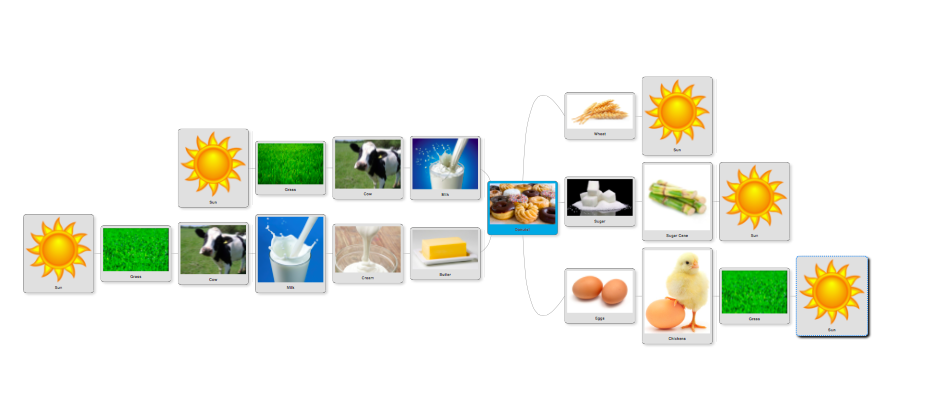
  2. Explain how these ingredients can be traced back to the sun.
  3. What MATTER in the food originally came from producers?
  4. What ENERGY in the food originally came from the sun?
  5. How is energy transferred from the sun to ingredients in your favorite foods?
Answers:

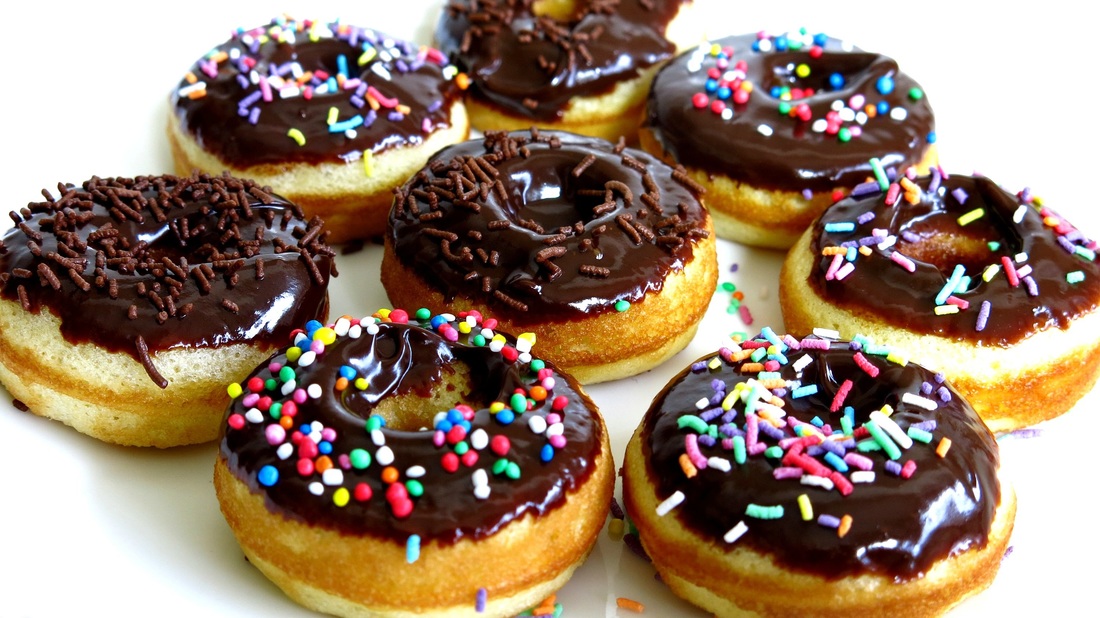
1. Most of the ingredients in donuts mostly come from plants so matter  is technically in plants. Matter is in plants. 
2.Eggs can be trace back to the sun because chickens eat grass and the grass grows because of sun. Butter can be traced back to the sun because cows make milk and cows eat grass and grass grows because of the sun. Sugar can be traced back to the sun because sugar is made from sugar canes and sugar canes grow from the sun. Milk can be traced back to the sun because cows make milk and cows eat grass and the grass grows because of the sun. Wheat can be traced back to the sun because wheat grows because of the sun.
3. A few of the main ingredients in donuts come from plants so some matter came from those ingredients. Plants are producers. 
4.Technically chemical energy came from the sun because chemical energy is in food and it is all around us. So I think that chemical energy came from the sun.  
5. It is transferred by since the main ingredients in donuts are mostly plants and plants need the sun because it gives them energy so when you put those ingredients in donuts, then you have ingredients from the sun in your food. 


0 Comments

Lesson 4: Plants as Producers

4/12/2016

0 Comments

 
Questions:
  1. Plants need energy and matter to grow. Where do plants get their ENERGY?
  2. Where do plants get their MATTER?
  3. Where do plants get their FOOD (be careful - this is a trick question)?
  4. Why are plants called Producers?
  5. What would happen if plants didn't have a way to get energy?
  6. What would happen to animals if there were no plants to eat?
  7. What are some of the LIVING components of a plant "system"? (A plant "system" is everything that a plant needs to survive and everything it produces.)
  8. What are some of the NON-LIVING components of a plant "system"?
  9. In what ways do the components of the system interact?
  10. What matter is transported in and out of the plant system?
Answers:
1. Plants get their energy from the sun and the sunlight. The sunlight has so many different nutrients' that plants need.
2. Plants get their matter from the carbon dioxide and the air that floats around it. Without the air/carbon dioxide, the plant would die.
3. Plants get their food from the pigment chlorophyll. Chlorophyll lets the plant get it's color and helps the plant make food.
4. Plants are called producers because they can produce their own food. They do this by using the sunlight from the sun.
5. The plant would die because plants need energy to survive. Without the energy, the plant wouldn't have enough to grow.
6. Without any plants for animals to eat, the animals that eat those plants would die because that is their food source and everything needs to eat so it can grow and repair itself.
7. Some of the living components are the sun and the water and air. Those are really important to plants because that is some of the components that plants need to survive. 
8. Some of the non living components of a plant system are dirt and grass. They are still important to the plant but just not living components of a plant system. 
9. Well, they all work together to make the plant grow big and strong and help it stay like that for some periods of time. They are good at working together. 
10. Water is transported in and out of the plant system because you water the plant everyday not every second for ever. If you give the plant too much water it would die. 

0 Comments

Lesson 3: Players in an Ecosystem

4/6/2016

0 Comments

 
Picture
Picture
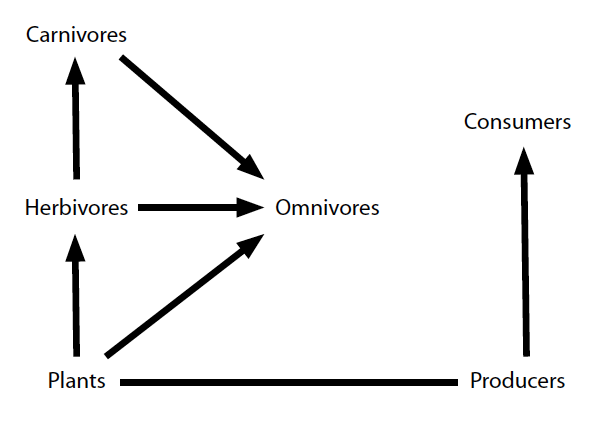
  • Producers are the beginning of a food chain because they get there energy from the sun.
  • Consumers eat other things like the producers.
  • Producers are plants and everything else like animals are consumers.
  • Examples: Cows fit in the herbivores section because they eat grass and other plants. Cows are also consumers because they eat plants.
  • Sheep are herbivores and consumers.
  • Deer are herbivores and consumers.
  • Rabbit are herbivores and consumers.
  • Grasshopper are herbivores and consumers.
  • Lion are carnivores because they eat other animals and are consumers.
  • Wolf are carnivores and consumers like lions.
  • Snake are carnivores and consumers.
  • Hawk are carnivores and consumers.
  • Praying-mantis are carnivores and consumers.
  • Spider are carnivores and consumers but there is a big species of spider so they can be any.
  • Pig are omnivores and consumers.
  • Bear are omnivores and consumers.
  • Racoon are omnivores and consumers.
  • Chipmunk are omnivores and consumers.
  • Human are omnivores and consumers.
  • Carnivores are animals that eat other animals
  • Omnivores eat anything
  • Herbivores eat plants
  • Food webs have 3 parts: Producers, Consumers and De composers
  • Primary consumers are omnivores.
  • Secondary consumers are carnivores.   
  • Food webs are all the possibilities that things that can eat each other
  • Food chain
  1. Choose one of your Food Chains that you created and explain how it works.
  2. Can a Food Web be considered a "system"? Why or why not?
  3. What happens if a plant or animal all of a sudden disappears from the food web?
  4. Using this food chain, "sunlight to apple to worm to bird to cat," How do organisms in this food chain get the matter they need for body repair and growth?
  5. Using the same food chain in #4, How do organisms in that food chain get the energy they need for body warmth and motion?
  6. What do you think happens to the matter that is NOT used by the organisms in a food chain or food web? Is it wasted or does something else happen?
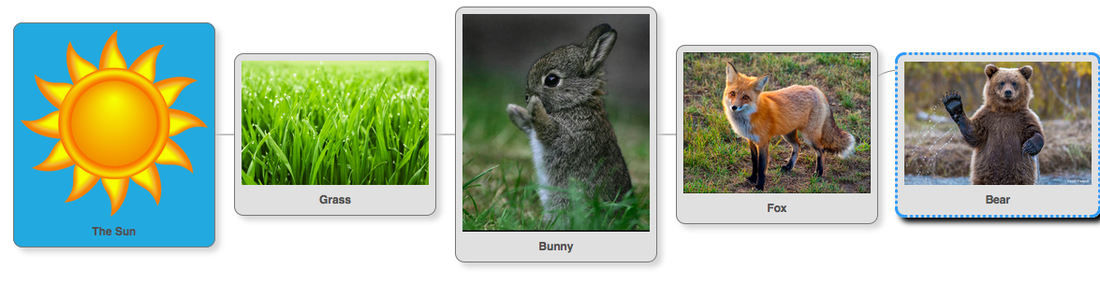
1. So first, the grass gets it's nutrients from the sun. Then, a bunny gets it's food from the grass. The fox gets it's food from the bunny and the bear gets it's food from the fox. 
2. Yes because a food web is all connected and everything is connected to something and nothing is left behind.
3. Then whatever was eating the plant or animal would die because it wouldn't get it's nutrients from the animal that it needs.
4. Well, fruits need the sun to grow because like all plants, they all need sunlight because it has all the nutrients that they need to grow. The worm gets matter by eating the apple because the apple has a lot of nutrients that the worm needs to repair itself and grow. The same with the bird and the cat, the bird eats the worm because that is it's diet and food source and the cat eats the bird because that is their food source also besides pet food. 
5. They get there energy from the different types of nutrients that the animal/plant has that they need. For example, the sun provides eat and when the apple takes in the sunlight from the sun, it gets warmth and energy because it is taking in the good stuff from the sun.
6. I think that the matter that is not used just stay with the animal/plant. I also think that the matter could be just left there and another animal or plant could pick it up. 

0 Comments

Lesson 2: Food - Matter & Energy

4/4/2016

0 Comments


Organisms That We Saw Outside:

Squirrel,Centipede, Worms, Trees, Grass, Flowers, Bushes, Pill Bugs, Birds

What Do Plants Need To Survive?:

Animals and Insects:
Food Carbon
Water
Oxygen
Sleep
Shelter and Warmth
Plants:
They need some carbon dioxide
Water
Sunlight, Nitrogen, Potassium, and Phosphorus

Where Do Plants Get What They Need:

  • Animals and Plants get carbon dioxide and oxygen come from the air
  • Plants draw water from there roots from the soil that they are in
  • Animals get there water from ponds, lakes, rivers, puddles
  • Carnivores get there food from other animals
  • Herbivores get there food from plants
  • Omnivore get there food from animals and plants
  • Plants don't want to get shelter they need sunlight so they need to be in the open
  • Animals and Plants get sleep from resting
  • Plants get there sunlight from any kind of light

Where Do We Get Our Energy From?:

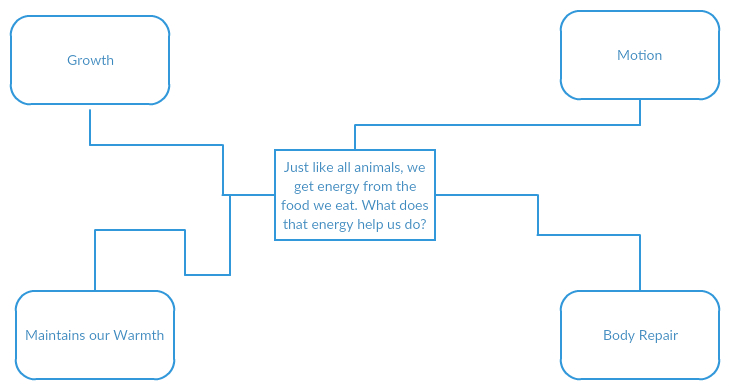
  • We get our energy from food It gives us the energy to do things that we do everyday.
We measure energy in food by calories.
Food gives us matter to let us grow and energy to help us move.
Picture
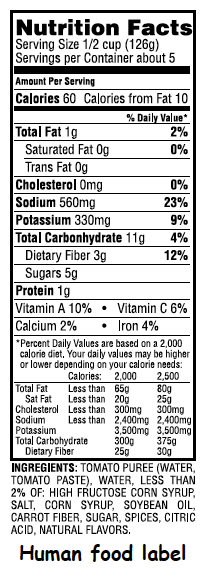
On the human food label:
  1. How do we find the energy (calories) per serving?
  2. How do we find the matter (carbohydrates, fats, proteins, vitamins, minerals)?
  3. Where can we locate the list of ingredients?
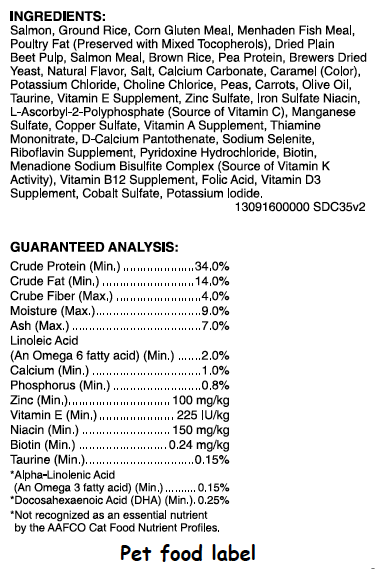
On the pet food label:
  1. Where can we locate the list of ingredients?
  2. How do we find the percentage of different types of matter in the food?
Answer the following questions while analyzing the Nutrition Labels:
  1. As a result of looking at food labels, what did you learn about food?
  2. Look at the ingredients of one human food label. Write down the food name. What ingredients came from animals?
  3. What ingredients in the above food label came from plants?
  4. What similarities and differences did you notice between the human food and pet food labels you looked at?
  5. Choose an animal/insect from the ecosystem walk. What do you think it eats? Explain what you think it gets from its food.
Answers:
1. You can find the calories per serving by looking under the amount per serving. The amount of energy that you get from your food is how many calories there are in the food.
2. You can find the matter under the calories where the % daily values are listed.
3. You can find the list of ingredients under the list of nutrition facts.
Answers:
1. You can locate the list of ingredients by looking at the top of the label unlike most human labels where the ingredients are typically found at the bottom of the label. 
2. Under the ingredients of the percentages of matter are listed in order of what the foods contains the most of to what it contains the least of.
3. Potassium came from plants because that is one of the elements that plants need to survive. 
4. Some similarities that a saw between the two food labels were that they both state the ingredients  that is inside the food. They both say the nutrition facts. Some differences that I saw were that the human label looks much different then the pet label. The pet label has more elements that are stated then the human label.
5. I am choosing the Squirrel. I think that squirrels eat nuts and insects and what ever they can find. Mostly they eat acorns. I think that squirrels get there food from the trees because acorns grow in the trees and squirrels can climb trees. I also think that it gets it food from the ground where small insects live and from inside trees where other insects also live. 
​


Picture
Picture
0 Comments

Lesson 1: What is an Ecosystem?

3/30/2016

0 Comments

 
Picture
Picture
Picture
Picture
Picture
Picture
Picture
Picture
Picture
Picture
Picture
Reflect & Synthesize:
Answer the following questions in your blog post. Remember to have at least one follow-up sentence for each question, when possible.
  1. What do living things get from their ecosystems?
  2. What evidence do you have to support your answer to Question 1?
  3. What does the term ecosystem mean, based on your experience in this lesson? (Don't use the definition from the BIG IDEA here. Put it into your own words.)
  4. Brainstorm at least one question you have about Ecosystems that you hope you learn from this unit.
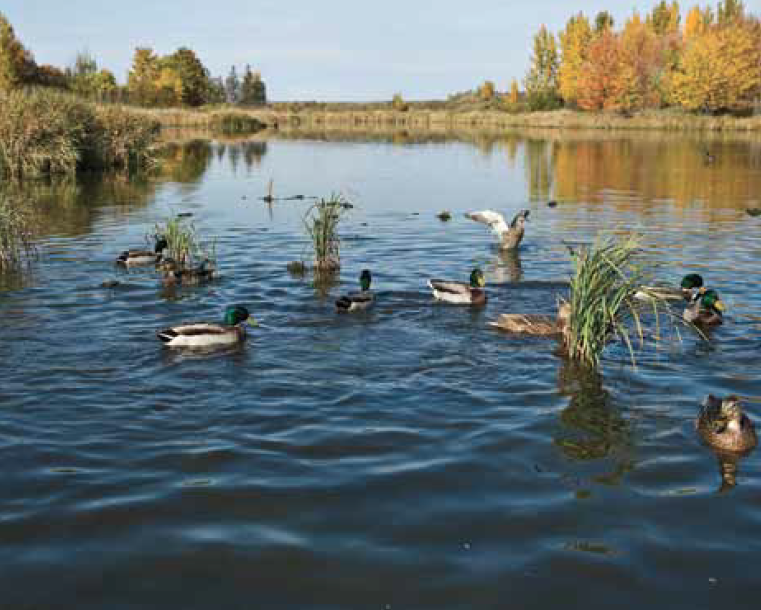
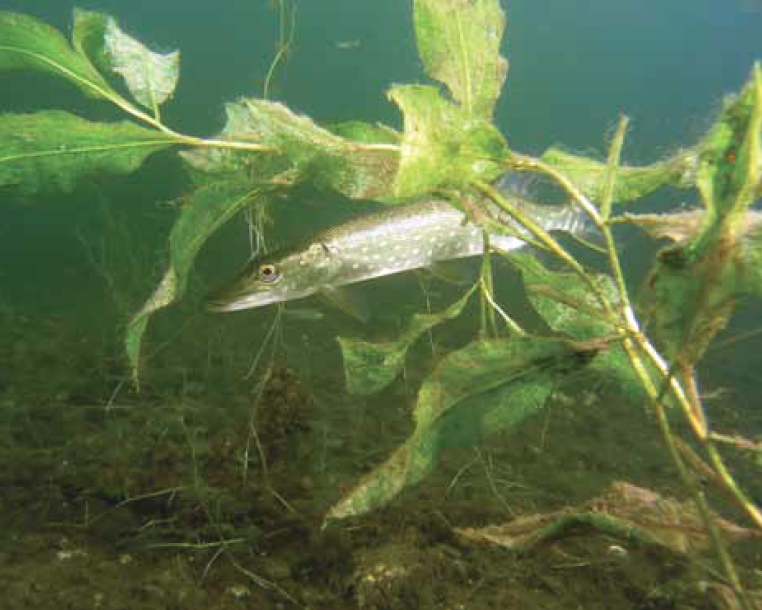
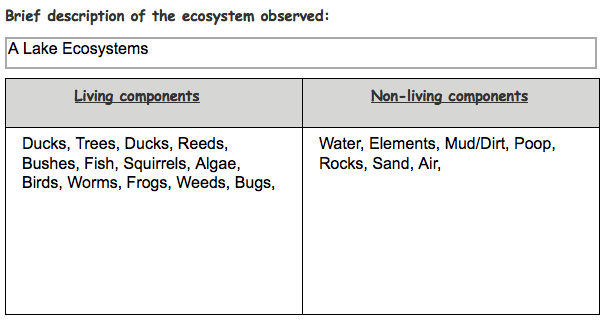
  5. Look at the image below that shows a portion of a forest ecosystem. Name at least five components (living or non-living things) of the ecosystem that you can either observe directly or infer.
  6. What are three (or more) interactions that might occur in this portion of the forest ecosystem?
Answers:
1. Living things get food, water, air, a nice place to live (home) from their ecosystems. They get some other living things to interact with other them and a cool place to explore and create a home.
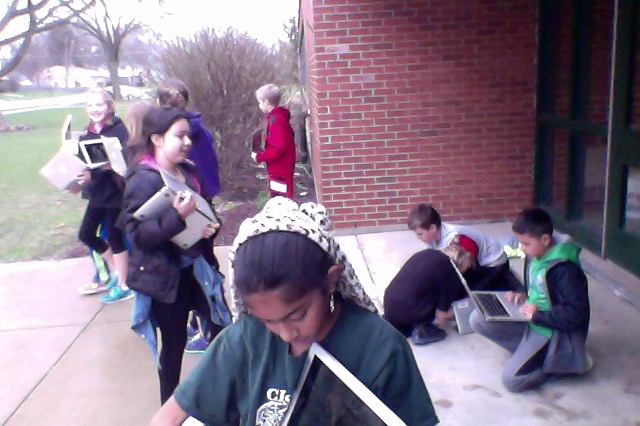
2. I have evidence from my experience when the whole class went outside and looked at the ecosystem outside of the school. We looked at our ecosystem and saw cool things.
3. They term of ecosystem means that a group of living organisms that interact with other non living things that are in there homes. 
4. I hope to learn what the difference between a habitat and an ecosystem.
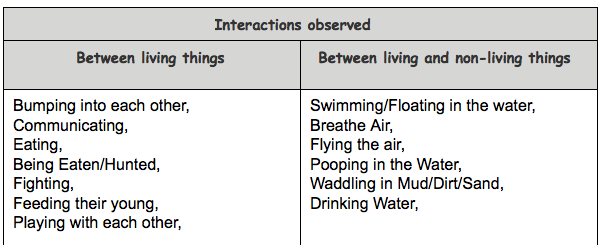
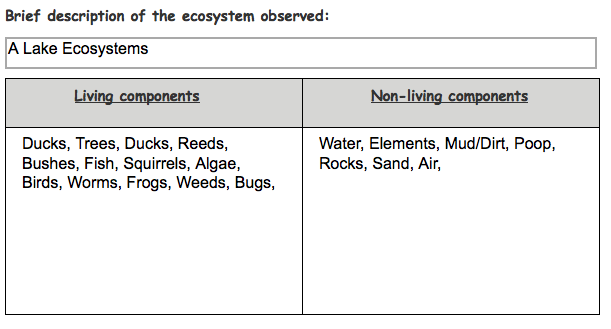
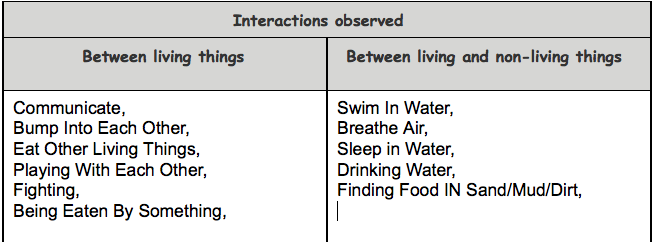
5. Ducks, Trees, Fish, Weeds, Plants
6. Ducks are communicating with each other, Ducks are playing with each other, and fish that are looking for food.
0 Comments

    Author

    Write something about yourself. No need to be fancy, just an overview.

    Archives

    June 2016
    May 2016
    April 2016
    March 2016
    February 2016
    January 2016
    December 2015
    November 2015
    October 2015
    September 2015
    August 2015

    Categories

    All
    Ecosystems
    Oregon
    Poetry
    Reading
    Science
    Writing

    RSS Feed

Powered by Create your own unique website with customizable templates.